May 28, 1918. The air was thick with the acrid smell of gunpowder and damp earth.
In the chaos enveloping the farmland near Guyencourt, Paris seemed like another world. Shells blasted the horizon, painting the sky with flashes of orange and red, as the incessant barrage reverberated through the ground, shaking even the most solid resolve. The Third Battle of the Aisne was raging, and the optimism of the spring months had turned into a struggle for survival for the soldiers of the Allied forces.
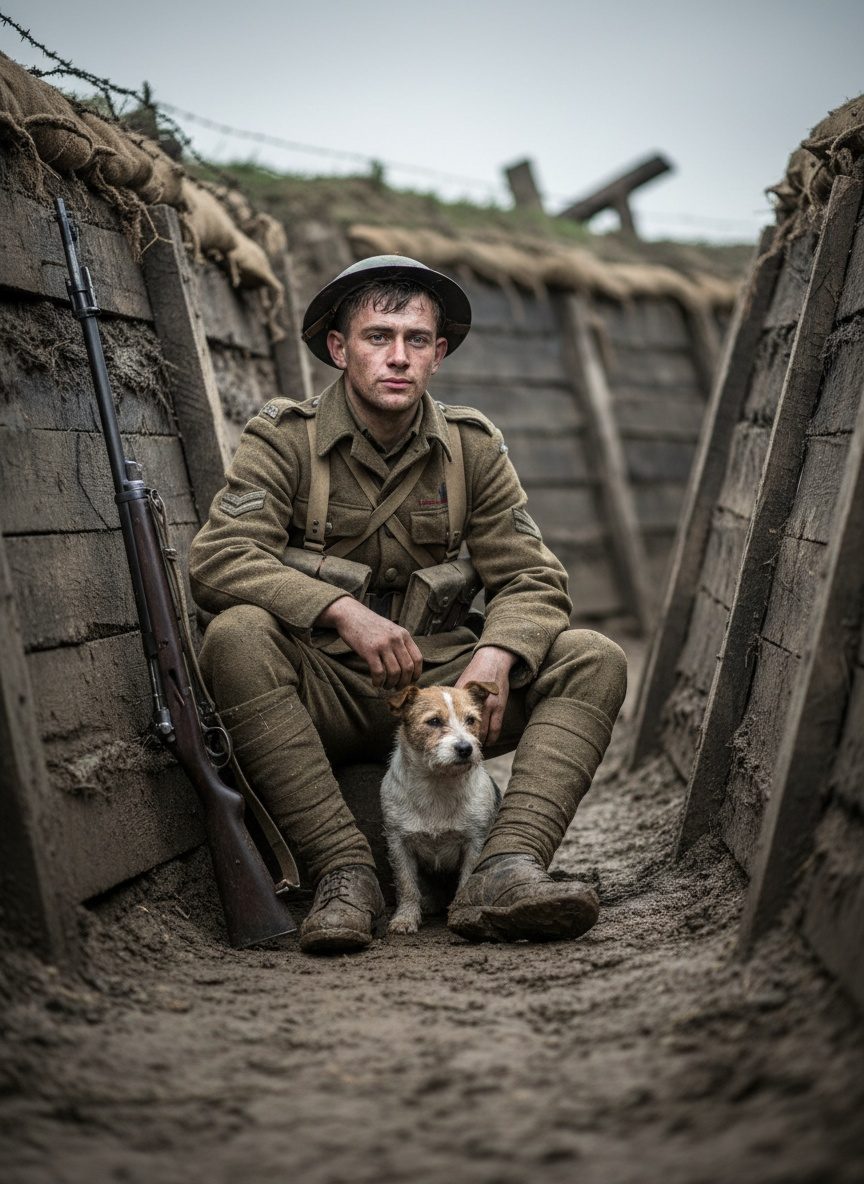
Among them, a soldier of the East Lancashire Regiment lay in a trench, water seeping into his boots and the mud swallowing all warmth. Yet, he wasn’t alone in this hellscape. Pressed against his side was the small, comforting presence of a dog — its fur speckled with mud, its eyes reflecting both innocence and an inexplicable understanding of the devastation around. This dog, unnamed in the pages of history, became legendary among the men who fought alongside it.
Dogs had a long history as mascots or unofficial members of military units, providing companionship and boosting morale. But this dog, with no military rank or official duties, took on the fierce devotion to its soldier with a loyalty that seemed almost human. It had been found as a stray, wandering between the lines, and had adopted the East Lancashire men as its own. In return, it was fed scraps of rationed meat and given the rare comfort of a pat on the head or a scratch behind the ears.
As the German spring offensive roared on, the trenches became more than just a physical barrier; they were a testament to resilience. Soldiers of the East Lancashire Regiment, like many others, endured unthinkable conditions — from lice infestations to the mind-numbing fatigue of constant artillery assault. In this grim existence, the dog became a beacon of hope, a reminder of normalcy amid the madness.
When the soldiers huddled in their dugouts, scribbling letters to loved ones back home by the flickering light of a candle, the dog would watch. Sometimes it left the soldier's side to patrol the length of the trench, as if ensuring that all was well. When rainwater filled the trenches and spirits were at their lowest, its presence acted as a silent cheerleader, nudging those on the brink of despair back from the edge.
The trenches near Guyencourt were alive with stories. While generals strategized from afar, it was the men on the ground — and the unique alliances they fostered — that wove the tapestry of the war experience. The dog's companionship often meant the difference between giving in to despair and finding the strength to go on. Stories circulated about how it would stand vigil beside wounded soldiers, refusing to leave their side even as medics carried them to safety. Its devotion was uncanny and the kind of legend that grew amidst the whispered conversations of soldiers trying to make sense of the absurdity around them.
On the frontlines, everything was stripped down to its essence; humanity was laid bare. The presence of the dog offered something tangible to cling to, a symbol of loyalty and courage without parallel. When soldiers rotated out to the rear for brief respites, they would recount tales of their furry comrade, and newcomers to the front would eagerly listen, waiting to see if they would have the fortune of sharing their trench with the now-famous canine.
As the Third Battle of the Aisne dragged on, claiming more lives with each passing day, it was easy to become numb to the death and destruction. Yet, the small dog stood as a reminder that some relationships transcended the horrors of war. There were stories of how, despite the chaos, the dog would bound through the no man's land as if racing through a park, its allegiance visible in its every action. Watching soldiers would be momentarily distracted from their dread, cheering its bravery, even as they held their breath, fearing for its safety.
When the offensive pushed towards the Marne, and the ultimate tide of the war began to change, the bonds forged in the trenches, like those between man and beast, had their role in the resolve that won the day. The dog's companionship was a lesson in loyalty and courage — virtues not exclusive to the human condition, but universal.
The story of the soldier and his dog in those trenches near Guyencourt is a reminder of the importance of companionship and loyalty when faced with the greatest adversities. For the soldiers who experienced war's frontlines, their memories were imprinted with the image of that small dog, resolute amidst the bullets and bravely keeping watch in the muck and mire.
War has countless unsung heroes, and history often overlooks them in its grand narratives. Yet, in these small stories — nearly erased by the passage of time and overshadowed by the larger battles and grand strategies — lies a profound humanity. At its heart, this is not just a tale of a soldier and his dog; it's a testament to the endurance of the human spirit and the unexpected alliances that form when the world falls apart. It speaks to us today, urging us to recognize those small but mighty bonds and the hope they carry in their steadfastness.