October 12, 1899. The sun cast long shadows over the dusty town of Mafeking.
The tranquility of this remote corner at the edge of the British Empire was shattered as the rumble of war echoed across the vast South African landscape. The Second Boer War had begun, and in the heart of the storm stood a man who would later become a legend in his own right: Robert Baden-Powell. His mission was ostensibly simple—to hold the town of Mafeking against a determined siege by Boer forces. What made this task particularly daunting, however, was that Baden-Powell was severely outmanned and outgunned. Yet, his response to the challenge was anything but conventional.
The Boers, descendants of Dutch settlers, had opted for a war of attrition against British imperial interests. They were seasoned fighters, well-versed in the art of commando warfare. As they encircled Mafeking, a swift victory seemed inevitable. The British garrison was outnumbered, with perhaps only a third of the number that the Boers could muster. Surely, the defenders would capitulate under pressure.
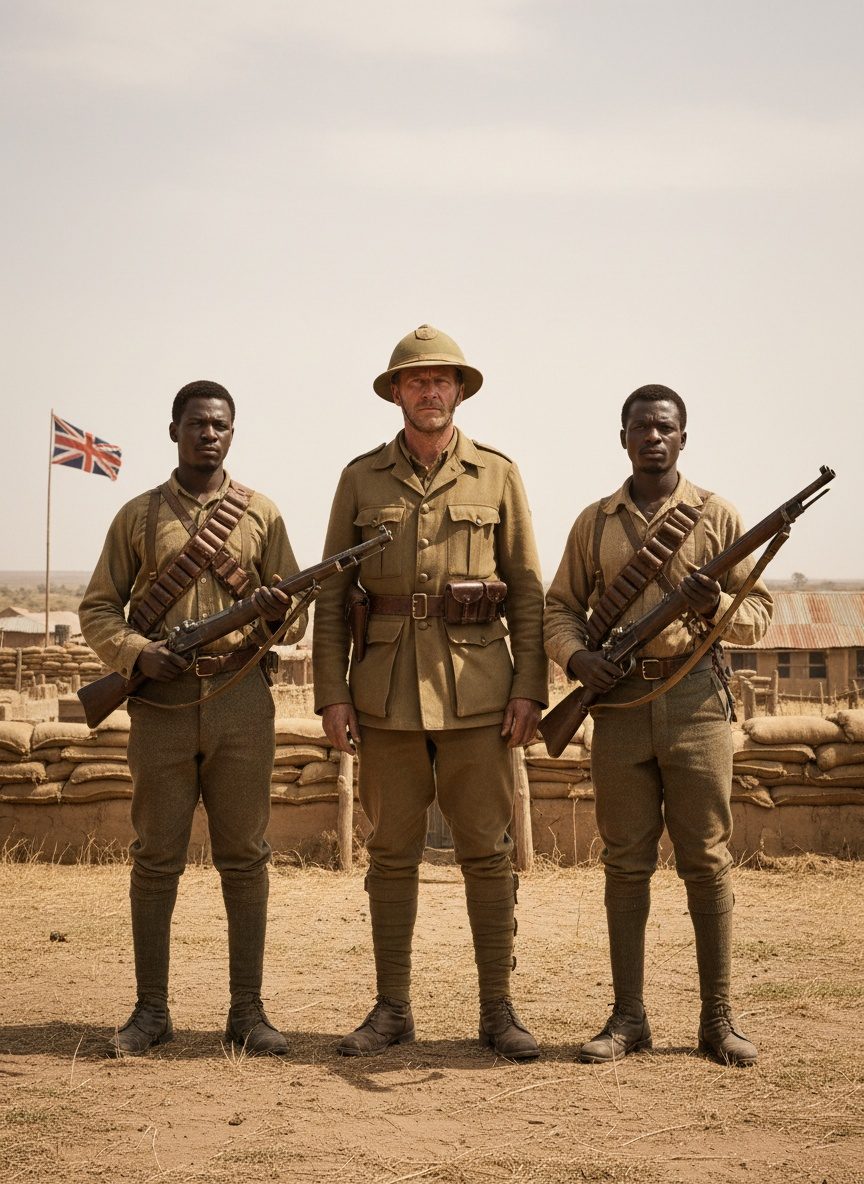
Baden-Powell, a man known for his ingenuity and rock-solid resolve, was undeterred. He turned his attention to the local resources at his disposal, which included the support of the Barolong, a Tswana people for whom Mafeking was home. Captivated by their loyal spirit and local knowledge, Baden-Powell made a decision that reflected both strategic insight and profound disregard for racial conventions of the time: he armed 300 Barolong men, forming a unit that would come to be known as the "Black Watch."
This decision did not sit well with the Boer besiegers. They were accustomed to a world rigidly divided by skin color and were scandalized by the sight of Black soldiers wielding rifles against white men. Protest letters soon started arriving in the British commander's hands, each dripping with indignation and warnings of dire consequences. The Boers demanded that the Barolong fighters be disarmed and removed from the conflict immediately.
Baden-Powell's response was curt and unyielding. His duty, as he saw it, was to hold Mafeking with any and all means available. The Black Watch would remain.
Amid the stark landscape with patches of ochre dust and wild grasses, the defense of Mafeking became a complex tapestry woven from ingenuity, resilience, and unexpected alliances. To boost the dwindling morale and resources, Baden-Powell deployed a range of psychological tactics and inventions. He orchestrated mock defenses, moving troops around the town in view of the Boers to suggest reinforcements. Guns that were incapable of firing were set up prominently but loaded with harmless improvised explosives to intimidate the enemy with faux-cannonades.
As the siege dragged on, the situation inside Mafeking grew increasingly dire. Food supplies dwindled, and rationing became severe. The townspeople, both European and African, found themselves engaged in an elaborate game of survival. Resourcefulness was the order of the day; the British officers taught children to act as lookouts, and even participated in theatrical performances to distract from the gnawing hunger.
For the Barolong men of the Black Watch, participation in the defense was both empowering and perilous. They occupied key positions and engaged directly with the enemy, their knowledge of surrounding terrain giving them a strategic edge. Yet, they did so under constant threat, not just from Boer rifles but also from the prejudices of an Empire that saw them as mere auxiliaries to a "white man's war."
Despite these challenges, the spirit in Mafeking remained unbroken. Each week, as supply wagons failed to arrive and each letter from Boer generals remained unanswered in defiance, the resolve of the defenders stiffened. Their plight captured the imagination of a nation thousands of miles away, making "Remember Mafeking" a rallying cry in Britain. Telegrams of support and spirited cheers from distant lands buoyed the beleaguered defenders, lending fresh wind to their tattered sails.
Finally, after an astounding 217 days, the besieging force drew back, marred by their own attrition and Baden-Powell's defiant stand. The relief of Mafeking on May 17, 1900, became a cause célèbre throughout the Empire, an unlikely victory that secured Baden-Powell's reputation as a military tactician and hailed the bravery of his makeshift army.
The siege had far-reaching implications, both immediate and symbolic. While Baden-Powell would go on to found the Boy Scouts, his unconventional defense at Mafeking laid bare the shifting dynamics of British colonial warfare — a world where ingenuity could bridge the chasm created by disparity in numbers. However, it also served as a subtle testament to the complexities and contradictions of Empire, where race and loyalty intertwined in unexpected ways.
In the years that followed, the story of the Black Watch and their resolute stand alongside Baden-Powell faded into the margins of history books more comfortable with conventional narratives. Yet, their courage and camaraderie transcend time, offering a poignant reflection on the shared humanity that persists even amidst the divisive machinations of conflict. These men fought not just for Mafeking, but for recognition, respect, and the right to be counted among the defenders of their land.