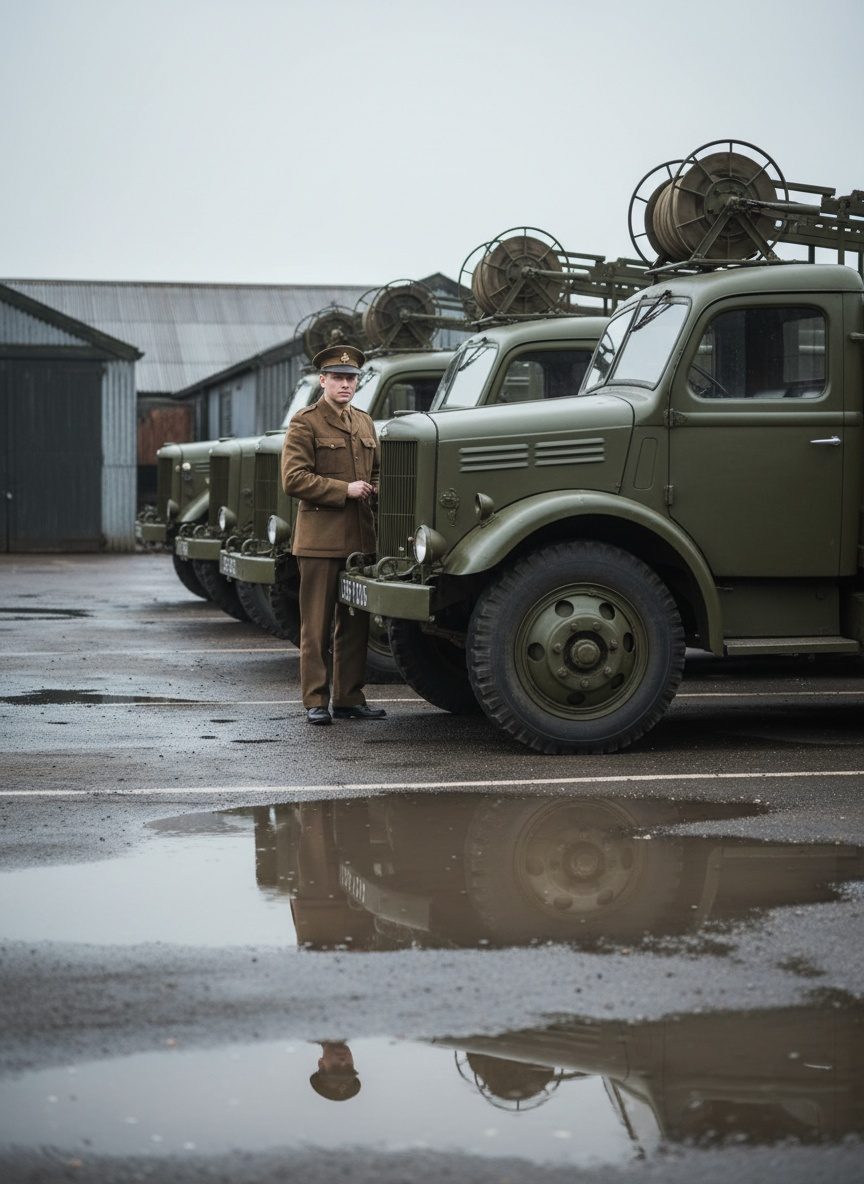
In 1953, a creation was hidden away in Britain’s military reserves that seemed unrelated to its global imperial ambitions. It was a fire engine, yet not a firefighter in peacetime had ever driven it. It lay dormant, wrapped in secrecy and green paint.
The Birth of the Green Goddesses
At a time when the world was wrestling with the reverberations of World War II and the dawn of the Cold War, the United Kingdom quietly commissioned a fleet of fire engines that differed from any conventional emergency vehicle. Known later as the "Green Goddesses," these 900 military trucks were distinctly army green rather than the vivid red traditionally associated with fire engines. Their purpose? To serve as a last line of defense against domestic chaos during potential national emergencies.
Britain, still emerging from the shadows of a destructive war and with its empire rapidly receding, was acutely aware of vulnerabilities on the home front. The government understood that the risk of internal disruptions—whether from strikes, emergencies, or even military confrontation—required unorthodox solutions. Thus, the Bedford RLHZ Self Propelled Pump, the official name for these trucks, was born. Designed to be used by soldiers rather than professional firefighters, these versatile machines held the capability to pump an impressive 950 gallons of water per minute.
Yet, despite their readiness, these military vehicles—and the state’s foresight—slipped into obscurity. Placed in mothballs, they lay in wait for over half a century, becoming an almost mythical aspect of the UK’s history of civil defense.
The Forgotten Arsenal
The Green Goddesses became a symbol of British endurance, embodying the "make do and mend" spirit that persisted long after wartime shortages had faded. These vehicles were tucked away in government depots, seldom seen by the citizens whom they were designed to protect. Many found it hard to imagine soldiers taking the wheel in peacetime, but such was the distinctive role of the Green Goddesses—always prepared but seldom deployed.
Over time, their purpose was questioned. Technological advancements in firefighting equipment and vehicles prompted doubts about the relevance of these aging machines. Yet, their sturdy construction and minimal technological complexities meant that even after decades, they remained operational. Maintaining and servicing them was less about cutting-edge technology and more about unwavering discipline and expertise passed through generations of military mechanics.
The Green Goddesses became relics of a forgotten form of preparedness, their presence minimized in discussions of national strategy, and their existence virtually unknown to the public. But their chance to shine came when Britain needed them most.
Called to Duty: Strikes and Unrest
In 1977, Britain faced a national crisis when professional firefighters went on strike, demanding better pay and working conditions. The government, in a bold and controversial move, activated the Green Goddesses for the very emergency they were intended. For many soldiers who climbed into the driver's seats, the vehicles were older than themselves, wartime museum pieces brought to life.
Driving through the streets, these incongruously green trucks became symbols of resilience and adaptability. One can imagine the scene: soldiers clad in uniforms, feeling the weight of responsibility typically carried by firefighters, operating cumbersome vehicles that lacked the modern conveniences of their red counterparts. Despite limitations, they provided an essential service, proving that the aging fleet was more than just a government experiment forgotten by time.
A quarter-century later, history repeated itself. In 2002, a significant firefighter strike once again incapacitated Britain’s emergency response system. Again, the Green Goddesses were summoned. This time, the trucks rolled out as emblematic guardians of a nation in need, steadfast against the modern backdrop of post-empire challenges. That the trucks—nearly fifty years old by this time—were still operational was both a testament to their robust design and a critique of the enduring gaps within Britain’s civil emergency arrangements.
Lessons from the Green Goddesses
The saga of the Green Goddesses is a story not only of vehicles but of a nation’s readiness to rely on unconventional solutions. While the story might be largely absent from history textbooks, it offers broader lessons about preparedness, adaptability, and the peculiar intersections of military and civilian life. Not only did these green giants stand ready to protect against fire; they became embodiments of the very fabric of British resilience.
In today’s rapidly changing world, where technology and methods of civil defense advance at a staggering pace, the Green Goddesses remind us that some solutions endure through simplicity and robust design. They tell of a time when necessity birthed creativity, and ingenuity filled the gaps left by a peacetime society grappling with peacetime problems through wartime strategies.
The legacy of these trucks, although not always leading, remains a quiet force within British history. They speak to the human capacity to persevere in times of adversity, to make do and mend when faced with the unexpected, a narrative as relevant today as it was in the days when those trucks first rolled off the production line. The enduring lesson of the Green Goddesses is that sometimes, the equipment already at one's disposal can be as valuable as the gaudy, headline-grabbing innovations waiting in the wings.