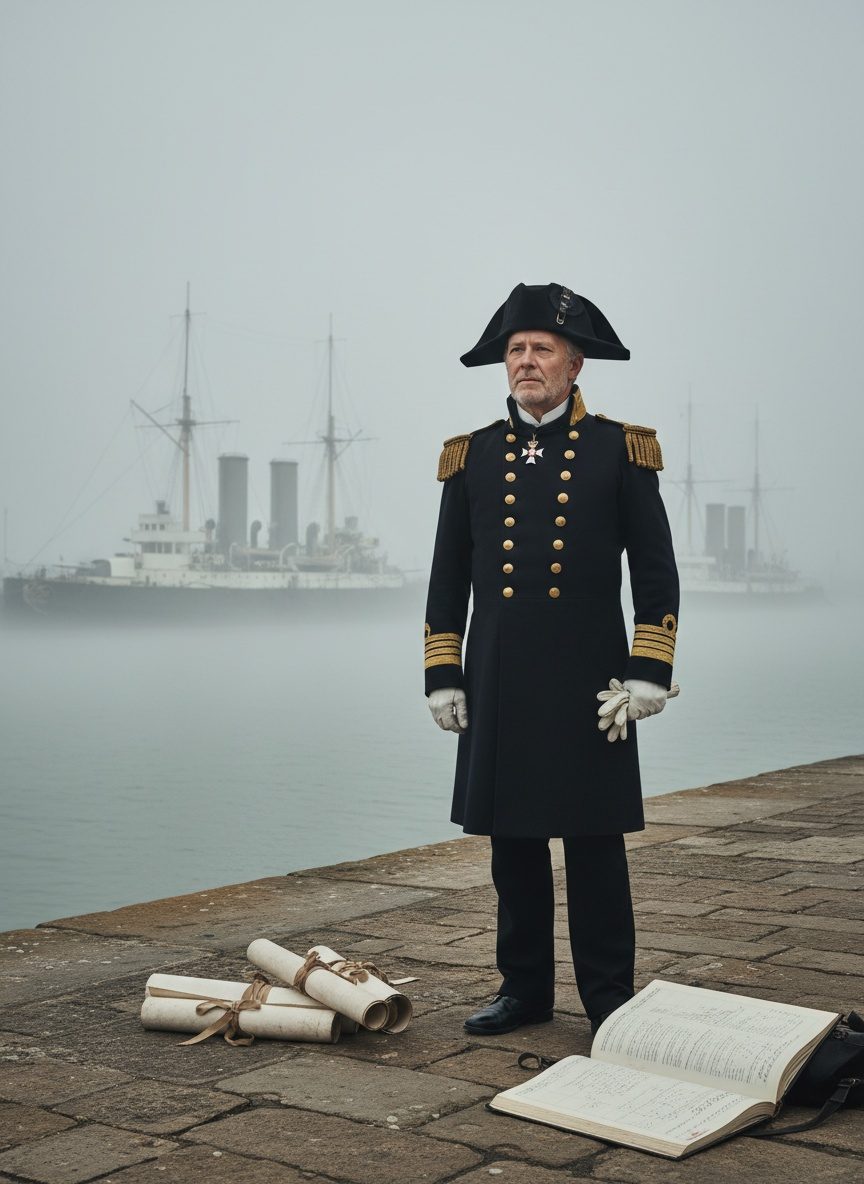
August 31, 1957. A humid stillness hovered over Kuala Lumpur as the clock ticked towards midnight.
The Final Dusk of Empire
As Malaysia’s Independence Day approached, the atmosphere in Kuala Lumpur was charged with anticipation and reverence. For the British, it marked the end of over a century of colonial rule—an era that had seen Malaya, rich in natural resources and strategically positioned, serve as a crucial jewel in the crown of the British Empire. Yet, unlike many decolonization episodes marred by violence and turmoil, Malaya stood at the cusp of peaceful transition.
The British administration in Malaya, aware of the winds of change sweeping through the global landscape post-World War II, began considering demands for self-governance seriously. Against a backdrop of the Malayan Emergency—a guerrilla war fought between Commonwealth armed forces and the Malayan National Liberation Army, the military arm of the Malayan Communist Party—the British worked towards ensuring political stability. The London Conference in January 1956 set the stage for the negotiations that would determine Malaya’s future, laying the groundwork for legislative reforms and eventual independence.
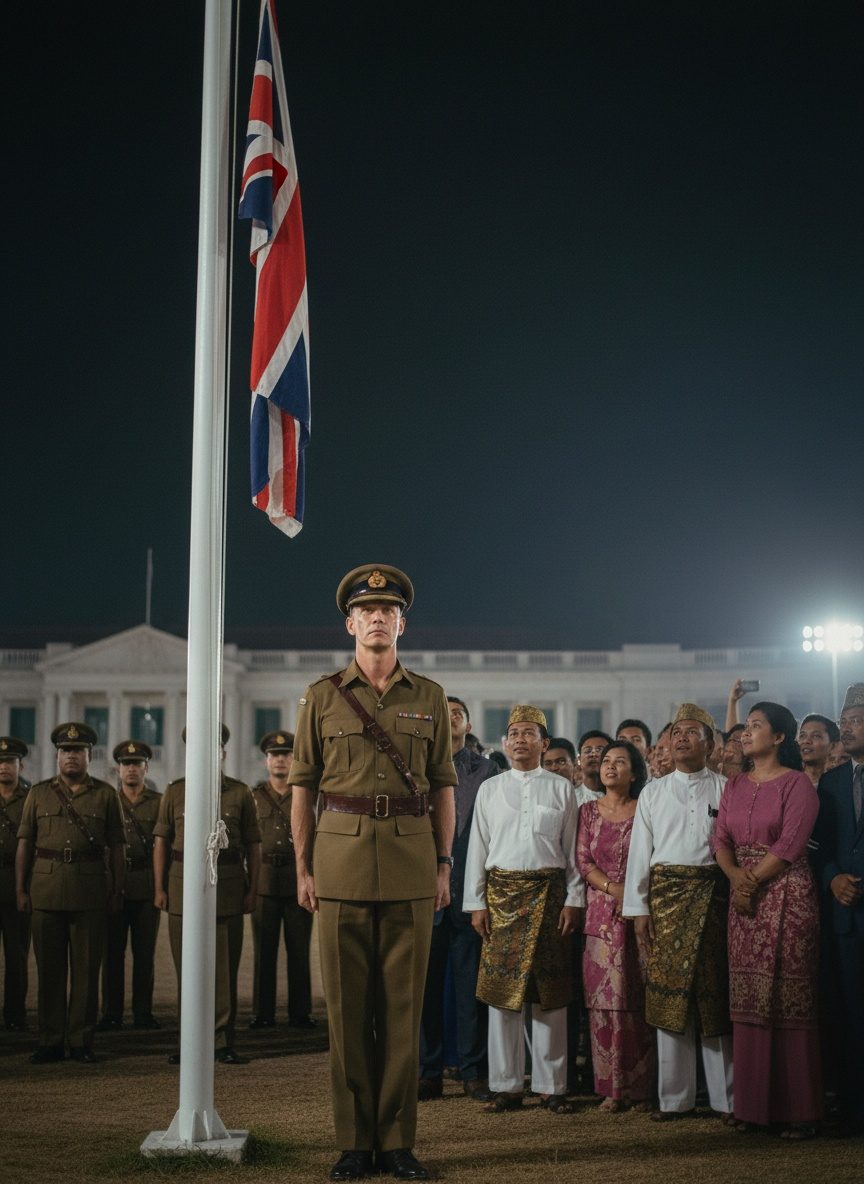
As dusk settled over Kuala Lumpur on August 30, 1957, anticipation swelled in the city's heart, where thousands gathered to witness a historic moment. The Union Jack, fluttering over the grand grounds of the Selangor Club Padang—renamed Dataran Merdeka or Independence Square—was poised to be lowered for the last time. The air was thick with moisture and history, as the crowd, Malays, Chinese, and Indians alike, waited in hushed expectation for the stroke of midnight.
A Ceremony Bathed in Symbolism
Midnight came as the national anthem, *Negaraku*, filled the air, a hymn to freedom and unity. With measured precision, a British officer stepped forward. He stood rigid yet dignified, his uniform immaculate under the soft glow of the tropical night. This was not a moment of conquest or defeat, but a deliberate act of transition.
As the last bars of *God Save the Queen* faded, the Union Jack slowly descended, billowing softly like a whispered goodbye. It was then reverently folded—a gesture full of respect for a nation that was finding its own way. In its place, a new flag soared—a bright and hopeful symbol of a newly independent Malaysia.
The raising of the Jalur Gemilang, the national flag, was a moment that meant different things to different people. To the Malayans, it signified the dawn of self-governance and the promise of a united future. For the British, it was a remarkable demonstration of an empire's recognition that the era of colonial dominance was over.
Cheering erupted from the masses, an expression of joy and relief, a collective exhalation of decades of anticipated hope. Voices laughed, cried, sang—a blend of cultures and languages that would come to define the country's uniqueness. As Tunku Abdul Rahman, soon to be Malaysia's first Prime Minister, declared “Merdeka!” seven times, each exclamation felt like a drumbeat heralding a new era.
The Ripple of New Beginnings
The peaceful transfer of power on that midnight in 1957 is notable not just for its ceremony but for the context in which it occurred. While British soldiers had not completely left—they stayed on for a few years under a mutual defense agreement—the transition was startlingly smooth compared to other decolonization efforts around the world. The careful preparation and negotiations demonstrated the leadership's commitment to avoiding the strife that had beset other countries in similar positions.
Furthermore, the choice of midnight for the ceremony imbued the proceedings with a poetic symmetry, symbolizing the overlap between the end and the beginning, the wane of empire and the dawn of a new nation. It reflected the shrewd resilience of the Malayan people, who had weathered occupations and insurgencies but remained forward-looking, eager to build their own identity on a fusion of their diverse cultural heritage.
While the legacy of British rule left indelible marks—visible in the architecture, the legal system, and the lingua franca—Malaysia was determined to forge an independent path. This was an emerging blueprint for post-colonial states striving to integrate colonial influences with indigenous traditions to build something uniquely their own.
On that historic night in 1957, the world witnessed the British Empire's symbolic act of closure in a land far from its own—and alongside it, the emergence of Malaysia as a sovereign state. This story of measured parting, without the echoes of gunfire or the bitterness of upheaval, is a testament to the complexity of the decolonization process. It reminds us how, amid the vast sweep of historical forces, a gesture as simple as lowering one flag and raising another can encapsulate the aspirations and reconciliations of entire peoples.