Ships on the Horizon: The Quiet Departure
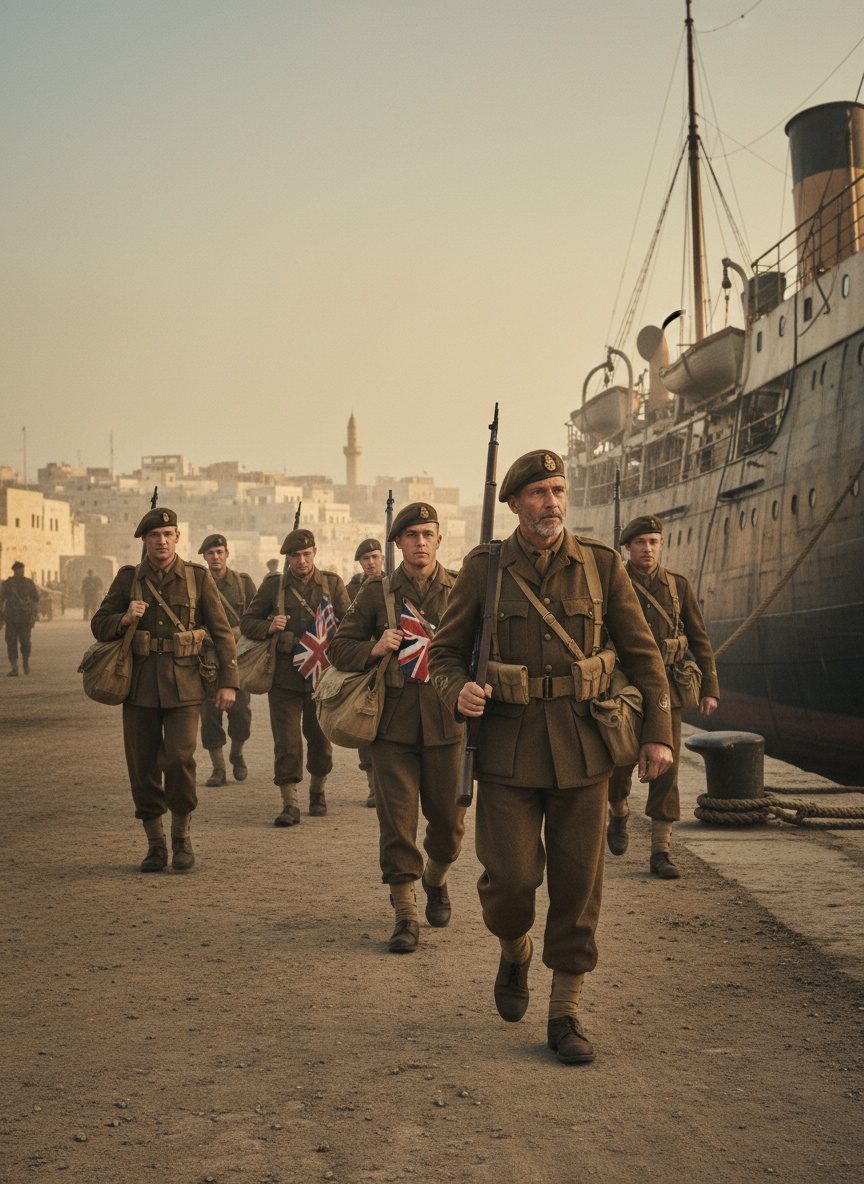
At dawn on May 15, 1948, the rising sun painted the Mediterranean Sea in shades of gold as the last echoes of marching boots faded into oblivion. A seemingly ordinary day, yet it marked the end of an era—the closing chapter of Britain's complex and tumultuous mandate over Palestine. As British soldiers boarded the final ships at Haifa's bustling port, they carried with them a deep sense of unease. There were no triumphant bugles or rousing speeches. Only the silent acknowledgment of a duty accomplished and a world of uncertainty left behind.
The Mandate: A Burden Shared, A Task Unending
In 1917, as World War I ravaged continents, Britain's Foreign Secretary, Arthur Balfour, penned a declaration that would reverberate through history. The Balfour Declaration promised to establish a "national home for the Jewish people" in Palestine, a land already fraught with cultural and religious significance. Officially mandated by the League of Nations in 1922, Britain found itself the balancing act between clashing Zionist aspirations and Arab demands for independence.
The mandate was not intended to be eternal. Yet for thirty long years, British forces stood as imperfect arbiters in a region riddled with ancient grievances and modern demands. They built, governed, and withheld, always with the trepidation that the embers of old conflicts could erupt into a blaze at any moment. By 1947, with its resources and resolve tested by World War II, Britain had had enough. It announced its withdrawal, acknowledging the task had surpassed its grasp.
Strife and Shadows: The Unseen Battles
The months leading up to the British withdrawal were anything but orderly. Communities already shared a deep mistrust, and violence became a regular rhythm of daily life. Jewish paramilitary groups like the Haganah, and more radical offshoots, the Irgun and Lehi, escalated their attacks not only on Arab populations but also targeting the British forces deemed occupiers and obstacles to nationhood.
On April 9, 1948, an event branded into collective memory occurred: the massacre at Deir Yassin, a Palestinian village attacked by Irgun and Lehi forces. It became emblematic of horrors on the ground—a symbol manipulated by both sides to stoke fear and fuel further violence. Britain's soldiers often found themselves outnumbered and outgunned, forced into the dual roles of peacekeepers and targets.
By mid-May, the British High Commissioner, General Sir Alan Cunningham, recognized the escalating chaos and ordered the final withdrawal. In this shadowy zone of mistrust and offen invisible skirmishes, the soldiers were the last to leave this patchwork of peace and war.
The Retreat: A Step Towards the Unknown
Retreating soldiers faced not the cheers and reassurances of a grateful populace but confusion and a deepening division among leaving forces. In almost film-like poignancy, sailors aboard the Royal Navy cruiser HMS Euryalus witnessed the unofficial birth of Israel on May 14, as it sailed past Haifa amid gunfire echoing across the hills.
On these final ships, sepia-toned photographs snapped off the coast of Haifa reveal soldiers gazing out at a receding shore—silent reflections set against a churning backdrop. Approximately 100,000 Jews had migrated to Palestine, with half a million Arabs living side by side, divided by languages and legacies. For departing soldiers, the terrain of foreign duty was now a mere silhouette.
The Aftermath: Sowing the Seeds of Nationhood
Upon the soldiers' departure, Middle East's fate hung precariously. As midnight approached on May 14, David Ben-Gurion, Israel’s future Prime Minister, declared the establishment of the State of Israel. By sunrise, five Arab nations had invaded, bitter about the exclusion of Palestinian Arab statehood in the partition plan proposed by the United Nations in November 1947.
Britain’s retreat left a power vacuum as anticipated, plunging the fragile land into war. As British forces sailed away, the conflict of 1948 ensued, marking Israel's War of Independence and Nakba—or catastrophe—as remembered by Palestinians. With every departing ship, the dying embers of empire once stoking global influence had split into the metaphorical present deconstructed map.
Epilogue: Echoes of Empire and Lessons Unlearned
The British retreat from Palestine in May 1948 did not bring closure, only further intertwined narratives still palpable in today’s Middle East tensions. It was a saga fraught with ironies, mutual loss, and difficult realizations—a hurried departure that abandoned hopes for peace.
As we look to the present, this historical chapter becomes an illuminating beacon, revealing the pitfalls of unfulfilled governance, promises, and the dangers of intervention without understanding. The end of the British mandate holds a powerful lesson: that imperial endeavors, no matter how well-intentioned or reluctantly held, often sow seeds of complex legacies that do not fade even as official flags are lowered.