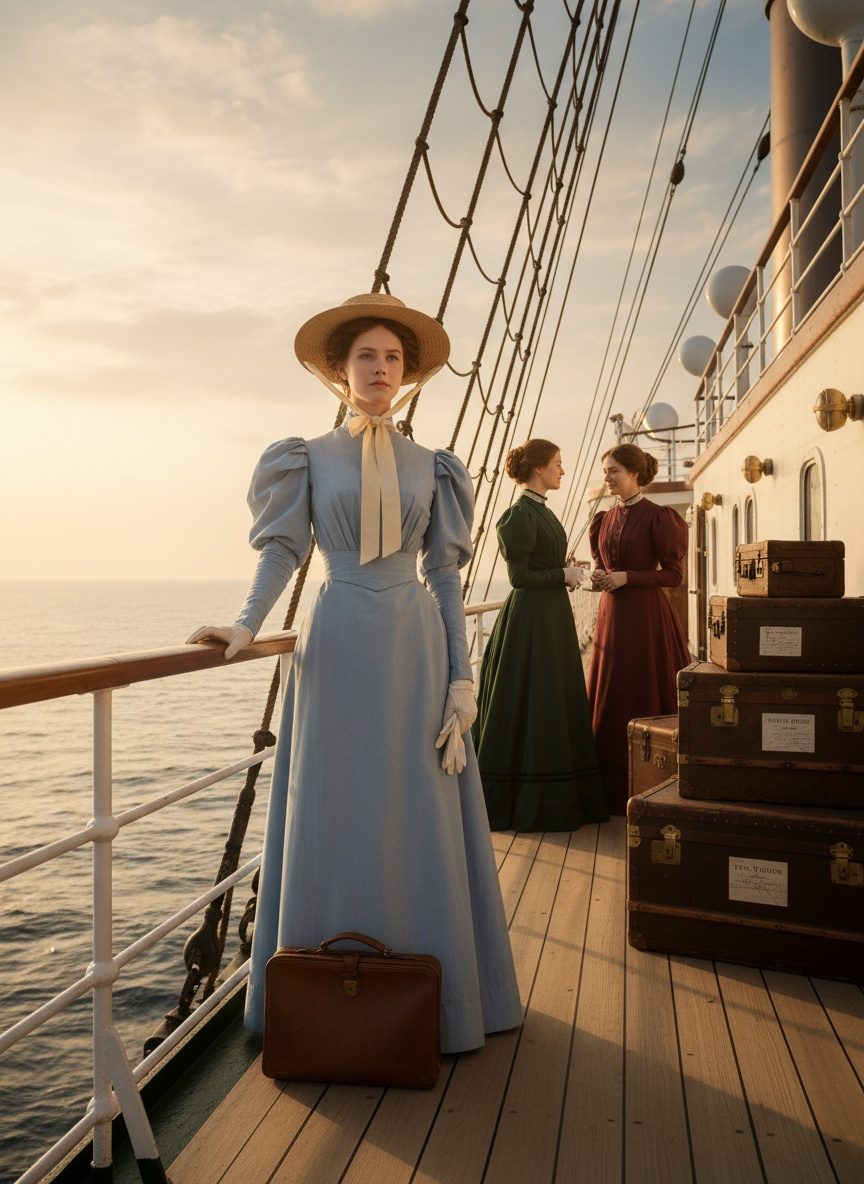
On the misty autumn mornings of the late Victorian era, a remarkable exodus began from the port of Southampton. With steamships clad in bunting and anticipation, an assemblage of adventurous young women known as the "Fishing Fleet" embarked on a journey that spanned continents and cultures. Their mission? To find husbands among the British bachelors stationed throughout the vast networks of the colonial empire in India. This unique social phenomenon wasn't just a metaphorical casting of nets for matrimonial prospects; it was a vibrant chapter in the story of British imperial life. Yet, as these bold women sailed across seas, the legacy they left behind is rich with untold narratives.
The Plight of the Bachelors
The 19th century was an era of expansion and opportunity within the British Empire, nowhere more so than in India. Yet, amidst the grandeur of colonial governance and commerce, there lay a demographic conundrum: a severe imbalance between the genders. Young men were dispatched in droves to serve as soldiers, civil servants, and traders. However, the journey for young English women was rare and often discouraged due to the logistics and perils involved.
By the 1860s, this imbalance had become stark. For every English marriageable woman in India, there were nearly three eligible men. This predicament presented a problematic spinsterhood and social stagnation that concerned both the families of these bachelors and the colonial administrators eager to promote family life as a stabilizing force.
The Launch of the Fishing Fleet
As the need for marriageable women reached a crescendo, families across Britain began to view India as a land of opportunity — not just in terms of wealth, but of marital prospects. This tradition gained the name "Fishing Fleet" in jest, suggesting both the catch of the voyage and the luck required. Each autumn, with the British summer season behind them, these daring women set sail, hoping to transform their social standing and secure their futures.
The passage was long and rigorous, lasting up to six weeks at sea. Yet, the promise on the horizon energized these journeys. Their sailing companions were other women in the same situation, creating a sense of camaraderie and competition that simmered beneath the surface. Among the most famous were the fashionable and tenacious Miss Flora Annie Steel, whose own experiences would later inform her acclaimed literature on Anglo-Indian life.
Life in a New World
Upon reaching the bustling ports of Bombay, Calcutta, or Madras, the Fishing Fleet girls were thrust into a whirlwind of social engagements, all designed to facilitate their integration into the colonial elite. Balls, teas, and garden parties stretched late into the tropical nights, orchestrated introductions between debutantes and dashing young officers or civil servants.
The reality of colonial life was a cultural shock. The lush, exotic landscape was far removed from the English dales they called home. The heat was suffocating, and the social customs required swift adaptation. Here, women found themselves in the "marriage market" spectacle that was both exhilarating and bewilderingly competitive.
Some Fishing Fleet members, like Miss Alice Moira Nora Portal, later known as Lady Curzon, thrived spectacularly. Marrying George Curzon, a future Viceroy of India, she exemplified success in the exotic and challenging life expected of Victorian women abroad.
Between Hope and Home: The Returned Empties
However, not all stories culminated in matrimonial bliss. For some women, the sojourn ended as "Returned Empties." These were the unfortunates who sailed back to England, unmarried and disillusioned. The moniker, though disheartening, could never encapsulate the breadth of individual hopes and experiences carried homeward across the sea.
The Returned Empties faced readjustment into society, often with a complex blend of experiences that defied the singular failure their title suggested. Despite the challenges, many applied their new-found independence and perspectives to carve out distinct paths, becoming educators, reformers, and some of the earliest advocates for social change, refusing to be defined merely by matrimony.
A Legacy of Expectation and Independence
The story of the Fishing Fleet is more than just an anecdote in the annals of imperial history. It reveals much about the intersection of gender, empire, and societal expectations in the Victorian era. These voyages were more than matrimonial quests; they were assertions of agency within the confines of a rigid social order, reflecting a unique if cautious subversion of traditional roles.
Today, this piece of history offers intriguing insights into how courage and expectation can intersect within global cultures. It impels us to consider how far society has come in terms of gender equity and the conscious selection of life's paths. Yet, it also reminds us that the courage to seize opportunities and adapt to other cultures remains as imperative now as it was then.
The legacy of the Fishing Fleet women, both those who stayed and those who returned, serves as a testament to the resilience of spirit and ambition. Their stories, often overshadowed by the granders of empire and conquest, are integral threads in the larger tapestry of history—tales of boldness, adaptation, and the enduring human quest for belonging and fulfillment.