In the early 19th century, a raw, thrilling force was unleashed in the north of England. This force was no elemental storm nor wild tide, but rather a man-made marvel: steam power. It all began in an unassuming patch of Lancashire in 1829, where the earth trembled not just from the roar of an engine, but from the tremors of history itself. Here, beneath a sky heavy with expectation and soot, George Stephenson's Rocket hurtled at an astonishing 29 miles per hour, forever changing the way the world would move.
The Dawn of Speed
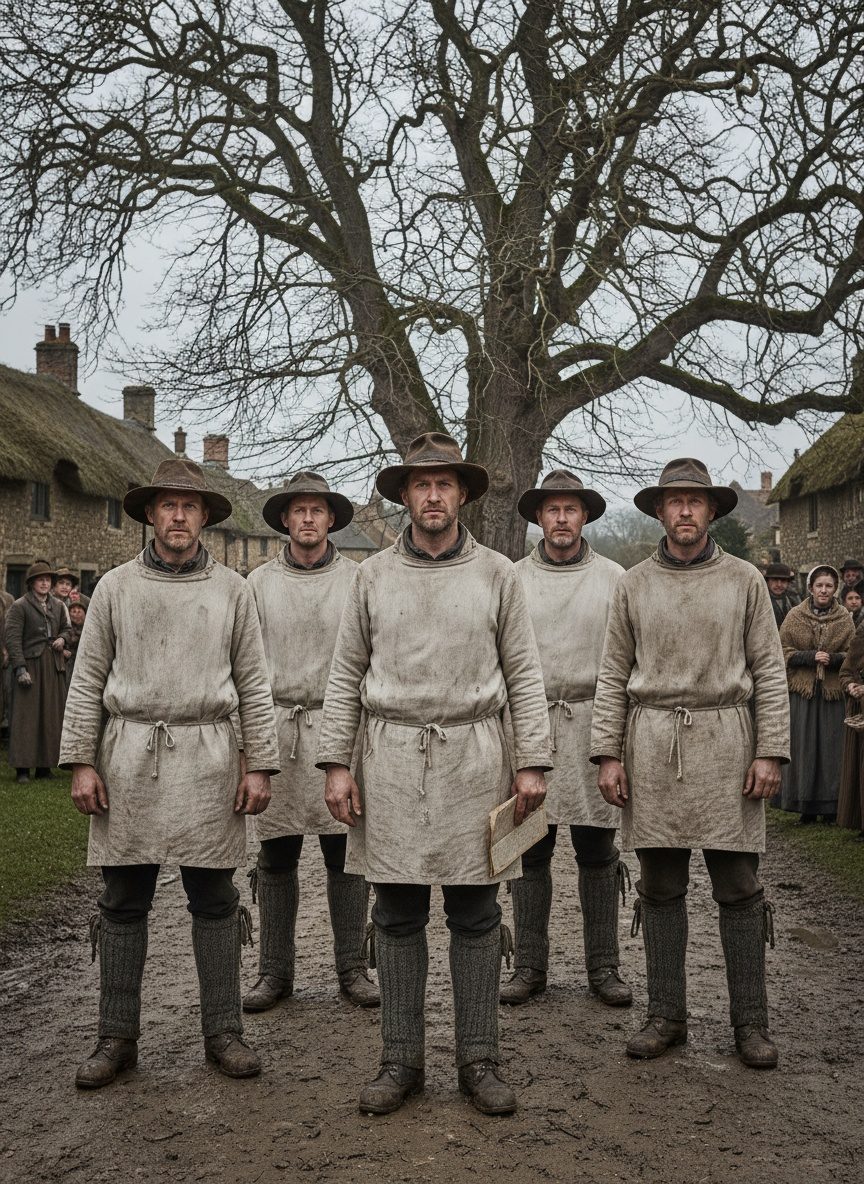
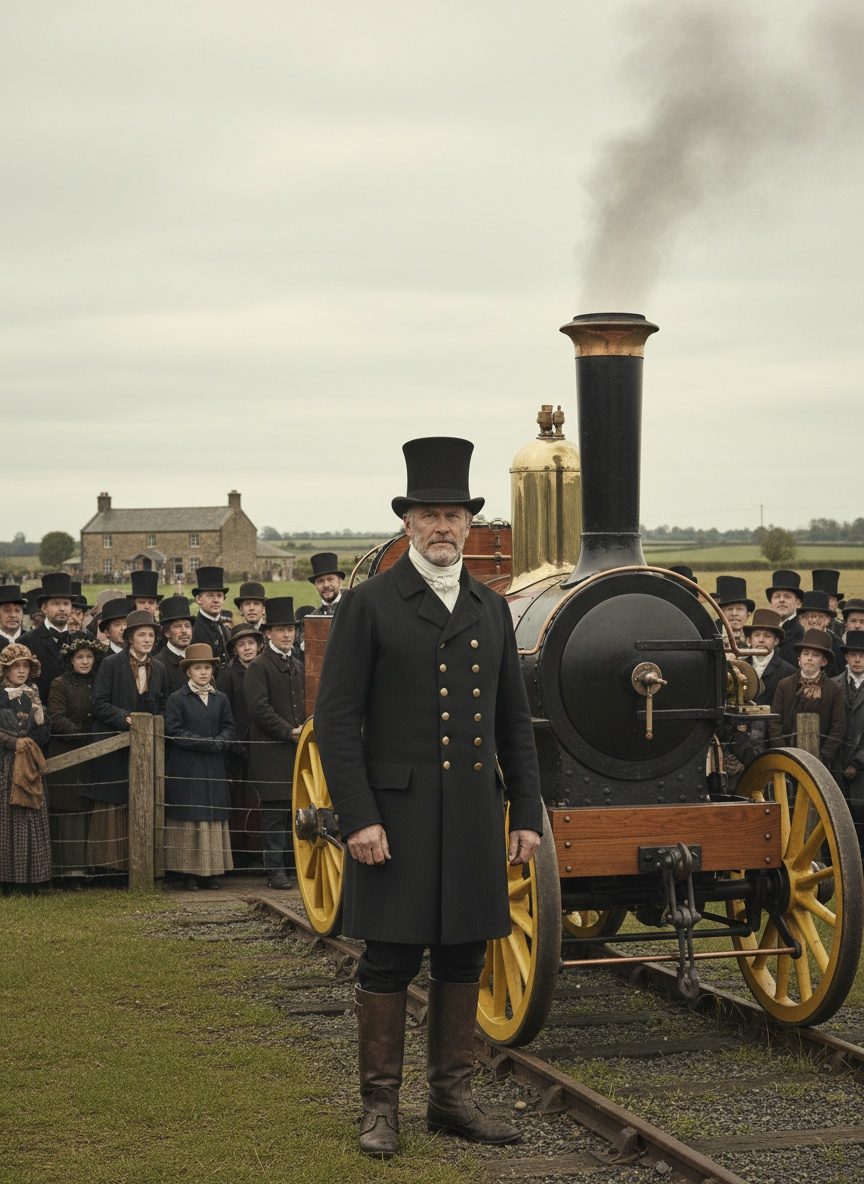
Imagine the scene: It’s October 6th, 1829, in Rainhill near Liverpool, where the trials are set to determine the best mode of transporting goods and people at never-before-seen speeds. Crowds are lined along the muddy tracks, dressed in their finest, faces filled with suspense and wonder as they witness the dawn of speed. George Stephenson’s Rocket, a steam locomotive wrought from passion and ingenuity, stands at the ready. Crafted by a man whose father worked the mines and who learned the principles of mechanics by lantern light, the Rocket was a testament to the power of perseverance and vision.
With bated breath, the signal is given and the locomotive comes to life. Clouds of steam hiss from its abdomen, gears turn with mechanical precision, and with a whistle that pierces the damp air, the Rocket bolts down the track. At 29 miles per hour, it moves faster than any human had gone before. The spectators are spellbound, some openly weeping, as the unimaginable becomes reality. These moments mark the beginning of a transportation revolution that would alter the destiny of nations.
From Field to Forefront: The Rise of the Railways
The success of the Rocket at the Rainhill Trials was more than just a victory for Stephenson; it signaled the start of a new era for the industrial world. The sight of the gleaming locomotive inspired myriad countries to adopt the revolutionary steam railway system. Within a decade, railways had spread from the dense coalfields of northern England to the wide-open plains of America, the vibrant continents of Australia and Africa, and the bustling lands of Asia, each adapting the principles set by Stephenson to their own landscapes and needs.
It's hard to overstate the impact of this expansion. In 1830, just one year after Stephenson's triumph, the Liverpool and Manchester Railway opened — the world's first inter-city railway running on steam power. Shortly after, the German city of Nuremberg became a stage for another innovation with the Adler, a British-made locomotive, ushering in Germany's stormy love affair with rail travel. By 1853, railways were snaking through Indian terrain, reducing the time it took to traverse the subcontinent and connecting disparate cultures more than ever before.
Surprise Beneath the Rails: Unlikely Inventors
While Stephenson is celebrated, it’s essential to recognize the eclectic ensemble of inventors fueling railway momentum. One such figure was Richard Trevithick, the Cornish engineer and forebear to many concepts employed by Stephenson. In 1804, Trevithick built the first successful locomotive on rails, though it never quite captured the public's imagination like the Rocket. Ironically, it was his lesser-successful models and ambitious visions that paved the way and inspired further innovation.
Then there was a young Isambard Kingdom Brunel, who, although primarily aligned with steamboats and suspension bridges, couldn't resist the lure of trains. Brunel famously redefined track gauge for his Great Western Railway, advocating a broader design for stability and speed — a fact that's lesser known but essential in the railway's evolution story.
Bridges Over Oceans: A Global Phenomenon
The expansion of railways wasn't merely a feat of engineering; it was a socio-economic catalyst that transformed societies worldwide. In India, the railways became a colonial cornerstone, unifying princely states while facilitating trade. Yet, it was also an iron chain, part and parcel of British imperial domination. In Canada, the completion of the transcontinental railway in 1885 was vital for the nation’s unity, efficiently connecting the cold maritime edges with the warm inland prairies and burgeoning cities.
Australia, with its sprawling Outback and vast expanses, embraced the new technology as a means to conquer distance, linking far-flung estates with bustling coasts. The railways connected people not just physically, but economically and culturally, knitting disparate parts of nations together into more unified wholes.
Echoes of the Steam Era
Today, one might glance dismissively at the silent railways snaking through the world, unseen architects of modern living. It's easy to miss the influence of Stephenson’s humble roots in these hulking symbols of human progress. But each time a train departs on time, whistles through the countryside, or arrives at an urban terminus, it’s a testament to that muddy field in Lancashire where it all began.
The railway legacy is undeniable, a chronicled testament that resonates from past to present. What started as one man’s dream to harness steam has transported not just freight and people, but has propelled stories, economies, and entire societies into the future. And as new generations dream of bullet trains and magnetic levitating leviathans, the timeless principles established by Stephenson and his peers at Rainhill serve as the indelible foundation — an ever-present reminder of a world once put into motion by the determined chug of the Rocket.