He wasn't what you'd expect—a British soldier in the tropical depths of Burma had never even seen a jungle before the war. Yet, he found himself fascinated by the intricacies of the Japanese weapons left behind.
Beyond the Battlefield: The Hunting Ground for Intelligence
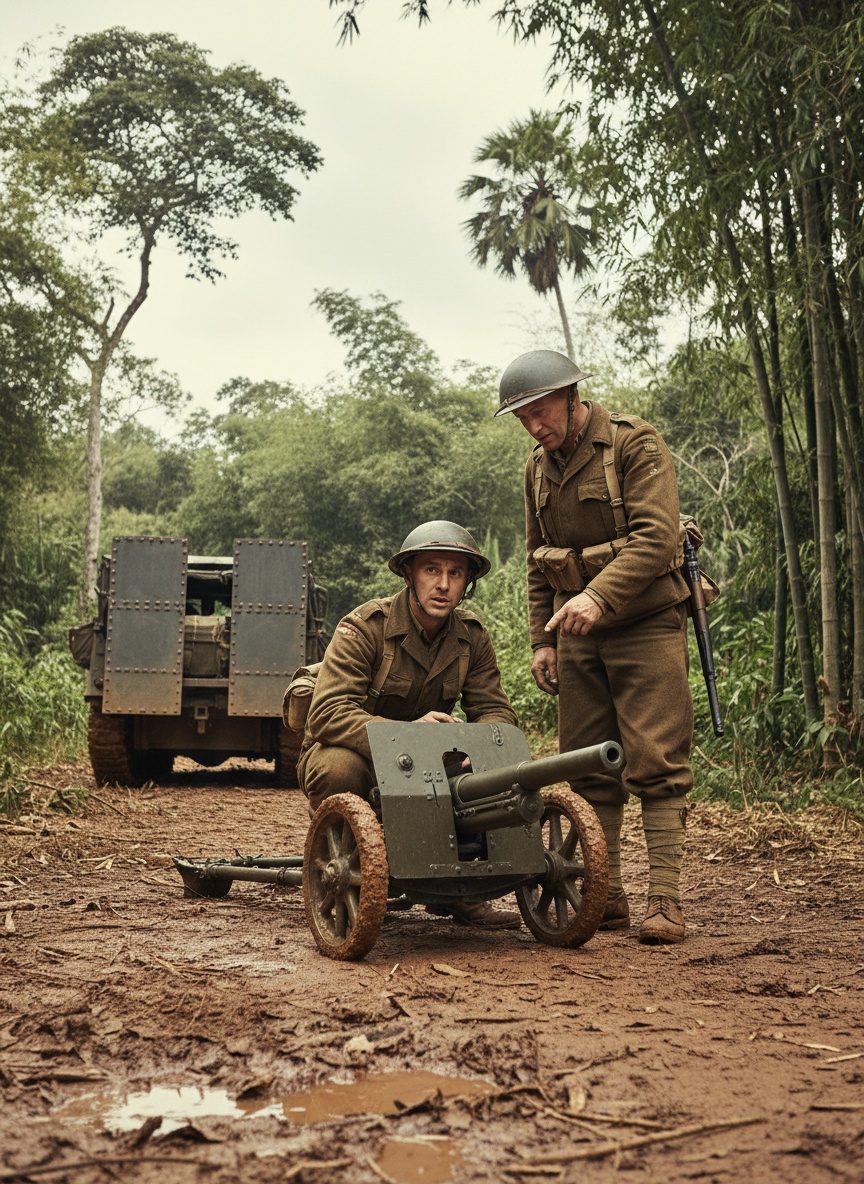
January 1945 in Burma marked a pivotal chapter in World War II as British and Imperial forces engaged in a relentless push against Japanese troops entrenched in some of the most unforgiving terrain on Earth. Each confrontation told a story of survival, strategy, and endurance. When the dust settled and the enemy retreated, what lingered on the battlefield were not just memories of combat but also a treasure trove of enemy weaponry. Among these captured prizes was the Japanese 37mm anti-tank gun, a relic that revealed more than the immediate dangers faced by Allied troops.
The war in the Pacific had its unique challenges. The enemy employed strategies and tools that were distinct from their European counterparts. Engagements in the sprawling jungles meant that getting to grips with the enemy’s technological adaptations was crucial for victory. The captured 37mm anti-tank gun served as an entry point into the Japanese tactical mindset. British troops, gathered around it, studied its make and configuration, much like archaeologists examining ancient relics. They sought to learn how these machines had been used against them—a vital step in countering the enemy's tactics.
Understanding the Enemy Through Iron and Steel
Japanese engineering prowess was evident in the streamlined design of their weaponry, and the 37mm anti-tank gun was no exception. It was lightweight and portable, a perfect fit for the dense jungles where mobility was king. Witnessed here in the depths of Burma, its presence painted a picture of Japan's strategic ingenuity. The gun was designed not just for defense but maneuverability—making it a formidable tool for the hit-and-run tactics that Japanese soldiers had excelled in throughout the early stages of the conflict.
The Universal Carriers—British-made small tracked vehicles—stood nearby, low on deep wading screens, silently testifying to a different approach to war: one of heavy machinery and logistical might. In examining the enemy’s lighter but skillfully crafted artillery, British troops gained insights into an adversary that thrived on flexibility and resourcefulness. Each notch and groove in the gun's metal bore the tale of battles fought, strategies executed, and the relentless will of soldiers who had once wielded it—a testament to the dynamic clash of ideologies and methodologies on the Pacific front.
Treasures of Warfare: Captured Secrets
As the British soldiers meticulously examined the 37mm anti-tank gun, they weren't just collecting souvenirs of war. They were delving into a process that modern military tacticians now call intelligence gathering. This was a tangible opportunity to get into the minds of their opponents. Every weapon left behind was scrutinized not just for its design but for insights into how Japanese soldiers adapted to their war environment.
Understanding these weapons involved more than just mechanical disassembly. The materials, the assembly techniques, and even the wear patterns on the gun offered clues about the conditions under which these weapons were used. Were they frequently moved? Had they been fired extensively in battle? Every detail mattered, as the British aimed to counteract these guns more effectively in future encounters. Deploying a captured weapon or deriving knowledge from it could mean the difference between victory and defeat in the dense and deadly Burmese jungles.
The Ancient Ways in Modern War
In the grand theatre of World War II, the Burma campaign reminded us of a fundamental truth of warfare: knowledge is power. The brutal terrain offered no easy victories, and the stakes in this theater were as high as the unforgiving peaks that loomed over endless jungles. While battles might be won and lost on the ground, it was the subtler wars of intelligence and adaptation that often tipped the scales.
This relentless focus on the opposition's tools and tactics, exemplified by the study of the 37mm anti-tank gun, offers a broader lesson about the nature of conflict. The silent examinations that British soldiers conducted amidst the remains of battle resonate as timeless acts of human curiosity and resilience. They remind us of the perpetual dance between offense and defense, a narrative older than the metals used to forge the weapons themselves.
In a world that often rushes to chronicle the loudest and most terrifying aspects of war, these quieter acts of intellectual strategy—the thinking soldier's battlefield—are just as crucial. As British troops thumbed through the technical mysteries of Japan’s artillery, they weren’t just seeking to understand an enemy. They were, in many ways, deciphering the language of war itself, a language spoken not just with bullets and bombs, but with insights drawn from the faint imprints left by battle-hardened men and their machines.