May 2, 1945. Smoke lingered in the crisp morning air, mingling with the acrid scent of gunpowder and the distant echo of artillery fire.
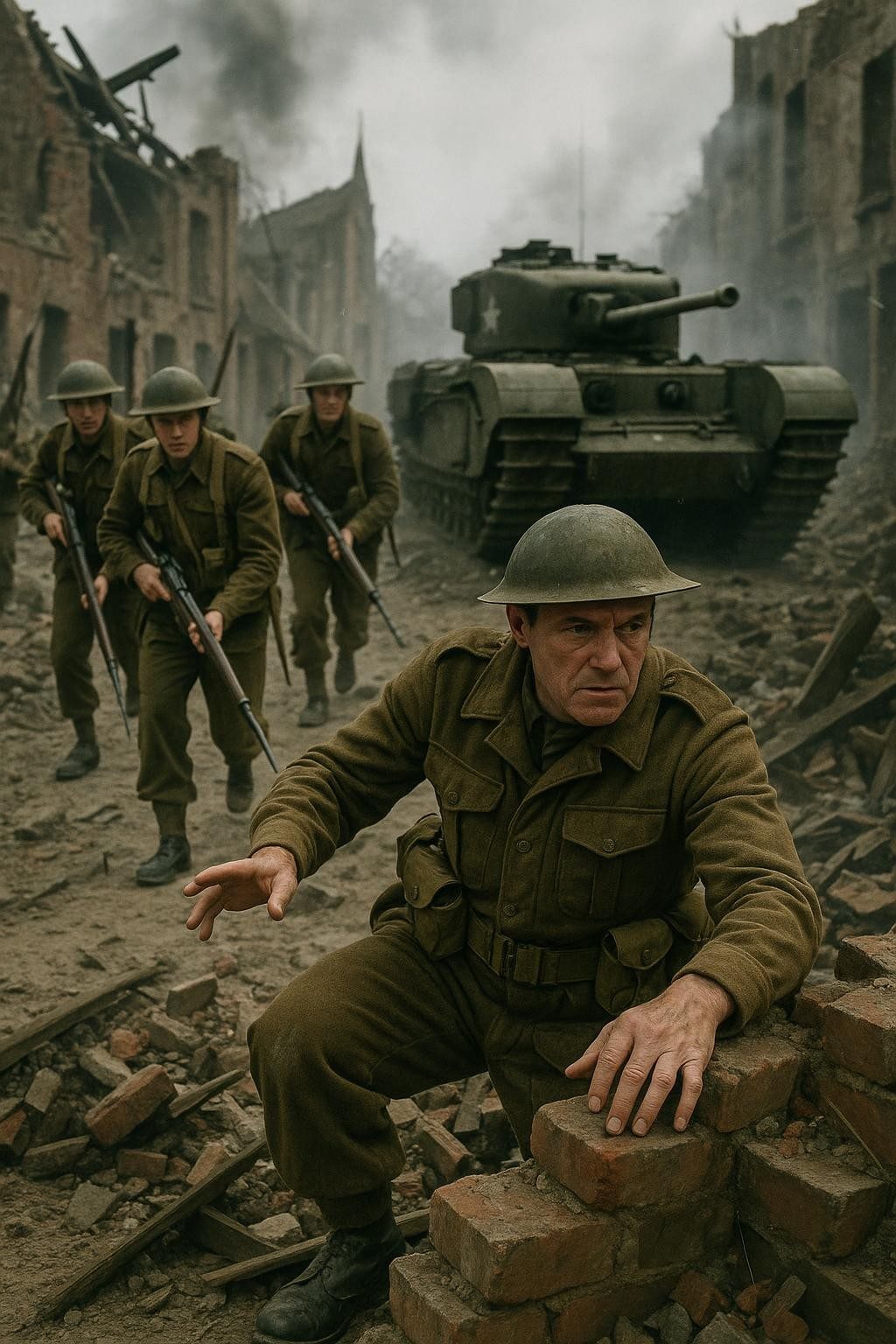
As the sun rose over the smoldering remnants of northern Germany, the war-torn landscape appeared surreal; the ravaged towns stood as ghostly reminders of the conflict that had raged for too long. Though the European theater of World War II was drawing to an inevitable close, the task of confronting stubborn pockets of German resistance fell to the British forces creeping ever forward, led by the formidable Churchill tanks. These steel behemoths, named for the indomitable British Prime Minister, ground their way slowly and deliberately through the battlefield, their powerful engines groaning with the weight of armor and ordnance. Despite the heavy damage dealt across the German front, pockets of fervent resistance remained, embodying a grim reality that peace had not yet been secured everywhere.
The thick armor of the Churchill tanks offered a measure of safety to their crews, deflecting enemy small arms fire and surviving direct hits that would cripple lesser machines. Inside, the clamor of metal against metal provided a soundtrack of mechanical determination, a stark contrast to the quiet dread manifesting in men who had borne the heavy burden of conflict for years. For them, the war's potential end was overshadowed by the immediate tasks at hand.
In these final throes of the German campaign, opposition came not in broad strokes of military engagement but piece by grim piece, as every building, every street corner hid potential perils. The patterns of warfare had shifted; it was no longer about grand strategies and sweeping movements. Instead, it was about the terrifying intimacy of street-by-street combat, where every doorway, every window could conceal a sniper's scope or the deadly trap of a grenade. Soldiers became heirs to the urban theater of war's brutality, where even the ordinary became ominous.
Amidst the rubble, the British infantry moved with a cautious, deliberate pace, accompanied by the unwavering support of the Churchill tanks, which navigated the shattered streets with imposing authority. Visible through the tangles of wire and dust, men huddled in trenches and behind makeshift barriers, every breath a careful gamble against unseen threats. Here, survival was not only an act of courage but one of constant vigilance, each soldier acutely aware that a moment’s lapse could mean the difference between life and death.
For the German defenders, the situation was equally dire. Cut off from nearly all reinforcements and supplies, they clung to a desperate hope fueled by nationalism and the stark desperation of a cornered force. The swastika-clad shreds of once-proud banners now hung limply against a backdrop of scorched buildings, as the cruel reality of defeat loomed ever larger. Resistance in these places was less a matter of military necessity than one of obstinate resolve, a tragic testament to human endurance in the face of impending collapse.
Each sortie into these embattled streets etched stories of intense personal valor and bitter hardship into the memories of those involved. The relentless advance required acts of heroism that would often pass unlauded outside the tight-knit bonds of brotherhood in arms. Even amid the screams of mortars and the thunder of tank cannons, moments of selflessness flickered. Medics risked their lives to reach the wounded, and soldiers disregarded personal safety to haul comrades to safety under withering fire. These small acts of courage peppered the voluminous manuscript of a war's endgame.
The Allies' progress, though steady, came at a grim cost. Forces faced fierce battles, often at close quarters, and paid dearly in blood and heartache, their losses mounting in the twilight of conflict. Yet, they pushed forward, animated by the hope that their sacrifices heralded the dawn of peace and the end of tyranny. Those on the front lines bore the forefront of a world straining against chaos towards a vision of rest and regeneration.
In the meantime, the grinding advance of the Churchill tank became emblematic of unfaltering momentum, its protruding turret a silent promise of safety, a turret that spoke the language of both destruction and deliverance. With every mile traversed, there lay the knowledge that each roll of the treads was integral to precipitating the collapse of a dark chapter in human history. For the British forces, the mission was clear-cut yet fraught with the ominous residue of undetermined resistance they could encounter. The deceptive quietude of a city yielding to liberation held an undercurrent of sinister poetry.
As their march continued, so did the peeling back of history's layers, uncovering moments that would instead circle in the minds of veterans long after gunpowder faded from their nostrils. These experiences penned a poignant epilogue to the narrative of unraveling Axis power — a narrative deeply etched with the hopes and suffering of those who survived its telling. The end of the conflict in Europe came not with fireworks but with the muted echoes of closing gunfire, a peaceful silence hard-won through unrelenting strife.
Though the war in Europe would soon be officially declared over, the visceral memory of battle remained as a difficult reminder of humanity's capacity for destruction — yet, within that destruction was the indelible resilience and spirit of survival. The story of the Churchill tanks rolling into Germany’s last pocket tells more than just the unraveling of a regime; it highlights the profound cost of reclaiming peace and instills a stark lesson about the complexities and relentless reality of warfare, a lesson that echoes through history and into the present day.