High above the suffocating heat of the Indian plains, where the thermometer often soared beyond 110 degrees Fahrenheit, a peculiar sound punctuated the cool Himalayan air. The gentle clink of china, the soft laughter from beneath parasols, and the delicate notes of a piano recital formed a distinctly British symphony at odds with its Indian surroundings. It was 1880, and in the burgeoning summer capital of the British Raj, Simla, a group of determined British women had decided to recreate their beloved England at seven thousand feet.
The Arrival: From Home to Hill Station
As the Victorian era marched on, thousands of British families made the long and arduous journey to India, lured by the promise of career opportunities in the sprawling empire. It was the desires of these families, particularly the wives of British officials, that found expression in the verdant hills of Simla. Established as the summer retreat for the British administration, Simla offered respite from the oppressive heat below. Yet, it offered more than just escape: it also ignited a resolute determination to transplant a slice of English life to the other side of the globe.
In 1822, Scottish civil servant Charles Pratt Kennedy constructed the first British summer home here. By 1864, Simla had become the official summer capital of British India. Each year, as the heat became unbearable, the families and bureaucrats would relocate, establishing a seasonal community that mirrored the cultural rigor of Britain itself.
Recreating England: Gardens and Gossip
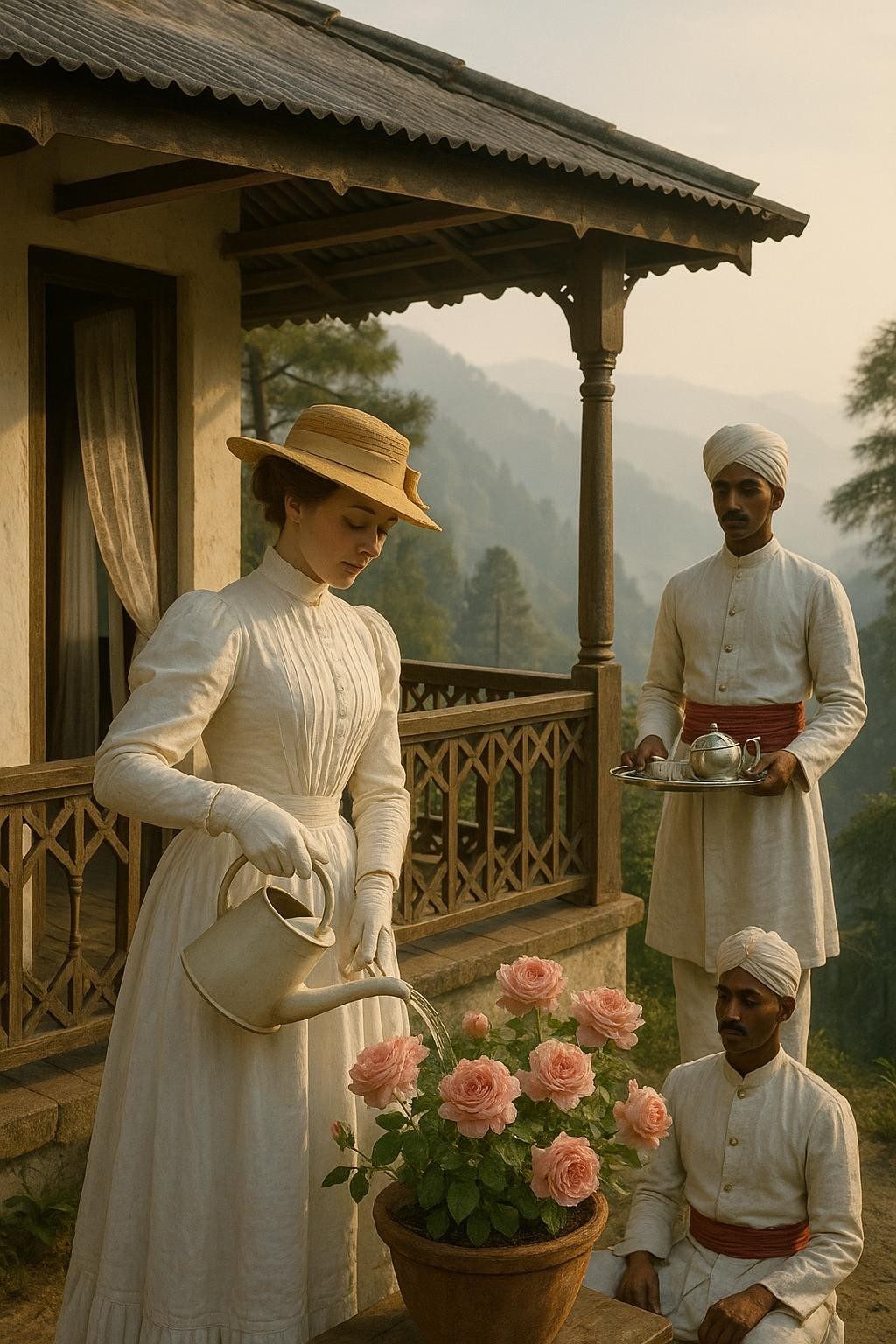
In their gardens, British women toiled with fortitude that belied their delicate natures. They planted roses, sweet peas, and begonias, nurturing them with as much care as they might have on the other side of the world. These horticultural endeavors were not merely acts of nostalgia but also a statement. Against the backdrop of thick pine forests and distant snow-capped peaks, each bloom was a defiant representation of English identity.
Gardens became the venue for cherished afternoon teas, complete with freshly baked scones and the ubiquitous sponge cakes. Under the shade of British oaks that had been painstakingly transported and cultivated, the memsahibs would share the latest gossip, discuss English politics, or recite poetry. These social gatherings reinforced bonds and soothed the longings for a homeland left behind.
The Echo of Pianoforte: Music on the Mountaintop
Transporting a piano to the peaks of the Himalayas was no easy feat, yet it became a common enough occurrence in Simla, where cultural life paralleled those of English country homes. The cool evening air often carried the sounds of Beethoven or Chopin, played by hands that sought solace in familiar compositions.
Mary Elizabeth Coombs, wife of a colonial officer, was renowned for hosting musical evenings at her residence, Woodville. Her soirées were attended by those eager to indulge in the arts, far removed from the realities of empire. This adherence to cultural traditions upheld a sense of normalcy and distinction against a foreign backdrop.
The Anachronism of British Architecture
The architecture of Simla itself tells a fascinating tale of these women's efforts to build a home away from home. Constructed in the Gothic, Tudor, and Georgian styles, many homes imitated the grand estates of England. Viceregal Lodge, completed in 1888, stood as a testament to imperial ambition with its fireplaces, red bricks, and manicured lawns reminiscent of stately homes down to the last detail.
These buildings were more than mere shelters; they were bastions of British culture. Maud Diver, a prominent novelist living in Simla, often remarked on the peculiarity of entering a distinctly English drawing room, complete with chintz curtains and silver teapots, while outside lay the untamed beauty of the Himalayas.
An Empire Within, Yet an Empire Apart
The ironic juxtaposition of English living created tensions and complexities which the memsahibs had to navigate. While British in their enclaves, they were largely dependent on Indian staff who handled the cooking, cleaning, and gardening. Many British women often taught English to these employed locals, furthering their cultural footprint through language.
Equally, Simla was emblematic of the segregated societies that marked the colonial landscape. For many, locales like Simla were insular environments that preserved the familiarity of home, but they undeniably remained aloof from the land and its native populace. This segregation fostered a duality—a simultaneous presence and absence in India.
Why It Matters Today: Reflections from the Hills
The echoes of this fascinating period resonate in today’s globalized world, where the intermingling of cultures is both challenged and celebrated. The British women in Simla remind us of the universal quest for belonging and identity, even in unfamiliar terrains. They exemplify resilience in the face of adversity and the human tendency to recreate comfort zones when thrust into the unknown.
Yet, their story also serves as a cautionary tale about the risks of cultural isolation. As we navigate our interconnected world, the challenge lies in embracing diversity without losing sight of our roots. In essence, British women who once planted roses in the Indian hills were forging the earliest versions of what could be considered modern expatriate lifestyles, raising questions about nationalism, identity, and adaptation.
While their precise contributions might not have featured in textbooks, their legacy is one of quiet determination and cultural transplantation. It reminds us of the enduring human spirit, which, much like the gardens they cultivated, blooms regardless of its surroundings.