
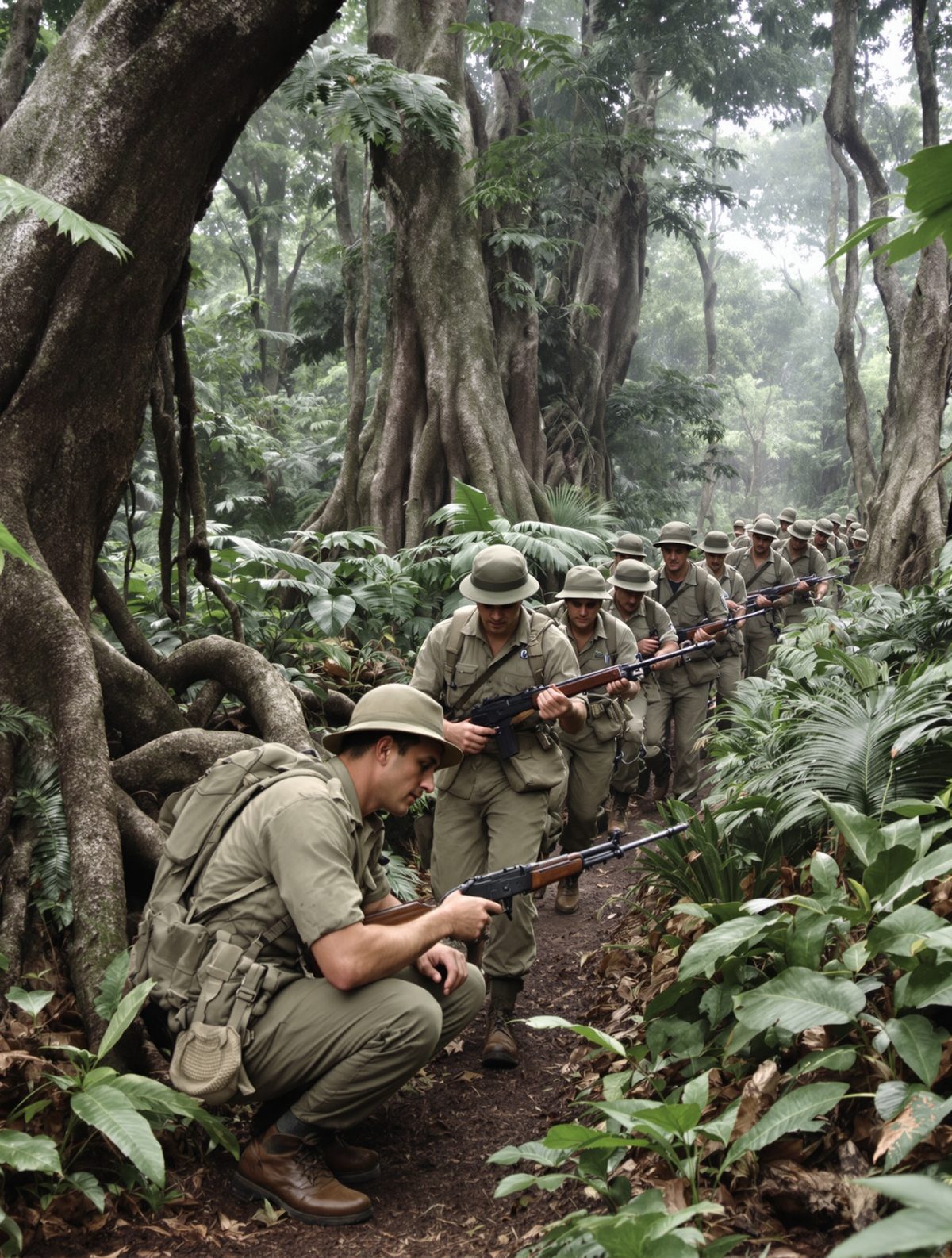
Amid the dense, sweltering embrace of the Malayan rainforest in 1952, a peculiar silence reigned. For weeks, a team of elite British soldiers vanished into this verdant labyrinth. These weren’t ordinary soldiers; they were the newly reformed Special Air Service (SAS), committed to an experiment in survival and warfare that would redefine modern military tactics. This is a tale of resolve, adaptation, and the sheer will to become one with the jungle – an untold legend of endurance and transformation.
Into the Green Abyss
Under the thick canopy of Malaya’s tropical forest, the air hung heavy with moisture and the scent of decay. On March 16, 1952, C Squadron of the SAS disbanded from traditional supply lines and communication networks, plunging into the jungle with the singular aim of dismantling Malayan Communist Party insurgents. Led by Captain Michael "Mad Mike" Calvert, a man renowned for his fearlessness and ingenuity, the squadron began a covert journey that seemed to blur the line between hunter and hunted.
The men carried minimal supplies: basic rations, radios, and firearms. They were to rely on their wits and the land itself. In an era dominated by rigid military hierarchies and procedures, the notion of a ‘go-native’ strategy seemed almost reckless—yet, it was a nod to ancient techniques of survival, reminding the world that sometimes, the old ways are the most effective.
The Art of Disappearance
Disappearing into the jungle was not merely a tactical move; it was a metamorphosis. The SAS men camouflaged themselves so thoroughly that they became specters in foliage—a strategy they termed "jungleization." It began with the adoption of native practices, including living off the land. With no traditional reinforcement, they fished, hunted small game, and learned to identify edible plants. The skills acquired were vital; their lives depended on these abilities.
Their presence went unnoticed by Communist forces. The mere thought of being haunted by specters of soldiers who seemingly materialized from the shadows sowed fear amidst their enemies. The SAS operatives utilized a potent mix of invisibility and misinformation, mastering the psychological aspect of warfare. Each flash of movement, each whisper through the underbrush, was designed to appear as a natural part of the jungle’s perpetual motion.
Borrowed Tactics, Undying Spirit
Despite the apparent isolation, the SAS drew inspiration from unlikely allies. Indigenous tribes of the Orang Asli became unexpected teachers. Renowned for their unparalleled understanding of the jungle, the tribes imparted crucial knowledge on tracking and survival to the soldiers. This collaboration, born of mutual respect and necessity, was pivotal in the unit’s success.
The SAS learned to blend guerrilla warfare tactics with their elite training, allowing them to ambush Communist patrols effectively. Their confrontations—often quick and brutal—left a lasting impact. By employing patience and precision over brute force, they redefined how an elite force could engage in conflict, inspiring special operations strategies worldwide.
The Transformation of Warfare
As the calendar turned to June, after nearly four months of intense immersion, C Squadron emerged from the rainforest transformed not only as soldiers but as innovators of a new warfare doctrine. Their tactics had evolved; their resolve, hardened. They had established a framework that evolved with the SAS, shaping it into the legendary unit known today.
This intimate knowledge of terrain and innovative operational secrecy set the stage for future conflicts. The lessons from Malaya were not merely of survival; they were a guide for asymmetric warfare against elusive enemies—skills that became crucial in later conflicts such as those in the Middle East and beyond.
Lessons Echoing Through Time
While the story of C Squadron’s jungle journey might seem a distant footnote in the larger chronicle of the Malayan Emergency, its significance resonates louder with time. The spirit of resilience, the ability to adapt, and the importance of cultural integration provide timeless lessons for modern military strategy. In a world where technological advancement often overshadows fundamental skills, this chapter emphasizes the timeless power of adaptability and human endurance.
As we reflect on this daring campaign, one that whispers through the leaves of history’s jungles, it becomes evident that the past often holds wisdom for the future. The ability to melt into the seemingly impenetrable shadows of both environment and enemy perspective remains a legendary endeavor, one certainly worth sharing and remembering.