In the cold, early light of the Victorian dawn, when the world still appeared a shade of grey, a lone figure stood at the foot of the imposing Western Ghats. The air was thick with a palpable fear that engulfed the city of Pune, a fear that crept into homes and marketplaces, carried by the rats that scampered through the shadows. This was India in 1897, gripped by a merciless wave of bubonic plague. In the absence of hope and amidst the chaos, a man named Waldemar Mordecai Wolff Haffkine prepared to undertake a feat of incredible bravery that would etch his name into the annals of medical history.
Climbing a Mountain of Fear
The horror of the plague was a macabre tapestry, woven with stories of loss, despair, and human suffering. By 1897, Pune had become one of its most cruel canvases, with death tolls rising daily. Traditional attempts to subdue the disease floundered, fuelling an urgent cry for a savior. Enter Haffkine, a Russian-Jewish émigré, who had previously tamed the deadly cholera with a vaccine. Now working in India at the invitation of the British government, he faced a breathtaking challenge — a chance to save countless lives with an untested prophylactic he had developed in a makeshift laboratory.
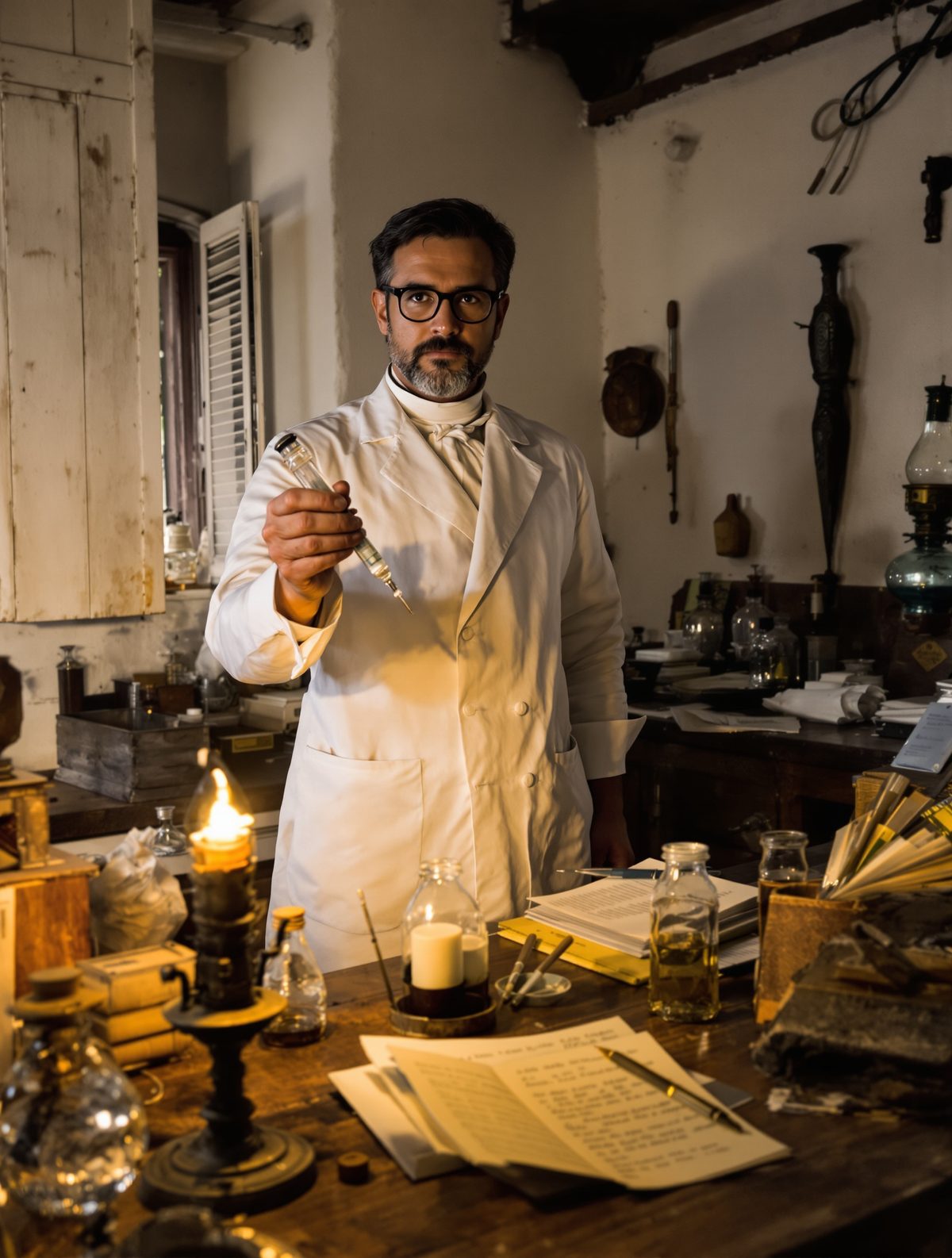
Rather than appealing to the divided opinions of the day, Haffkine knew he had to demonstrate conviction and verifiable results. The plague did not discriminate; it cruelly swept through populations irrespective of caste, religion, or wealth. Inspired by Louis Pasteur, whom he admired deeply, Haffkine devised a plan that would serve as a beacon of scientific integrity and courage. Rolling up his own sleeve, Haffkine injected himself with the very vaccine he had crafted, daring to believe in its promise.
The Makeshift Laboratory: A Hive of Hope
Imagine a cramped room above the Grant Medical College in Mumbai — hardly the sterile and sophisticated environment expected of life-saving endeavors. It was here that Haffkine toiled day and night, driven by a singular purpose: to vanquish the silent killer. Without access to modern equipment or vast resources, he had to rely on his wit, determination, and an indomitable spirit.
The laboratory appeared more like a chaotic bazaar of glass vials, biological cultures, and the incessant hum of thoughts translating into lifesaving science. It was improvisation at its finest, a testament to human ingenuity borne out of dire necessity. The bacteria, Yersinia pestis, posed a formidable challenge, but Haffkine was undeterred. Weathering the skepticism of contemporary science, he pressed on — convinced that nature's enigmas were meant to be unraveled.
The Test of Courage
The year was 1897 when Haffkine administered the first injections. Lacking any authoritative human trials, he was the guinea pig for what was at stake. His colleagues watched with bated breath as he broke convention and attempted to control the outbreak raging across the Indian subcontinent. When he emerged unscathed, word spread quickly, and volunteers emerged from among the local populace and British troops stationed in India, publically asserting both hope and belief in his vaccine.
Over ten months, Haffkine’s vaccine was administered to some 42,000 recipients — a courageous act that restricted mortality to a mere 2.6%, compared to 23.3% in those unvaccinated. By the end of the campaign, more than half a million doses had been distributed, proving not only the vaccine’s efficacy but also Haffkine's prudent determination. His efforts quelled the raging storm that had threatened to swallow entire cities and their histories.
A Legacy Written in Courage
Waldemar Haffkine didn't become a household name celebrated in textbooks, but his legacy is imprinted in the heart of medical science. He was knighted by Queen Victoria in 1897, a modest recognition for the man who saved half a million lives. Often referred to as the "saviour of humanity," his work paved the way for modern vaccines, a feat of medical prowess that keeps pandemics at bay even today. Haffkine's journey through the foothills of an unsuspecting plague provided a narrative of bravery and relentless dedication to the advancement of science.
Sadly, the gripping tale of Haffkine's exploits also serves as a reminder of the political and social complexities of the era. Despite his monumental contributions, Haffkine faced anti-Semitic bias and career obstacles. Yet, his perseverance transcended these barriers, underscoring the profound truth that amidst adversity, human aspiration and innovation can light the darkest paths.
The Beating Heart of Medical History
Haffkine's story in Victorian India is more than a historical footnote; it is a heartbeat that reverberates through time, reminding us that the battle against diseases is relentless and ever-important. His boldness to inject himself and sail uncharted waters speaks to the courage needed to challenge the status quo and pioneer groundbreaking developments — at times, even when the odds seem insurmountable.
As we navigate the precipice of modern pandemics, we stand on the shoulders of giants like Haffkine, who illuminate the path forward. Their stories, often veiled in obscurity, ignite a flame of hope and remind us of the indomitable human spirit that dares to conquer the unconquerable.