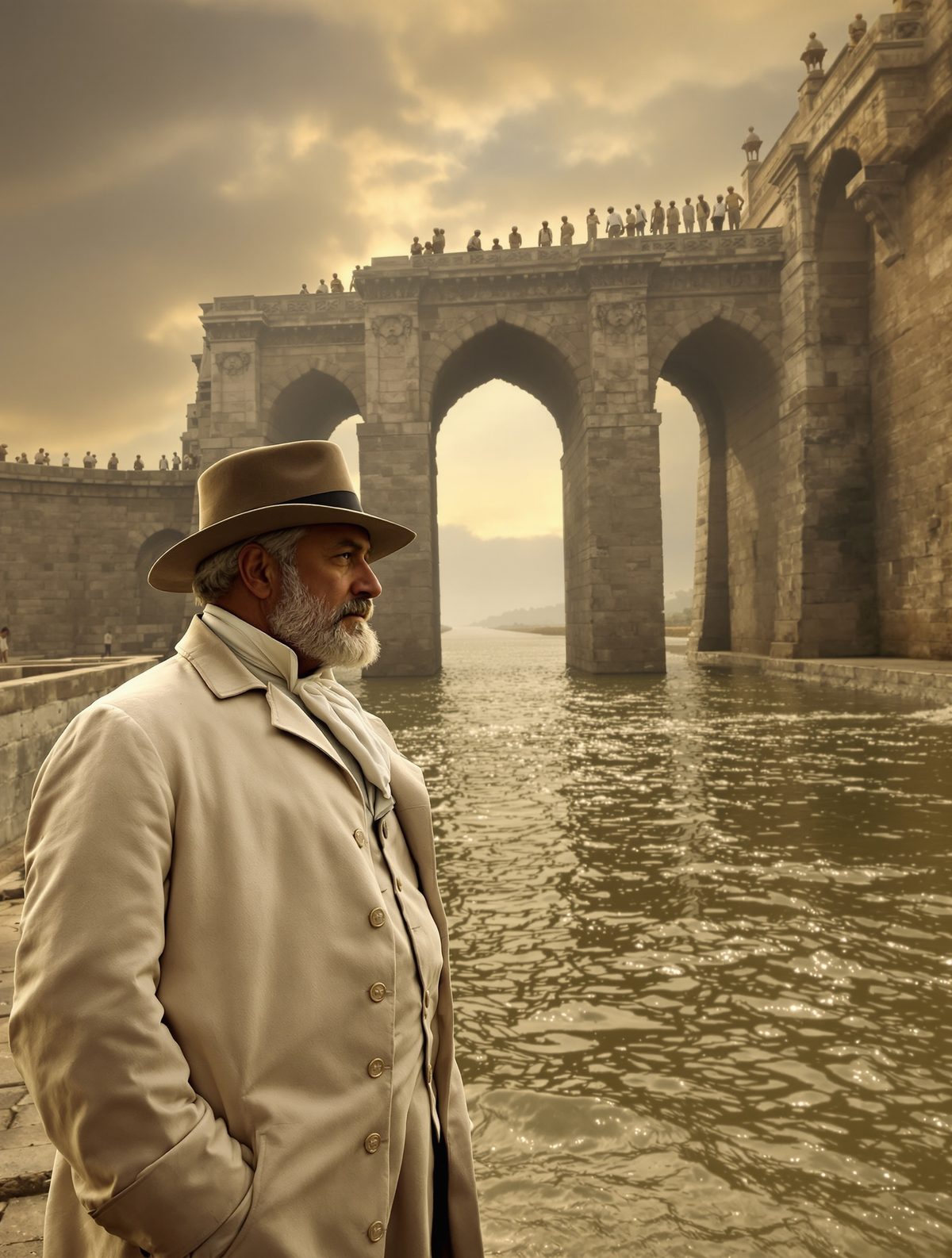
Under the blazing Indian sun, the plains north of the mighty Ganges River shimmered with a deceptive, beautiful stillness. For a thousand years, this land succumbed to the relentless rhythm of nature — monsoons promised hope but often delivered destruction, and droughts followed in their wake, leaving millions in their grip. But amidst the chaos of Victorian-era India, there emerged an unlikely savior. A singular vision redefined these lands and the lives entwined with them. This is the story of Sir Proby Cautley and the unparalleled engineering marvel of the Ganges Canal.
The Vision of Water
It began with a simple, almost revolutionary idea: to tame one of the planet's most unpredictable rivers. Proby Cautley, a British engineer serving under the East India Company, arrived in India when the notion that human hands could channel such a vast river was akin to mythology. Born in 1802, Cautley had an astute mind and a heart driven by equal parts duty and innovation. He gazed at the Ganges and saw not just waters but potential — an artery to bring life to a parched land.
The actual undertaking commenced in 1845, a test of both human spirit and ingenuity. Cautley's ambition was fueled by more than colonial desires; he empathized with the lives teetering on the brink of famine. In a world where millions were seasonally starved, Cautley dared to conceive a world of sustenance and abundance.
The Herculean Task
Stretching 350 miles from its harrowing headworks at Haridwar to the diverging streams feeding the Yamuna River, the Ganges Canal was not just a marvel of its time but a record in endurance and engineering. At a remarkable width of 150 feet and with the capacity to ferry 8500 cubic feet of water per second, Cautley's design was the longest irrigation system on Earth.
Construction wasn't without its drama and peril. With a team of local laborers, numbering over 300,000 at its peak, Cautley forged ahead despite the climatic adversities and the ever-imposing threat of cholera and malaria. His untiring commitment saw him navigate through dense jungle, seething with venomous creatures and plagued by blistering heat.
What many don't know is that Cautley’s passion for geology led to significant archaeological advances too. During the canal’s excavation, he uncovered fossil remains in the Siwalik Hills, adding to our understanding of extinct species like the giraffe-like Sivatherium.
A River Runs Through It
The canal was completed in 1854, after nine grueling years that tested every aspect of garnering success out of improbability. On its inaugural flow, the canal didn't just carry water; it carried hope. It reached the rural hearts of northern India where previously, the Ganges seemed a distant, indifferent deity.
The canal helped to irrigate 5,000,000 acres of farmland, transforming the once unreliable fields into bountiful crops. India's agrarian economy began its metamorphosis. It's estimated that during its first full decade of operation, the canal averted countless potential famines, saving untold thousands of lives.
Kalyan: The Boons and Burdens
Yet Cautley’s creation was not without its complexities. Though it brought prosperity, it also induced shifts in socioeconomic dynamics. Land ownership patterns changed, and villages previously isolated became bustling hubs, profoundly altering the rural landscape.
The introduction of such an irrigation system changed more than just agricultural output; it altered the bedrock of Indian society, setting precedents for land rights and agrarian structure. For many, it was the first glimpse of the modernization tide that British rule would bring — sometimes a boon, and sometimes a burden.
Why This Matters Today
The tale of Sir Proby Cautley and the Ganges Canal is one of inspiration mingled with complexity. In a world where climate change and water scarcity present ever-growing threats, his legacy rings prophetically clear.
Yet perhaps the most significant lesson resides not in the lands nor the waters, but in the vision of one engineer who dared to dream big. Cautley's canal exemplifies what human agency can achieve when married to a profound sense of purpose, reminding us that no chasm is too wide, nor river too deep.
As we grapple with the needs of today, Cautley's journey calls on us to harness technology for sustainable change. One man's resolve tamed the Ganges amidst Victorian imperialism; might it inspire new heroes to rise and tame the ecological crises of our own era?