The wheels of history sometimes turn on moments so surreal they border on myth. Picture this: in June 1381, a 24-year-old king stood on the edge of revolution in a field near Smithfield. Across from him, cloaked in the mantle of dissent, was a blacksmith's son from Kent, Wat Tyler, leading the greatest uprising England had ever witnessed. As Tyler extended his hand to the young King Richard II, time seemed to freeze, and in that charged moment, the rigid feudal order trembled.
The Fires of Discontent
The stage for this unlikely encounter was set by an England simmering with anger. By the late 1370s, the country was bruised by the debilitating costs of the Hundred Years' War and reeling from the devastation of the Black Death, which had decimated nearly a third of its population. Now, in 1381, a new Tax Poll was implemented, levied thrice in a row, and far more ruinous than the common folk could bear. It was designed to fund futile war campaigns and the lavish lifestyles of the ruling elite. Yet, the most damning blow wasn't economic — it was the despised 'poll tax' that didn't discriminate by status, forcing even the poorest peasants to shoulder the same burden as wealthy nobles. That was the spark.
Gathering of the Storm
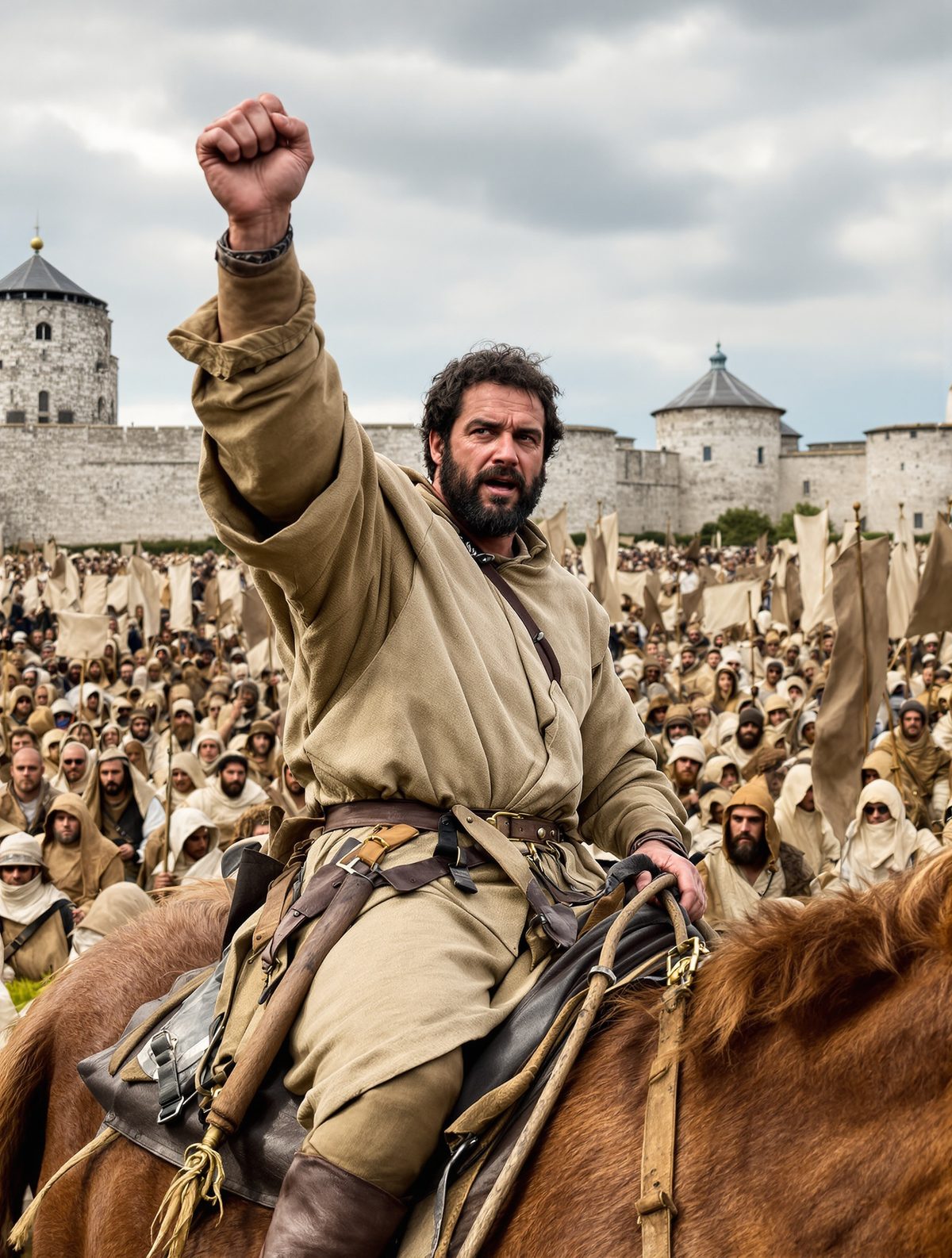
Out of this cauldron of discontent emerged Wat Tyler, hailing from the verdant corners of Kent, a county already vocal in its resistance. He wasn't a knight or noble with inherited power; Tyler was a tiler, a craftsman with a talent for organizing and an unyielding sense of justice. By June, he drew 60,000 souls, men bonded by desperation, to his cause. They unfurled a flag of rebellion and trudged onwards to London, igniting the countryside in their wake. With every step, the mighty roar for fairness echoed through the shires — the roar of Wat Tyler's voice became theirs.
London Ablaze
On June 13, 1381, they breached London’s gates, welcomed with strangely open arms by sympathizers within. The city shuddered under the feet of an advancing mass, driven to purge it of its oppressors' symbols. Priories fell, writs were torched, and a dramatic assault on the Tower of London saw the King's head officers dragged outside and executed. The rebellion wasn’t aimless slaughter; it was a finely aimed arrow seeking justice, targeting figures like Simon Sudbury, Chancellor of the Exchequer, who bore the weight of people's hate for the third poll tax.
The Meeting at Mile End — and its Miracles
King Richard II, himself only newly crowned and fragile in power, agreed to meet the rebels at Mile End on June 14th. By all accounts still a mere boy thrust between forces of unimaginable strength, Richard offered concessions — abolition of serfdom, limits to the statutory rights of manorial lords, and free market access. While this meeting dissipated some of the tension, Tyler knew truer change required more.
Thus, it was in this climactic setting that Tyler and the King again faced each other on June 15th at Smithfield. Wat Tyler rode out alone, a solitary figure, unarmed save for the hopes of thousands. Their conversation, a tense parry of points and counterpoints, ended when Tyler, in bold defiance, reportedly demanded a proper citizen's charter and more profound change. As he reached for the King, perhaps to solidify a pact, a scuffle ensued — moments brimming with ambiguity. Wat Tyler fell mortally wounded, his rebellion collapsing under the weight of its own leader's enigmatic end.
The Aftermath — Seeds of Change
Yet, Wat Tyler's death was not the erasure of his cause. Though the immediate rebellion crumbled after his violent demise, the impact of the Peasants' Revolt stretched far beyond the field of Smithfield. The echoes of this insurrection nudged England towards reformation. King Richard's initial concessions were withdrawn, but the monarchy would cautiously tread henceforth, for fear of further uprisings. In the subsequent decades, the rigid frameworks of feudal obligations relaxed significantly. England took tentative steps towards recognizing the plight of the common folk.
Legacy of a Handshake
When Wat Tyler shook the King's hand, he grasped not just for a man, but for an ideal — that even the humblest voices could demand a seat at the nation's table. Tyler’s legacy is a testament to those moments in history when ordinary individuals tilt the balance of power. Despite failing to achieve immediate goals, the echoes of 1381 remain a poignant reminder of the human spirit’s relentless pursuit of justice and equity. In the heartbeat of Tyler's gripping stand lies an eternal lesson: there exists no wall too unyielding against sheer resolve.
In our era, where socioeconomic divides still potentiate unrest, the story of Wat Tyler serves as a clarion call for vigilance against inequality. The dream of fairness — voiced from the mouths of 'peasants'— retains its resonance, urging us to question, "What shackles persist that need dismantling today?"