In the sweltering heat of 1901, as steam drifted lazily over Lake Victoria and the hum of Africa's wildlife serenaded the early morning air, a specter of death lingered. Entire villages stood silent, their bustling life snuffed out by a mysterious plague. The specter was sleeping sickness, claiming nearly 200,000 lives in Uganda alone. Yet, amid this darkness, a singular figure emerged — a British doctor with a boat and a microscope, resolved to tackle this invisible foe. His journey to uncover the disease's secret carved a path for modern tropical medicine, and the doctor became a legend.
The Plague of Shadows
In the late Victorian era, the "Scramble for Africa" was as much about conquest as it was about confronting the unknown. While European powers raced to claim territories, they were also encountering diseases that defied their medical knowledge. Sleeping sickness, or African trypanosomiasis, was one of these maladies — insidious and deadly. Local populations, who had lived harmoniously with their environment, became unwitting casualties of the colonial incursion.
Sleeping sickness swept through Uganda like an invisible army. The illness, transmitted by the tsetse fly, was notorious for its peculiar progression: a feverish stupor that spiraled into neurological turmoil, before culminating in death. Villages turned into ghost towns almost overnight. With local medicine unable to halt its march, the gravity of the crisis called for a hero; that hero was Dr. John William Watson Stephens.
Voyage of the Resolute
Dr. John Williams Watson Stephens was not your typical Victorian doctor. Armed with curiosity as much as with clinical expertise, Stephens had always been drawn to the frontiers of medicine. However, the scale and the swiftness of the sleeping sickness epidemic added a daunting urgency to his mission. In 1901, Stephens, along with fellow researchers, set sail across the African Great Lakes, driven by the singular purpose of mapping out the epidemic's reach and discovering its cause.
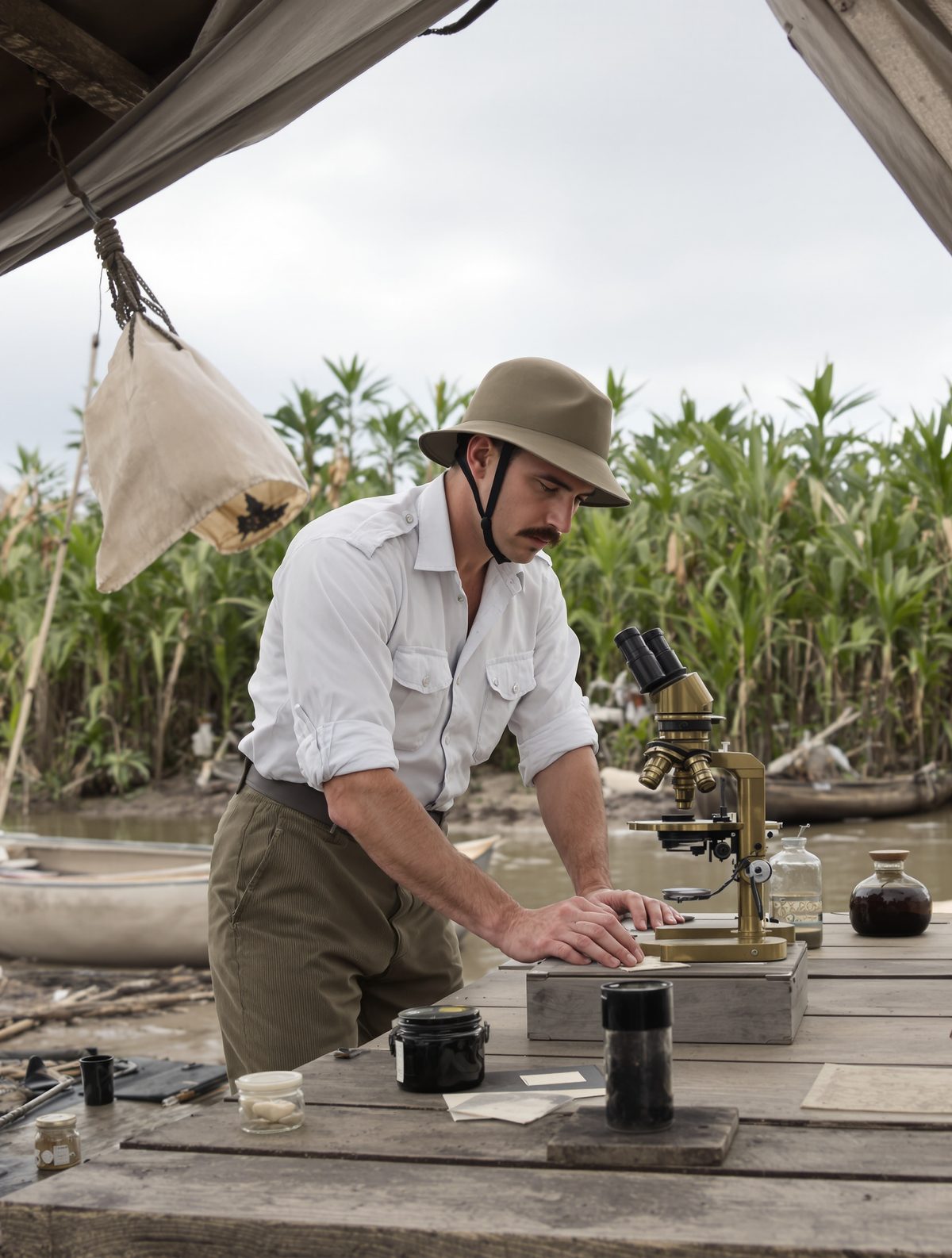
With a simple boat as his steed and a microscope as his sword, Stephens landed on the shores of Lake Victoria. Armed with scientific resolve, he ventured into regions where few Europeans had trodden — packed with nothing more than slides, swabs, and a fevered determination. There, in the very heart of the epidemic, he began to piece together a puzzle that evaded even the most stalwart minds of the British Empire.
The Glint of Discovery
Under the unyielding African sun, Stephens observed. From Kapata to Jinja, he meticulously collected blood samples, examining each under his portable microscope. His raw tenacity and meticulous nature pinpointed something miraculous — the presence of Trypanosoma brucei, a previously shadowy protozoan parasite, was definitively linked to sleeping sickness.
The revelation was groundbreaking. It wasn't just a scientific discovery; it was a lifeline tethered to the realm of life and death. Stephens' identification of this connection marked a milestone in tropical medicine, placing an unknown protozoa at the center of international scientific intrigue. It was as if a glint of sunlight had pierced the dense curtains of doubt, illuminating the way forward for doctors across the continent.
The Battle Beyond Borders
Stephens’ work had set into motion a flurry of international collaboration and innovation. Armed with the newfound understanding of the disease, physicians and scientists across Europe began developing treatments, while measures were crafted to control the tsetse fly population. This spark of knowledge helped curb the epidemic, transforming Uganda’s outlook from despair to hope.
Yet, the battle against sleeping sickness was far from over. As colonial powers confronted their medical inadequacies, they also recognized the necessity of understanding the lands they governed. This epidemic forced a reevaluation of the imperial healthcare systems, and the fleeting victory over sleeping sickness became a cornerstone of tropical medicine education in colonial and post-colonial eras alike.
Legacy of an Unwavering Spirit
Dr. John William Watson Stephens’ contributions extended beyond that of a learned investigator. His journey was one of endurance, curiosity, and undaunted resolve. The quest to understand and combat sleeping sickness shaped not only the future of Uganda but also the face of medical science in tropical regions.
Today, sleeping sickness remains a challenge but not an insurmountable one. Advances in medicine, rooted in discoveries like Stephens’, continue to propel us toward a world where such diseases may one day only echo in history books. His story serves as a powerful reminder of the impact that one determined individual can have on reshaping the course of entire nations — and, indeed, the world.
The tale of Dr. John William Watson Stephens is more than just a chapter in medical history. It is a testament to the tenacity of the human spirit, the pursuit of knowledge against overwhelming odds, and the imperative to act in the face of incomprehensible tragedy. As we chart our own courses in an ever-evolving world, let us not forget the legends of those who dared to defy the darkness — and, in doing so, left an indelible mark upon history itself.