On a June afternoon in 1813, in the turbulent waters off Boston Harbor, the crackling tension of battle hung thick in the air. The deck of HMS Shannon bristled with energy as her crew prepared for a confrontation that would become legendary—orchestrated not by fate or chance, but by the dauntless spirit of her captain. In a mere thirteen minutes, the clash of cannons and clamour of cutlasses would echo across history, marking one of the Royal Navy's most astonishing victories.
The Challenge of the Sea: A Duel of Honour
In the early 19th century, the oceans were as contentious as the continents that bordered them. It was a world where the flag you flew could spell your destiny and where ships were both the pride and power of nations. Amidst this age of naval supremacy, the War of 1812 raged—a testament to the strained relations between Britain and the burgeoning United States.
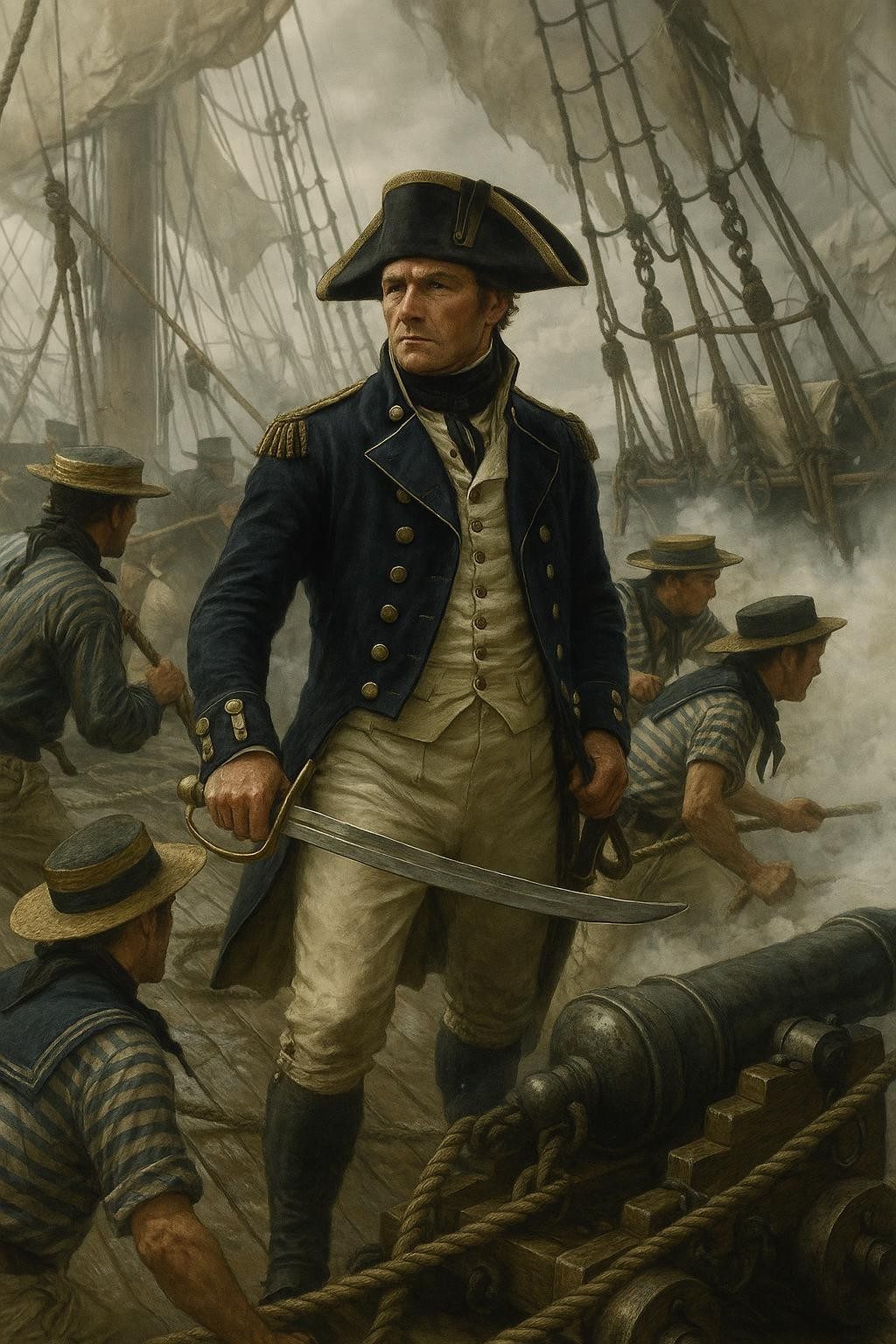
On June 1, 1813, Captain Philip Broke stood on the deck of HMS Shannon, a frigate that had prowled the seas for seven years without refit. With a determination forged in iron, Broke had meticulously drilled his crew daily, transforming them into what some say was the best-trained gun crew in the navy's history. Despite the trials of prolonged service, Shannon was prepared for her moment of destiny.
Broke issued a bold, handwritten challenge to the American frigate USS Chesapeake, inviting her to single combat. This act of chivalry and strategic cunning was no mere formality. It was a calculated move designed to draw the Americans out from the safety of their harbor—a challenge accepted by the already embattled Chesapeake. What followed was one of the most fiercely contested frigate duels ever witnessed.
The Guns of June: Shannon Prepares
June 1st dawned clear and bright. As Shannon and Chesapeake approached one another, the crews readied for combat under the watchful gaze of their captains. Aboard Shannon, sails snapped in the wind, and every man knew his duty. Broke himself was a man possessed with the theories of naval warfare, an officer who believed in the relentless practice of precision over the luck of the draw.
Broke had spent years perfecting his gunners' skills; it was said that he could direct his cannonballs through the captain's cabin window of a ship a mile away, if need be. On this day, every bit of that discipline would be tested. As the opposing frigates closed the distance, the American and British crews steeled their nerves for the engagement of a lifetime.
The Rending Broadside: Thirteen Minutes of History
The Chesapeake fired first—an opening salvo that thundered across the ocean. The Americans aimed high, seeking to disable Shannon's rigging. Broke's strategy, by contrast, was immediate and lethal. At a range of less than a hundred yards, Shannon's cannons erupted in a single, devastating broadside aimed at the hull of her opponent.
Within moments, the air was thick with screams and smoke, as Chesapeake's defenses buckled under the precision of Shannon's guns. Broke seized this moment of chaos, leading a boarding party onto the stricken American vessel. Gleaming cutlasses and pistols in hand, they crossed the gap in swift, lethal strides. In the ensuing melee, Shannon's men overwhelmed the dazed American crew in a matter of minutes. Thirteen minutes after the first shots were fired, the battle was over; the British had seized the Chesapeake.
Unexpected Outcomes: Casualties and Courage
The grim tally of these thirteen minutes was palpable. Chesapeake lost 48 of her crew, including her captain, James Lawrence, who famously ordered, "Don't give up the ship," even as the fight drew to its brutal conclusion. On Shannon's side, the victory was bittersweet; Captain Broke himself was severely wounded during the boarding action, leading his crew from the thick of the fray.
Broke’s injury did not diminish the impact of his achievement. Upon returning to Halifax, HMS Shannon and her crew were celebrated as heroes, and Broke's strategies were studied and admired by naval tacticians on both sides of the Atlantic. Curiously, even in defeat and death, Captain Lawrence's dying words became a rallying cry for American sailors, a testament to the indomitable spirit on both sides of this conflict.
The Lessons of the Sea: Why It Matters Today
In the grand tapestry of history, the duel between HMS Shannon and USS Chesapeake serves as a vivid reminder of the complexities beneath the surface of war. It was a battle not only of might but of minds—a testament to the power of preparation, leadership, and courage under fire. The audacity of Broke’s challenge reflects a broader culture of honour and personal courage that defined an era and shaped the conduct of nations.
For modern audiences, this clash echoes through time, underscoring the reality that preparation and resolve can tip the scales of any confrontation, be it on the high seas or in life's daily struggles. The brief yet ferocious duel between Shannon and Chesapeake underscores a timeless truth: greatness is often forged in moments that demand both skill and bravery.
As we navigate the currents of today's tumultuous world, the legacy of Captain Philip Broke and the men of HMS Shannon urges us to consider the values of perseverance, precision, and preparation. In doing so, these historic waters sail with us still, a living legend that parallels the challenges of our own age.