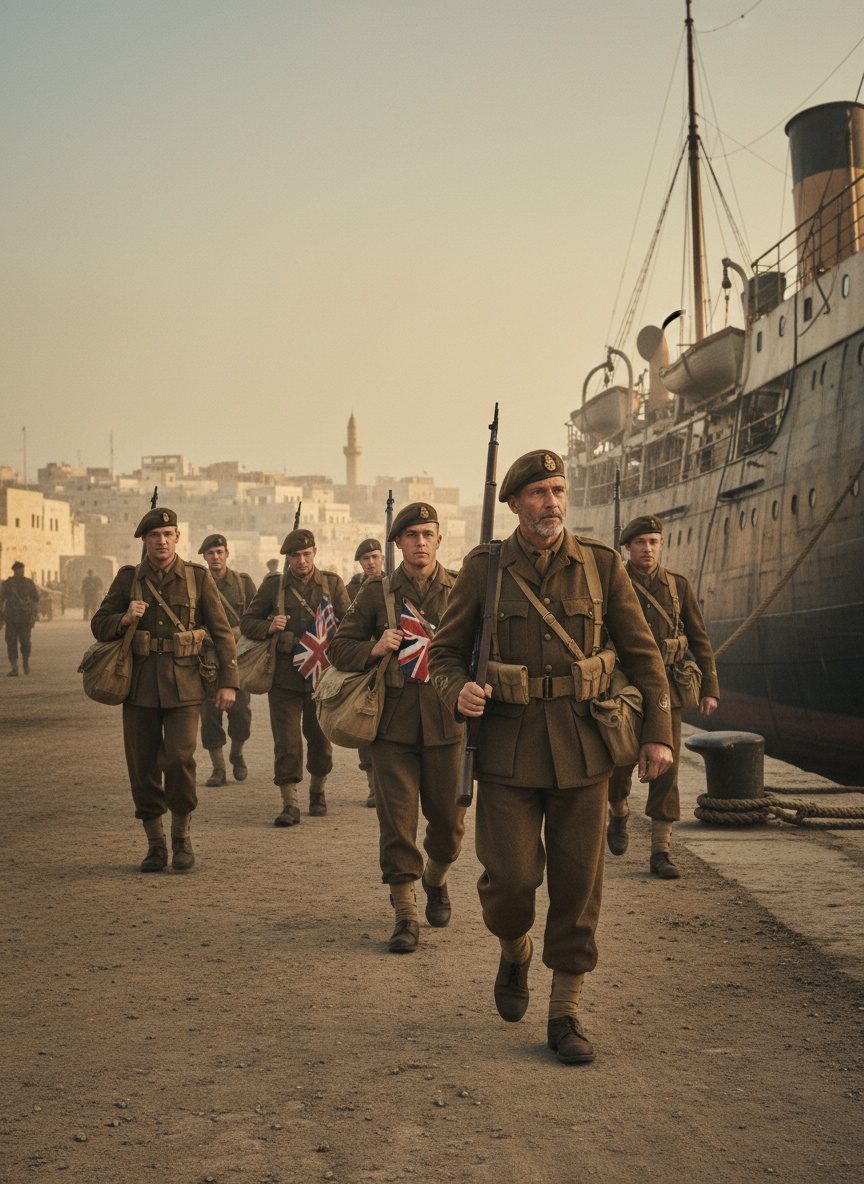
In the tempestuous final years of the 19th century, the British Empire was a colossus, its reach spreading over a quarter of the Earth's landmass. Yet there were corners of the globe where its dominance was still contested. One of those corners was the Sudan, a vast, desert-dominated region rife with conflict and resistance. Lord Kitchener, a man of towering reputation and ambition, faced the seemingly insurmountable challenge of conquering this expanse. But to dominate the Sudan, his army had to achieve the impossible—cross the unforgiving desert and the obstinate Nile River with unprecedented speed. What unfolded was a story of ingenuity, bravery, and engineering genius, a counter-stroke to the forces of the Mahdist state that ensured British imperial ambitions were not just drawings on maps but realities etched into the earth.
The Desert That Defied Armies
The year was 1897, and the British were determined to eliminate the Mahdist state in Sudan, which had, since its inception in 1885, posed a continual threat to Egyptian stability and, by extension, British interests. The Mahdists were fierce, well-organized, and under the charismatic leadership of Khalifa Abdullahi. The campaign pivoted on a simple yet daunting principle: Starve the enemy of resources by cutting off trade routes while supplying the British forces far from home. But first, Lord Kitchener faced the formidable obstacle of the Sudanese desert.
The desert was more than a gargantuan battlefield; it was a graveyard for the unprepared. Artillery bogged down in sands, while horses and camels withered under the relentless sun. Moreover, the Nile River offered no mercy, its silt-laden waters a natural barrier against advancing armies. In this sweltering landscape of stifling heat and relentless dunes, Kitchener devised a plan that would see engineering prowess meet military might in a spectacular dance of innovation.
The Genius of the Iron Spine
Kitchener understood that the key to conquering the Mahdists lay not in sheer force but in building a logistical masterpiece. He envisioned a railway—a metal lifeline stretching through 400 miles of hostile desert to ensure his troops received supplies and reinforcements swiftly. Hence, the Dongola to Khartoum railway was born, a project aimed to strike at the heart of the Mahdist state with the same precision as a surgeon's scalpel.
Construction began in 1897, spearheaded by the Royal Engineers—a cadre of men whose resolve was as tough as the iron they bent to their will. The railway track carved through the desert required more than manpower; it demanded relentless dedication and an ability to confront adversity with ingenuity. Astonishingly, the railway was laid at a speed of nearly a mile a day, becoming not only a supply route but a game-changer in the art of modern warfare.
Bridge over a Heart of Water
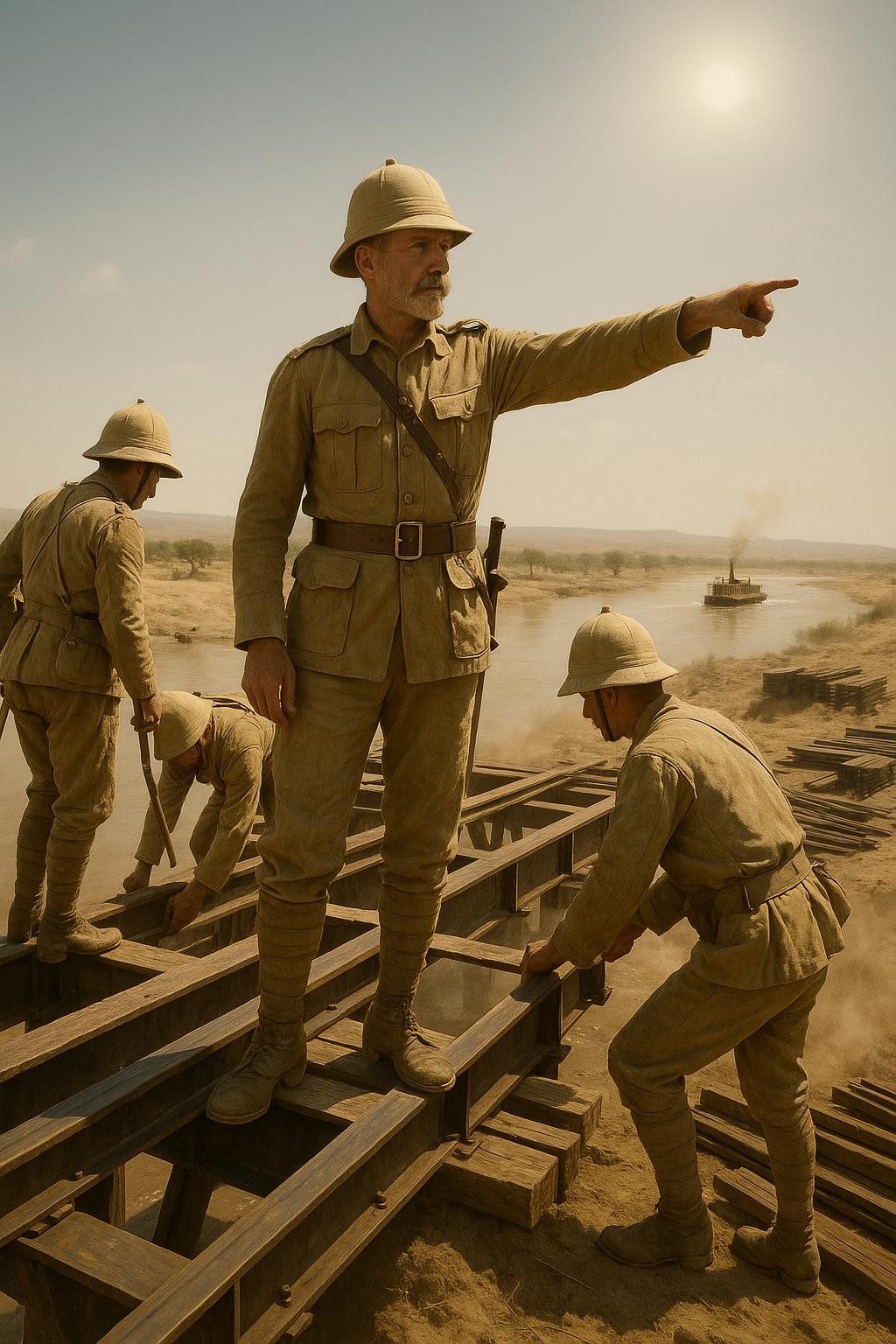
As if railway construction wasn't monumental enough, the engineers were tasked with another seemingly impossible feat—bridging the Nile. Prior to this, the Nile had acted as a final frontier against any invading force, a natural defense more potent than any man-made wall. Kitchener's team of engineers designed a remarkable structure, a makeshift bridge constructed with steel girders, wooden planks, and sheer determination.
The Nile bridge, completed in 1898, was a masterstroke, allowing locomotives, troops, and supplies to cross unimpeded. This wasn't just a triumph of engineering; it was a maneuver that took the Mahdists by surprise, underscoring the logistical supremacy of Kitchener’s campaign. The crossing marked the end of a geographical impasse and the beginning of a strategic offensive that would culminate in battle.
March to Omdurman: The Final Assault
With the railway and bridge completed, Kitchener's forces marched towards their ultimate goal: the city of Omdurman. On the morning of September 2, 1898, under the scorching Sudanese sun, the defining clash commenced. Kitchener's forces, well-supplied and strategically positioned thanks to their logistical triumphs, faced the massed ranks of the Mahdist army. In a battle that was as much about technological superiority as it was about courage, the British forces used modern rifles, machine guns, and artillery to devastating effect.
The clash was fierce, and while the Mahdists fought valiantly, they were ultimately outmatched by Kitchener’s disciplined and well-equipped troops. The victory at Omdurman not only crushed the Mahdist forces but effectively marked the consolidation of British control over the Sudan. The battle was over by midday, a testament to the precision of Kitchener’s campaign.
Why It Matters Today
The success of Kitchener’s campaign lay as much in the resolve of the men as in the rivets of the railway. This monumental achievement, often overlooked in traditional textbooks, was a transformative episode in military history. It demonstrated the pivotal role that engineering and logistics play in warfare, where victory is not merely about men but about the meticulous management of resources. The ability to integrate technology with tactical prowess laid a blueprint for subsequent military strategies throughout the 20th century.
As we reflect on this tale of tenacity and triumph, it becomes clear that such historical sagas bear potent lessons for today’s world—a reminder that challenges, no matter how insurmountable they seem, can be overcome through innovation and perseverance. In a world where logistics continue to shape global dynamics, Kitchener’s campaign in the Sudan resonates as a powerful, enduring legend of unyielding human spirit and ingenuity.