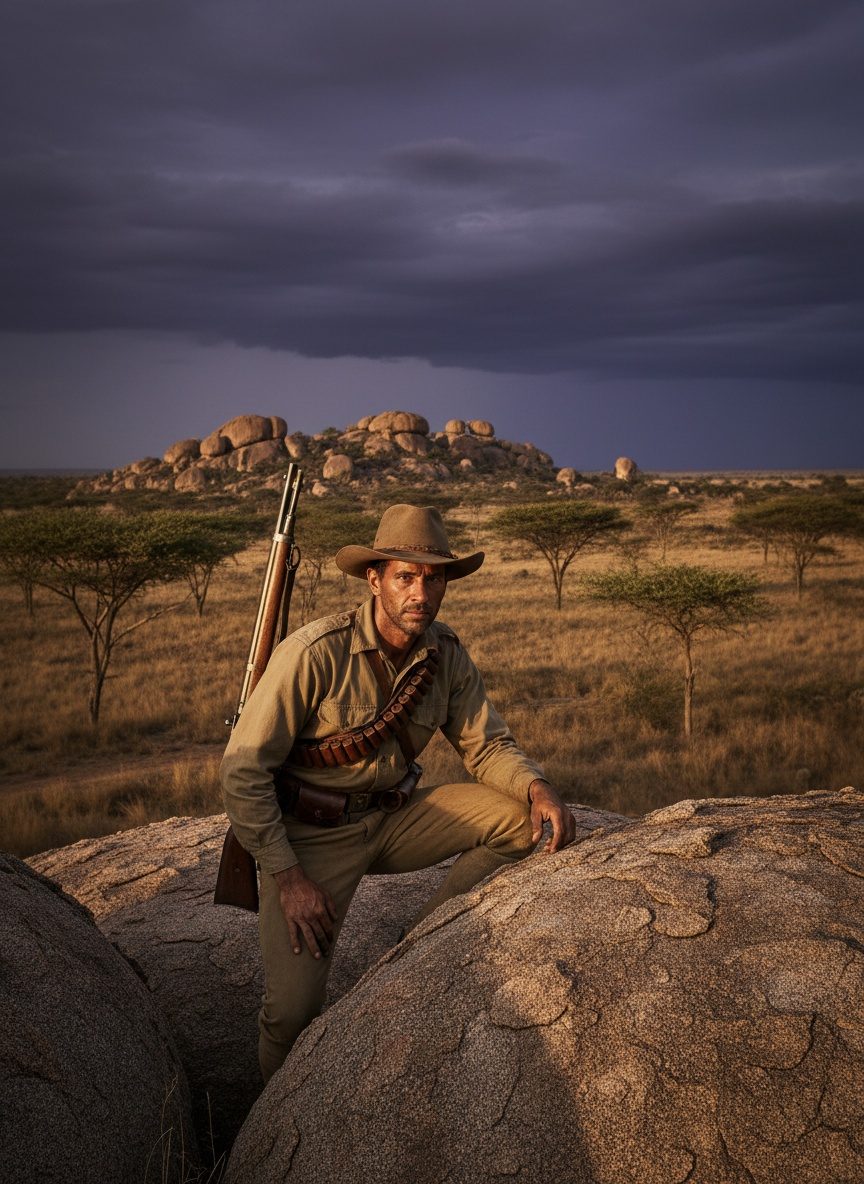
Amid the rocky undulations and thick thornbushes of the Matopos Hills, beneath a shroud of uncertainty that hung over the African savannah like a ghostly veil, a lone horseman threaded through enemy territory, his mission as perilous as it was crucial. In the searing heat of 1896, amidst the upheaval of the Matabele rebellion, Frederick Russell Burnham embarked on a daring reconnaissance behind enemy lines. To the uninitiated, his was a story of brazen courage; to history, it was the tipping point in the struggle for control of a beleaguered Rhodesia.
The Perilous Womb of Rebellion
It was a time when the African soil seemed to heave beneath the weight of imperial ambition and indigenous dissent. The Matabele, a warrior nation under the leadership of King Lobengula's son, had risen in fierce defiance of British rule. Their grievances—land seizures, cattle confiscations, and the ruthless imposition of foreign laws—incited a violent uprising that saw settlers and soldiers alike under siege.
In April 1896, the Victoria garrison found itself encircled, its scouts too terrified to venture beyond their hastily dug-in defenses. The Matabele warriors, led by wily commanders who knew the landscape intimately, had managed to pin down the might of the British South Africa Company. It was in this dire context, amidst the tension and desperation, that Burnham stepped forward.
The Scout Who Knew No Fear
Frederick Burnham was no stranger to danger. Born on May 11, 1861, in Minnesota, he spent his early life on the American frontier, honing a talent for survival and scouting that would become legendary. His move to Africa in the 1890s was driven by a thirst for adventure and the promise of Rhodesia's gold fields. But it was his superb skills as a scout—his ability to read tracks like an open book and move invisibly through hostile terrain—that set him apart in the region's tumultuous campaigns.
By 1896, Burnham had already built a formidable reputation among the colonial forces: a man who could be relied upon to deliver intelligence from places deemed impenetrable. So, when volunteers were sought for an expedition into the heart of Matabele strongholds, Burnham did not hesitate. He resolved to ride out alone, into the very belly of insurrection.
A Lone Pursuit into the Matopos
Under cover of darkness, Burnham slipped from the confines of the besieged garrison. His horse stepped lightly, following forgotten paths that wound through craggy hills and dense thickets. With the stars as his guide, he became one with the silence of the night, attuned to the whispers of the wilderness. The Matopos, a landscape of eerie grandeur with its granite outcrops and ominous tunnels, held secrets as ancient as time itself—and it was here that Burnham sought the rebel lair.
Fortune favored the bold scout. Over several nerve-wracking days, he located the Matabele's hidden stronghold and, more crucially, gleaned insights into their supply lines and troop movements. What he discovered was more than just the physical presence of an enemy; it was the revelation of their strategic vulnerabilities.
The Dangerous Road Back
Returning was no less daunting. With the Matabele in constant patrol, Burnham had to negotiate a gauntlet of watchful eyes and itching trigger fingers. Moving with the silence and stealth that would later inspire the creation of the Boy Scouts of America—an organization he directly influenced—Burnham threaded his way back, skillfully eluding capture and completing a journey that seemed more the stuff of legend than of fact.
Exhausted but unharmed, Burnham slipped back into the garrison's lines days later. His mission was a resounding success; the intelligence he gathered proved instrumental in organizing counter-attacks that ultimately broke the siege and shifted the momentum of the campaign in favor of British forces.
A Legacy Beyond Borders
Frederick Burnham's daring exploit was more than just a footnote in the annals of the so-called “Scramble for Africa.” His actions underscored the vital role of reconnaissance in warfare and the significance of individual courage in shaping historical outcomes. The Matabele uprising would eventually be quashed, and with it, the dreams of a people yearning for sovereignty over their homeland.
In our times, Burnham's legacy is a reminder of the complex interplay between imperial ambitions and indigenous resistance—a narrative often glossed over in traditional textbooks. His story compels us to ponder the human elements of history: courage and conquest, resistance and resilience, interwoven in a tapestry that continues to echo through the corridors of time.
So, as we reflect on the chronicles of the past, let us remember that the unassuming scout who rode alone into danger's embrace did not merely defy the odds—he helped shape the course of a continent's history in a way that deserves to be remembered, retold, and respected.