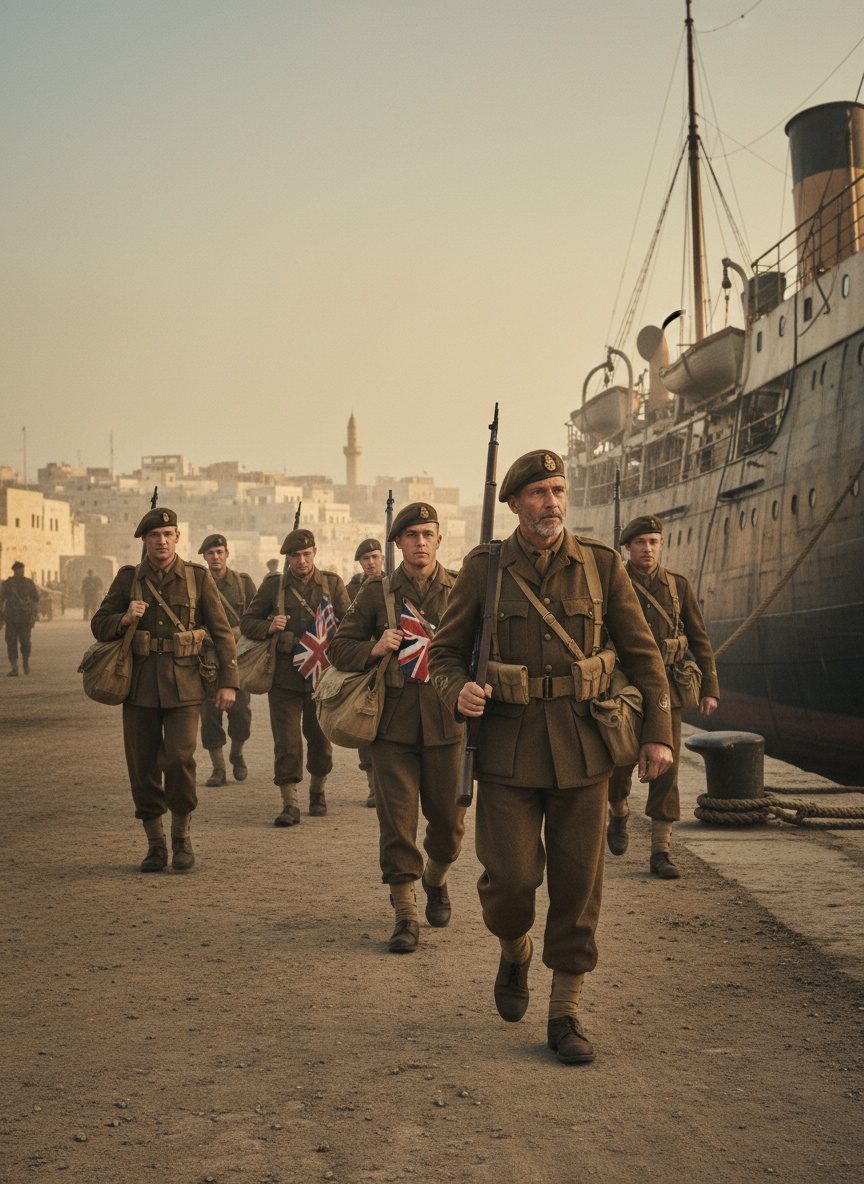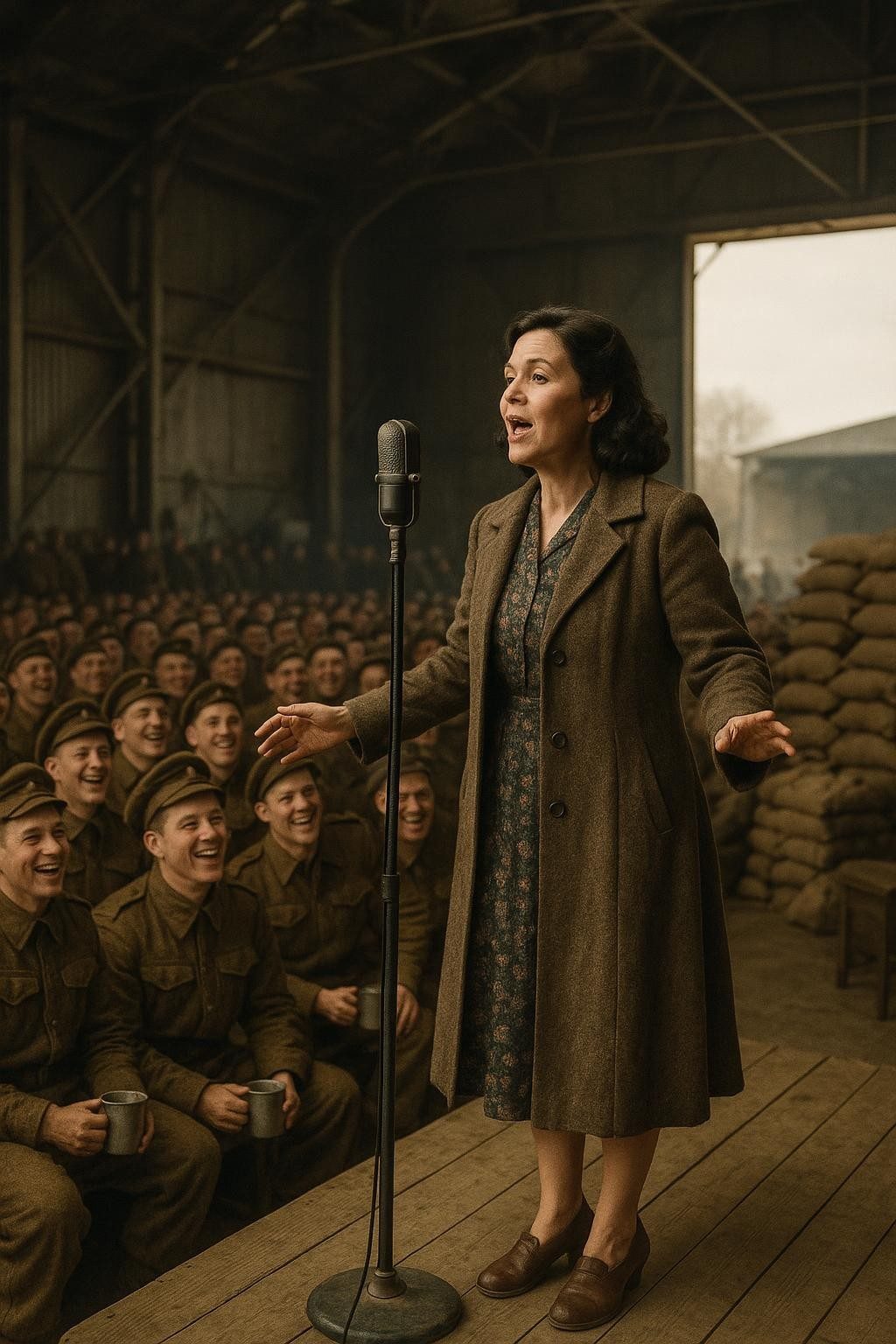
There she stood, draped in a shimmering gown, her voice a beacon of warmth piercing through the chill of an endless waiting game. It was autumn 1939, and the men of the British Expeditionary Force found themselves in limbo, stationed in France, poised on the edge of a war that had yet to unfurl its brutal banners. It was into this cloud of uncertainty that Gracie Fields — the War-blinging wonder from Rochdale who had enchanted a nation — sang. Her visits were improvised concerts that turned freezing hangars into halls of laughter and song. But Gracie’s performances were more than just morale boosters; they represented a tether to the world these men were fighting to protect.
The Chant of a Wartime Canary
Gracie Fields, born Grace Stansfield in a modest terraced house in Rochdale in January 1898, was no stranger to hardship. Rising from her humble beginnings, she became Britain’s highest-paid entertainer by the 1930s. With a voice that could sail a poppy-red balloon over the darkest clouds, Gracie, affectionately called "Our Gracie," was more than just an entertainer; she was a symbol of hope and resilience. On October 6, 1939, barely a month after Britain's declaration of war, Gracie found herself aboard a steamer across the choppy English Channel, destination: France.
The condition of the soldiers she was set to perform for mirrored the state of her nation — apprehensive, yet unbroken. Stationed in bleak encampments with little more than sodden tents and the looming threat of conflict for company, the soldiers were desperate for a distraction from both the mud beneath their feet and the uncertainty of what lay ahead.
Singing Into The Silence
The staging for Gracie's performances was makeshift at best. Hangars typically reserved for machinery were swiftly transformed into concert halls; muddy fields served as foot-stamping, cheering audiences. Despite the technical limitations — from faulty sound equipment to inadequate lighting — the magic didn’t wane. Standing in the dim glow, Gracie quipped and laughed, her warmth tangible in the air. "Would you like a song or my telephone number?", she jested with the troops, eliciting roars of laughter.
Perhaps one of the most memorable performances occurred at a tiny French village, a stopover barely even visible on maps. Gracie's songs, blending comedy and pathos, found their way into hearts and minds, a mental soundtrack that conjured memories of home. Her rendition of "Wish Me Luck as You Wave Me Goodbye" became an anthem, carrying a special weight as every note pulled threads between the soldiers and their loved ones across the sea.
Gracie’s Army
Unbeknownst to most, Gracie’s influence extended beyond just these fleeting concerts. She was covertly involved in creating a network to gather and deliver morale-boosting materials across the war fronts. Gracie founded the "Fields' Welfare Fund", a lesser-known initiative that curated supplies of sheet music, radios, and gramophones for the troops. Her involvement was partly an homage to her upbringing and partially a testament to her belief in the human spirit's resilience, powered as much by song as by sustenance.
During her tours in France, Gracie made it a point to chat with as many soldiers as she could, collecting their stories like a bouquet of war-time blossoms — each story distinct with its own shade, yet all rooted in the same soil of hope and longing.
A Resilient Voice in the Shadow of War
The months following her 1939 tour were bittersweet. As the threat of war turned to its grim reality, Gracie’s visits to France became part of the folklore, whispered in the trenches and talked about in steamy coffeehouses under a pretence of normalcy. Little did the troops know, while her songs echoed through their memories, Gracie was battling her own personal wars — a grueling sickness that would eventually pull her off the stage for subsequent tours.
The world changed irrevocably during those early war years, but the echo of Gracie’s voice — a melody of camaraderie and comfort — lingered among the troops. Her ability to transcend the simplicity of performance and connect deeply with her audience became a lesson in empathy and resilience, one that stretched beyond the confines of wartime France and into the fabric of wartime Britain.
A Legacy Beyond the Footlights
Today, to hear a whisper of Gracie Fields’ story is to understand the profound potency of cultural legacy amidst chaos. Her songs were not just escapist metaphors, but acts of defiance against the encroaching shadows of warfare. They were a reminder that even the darkest winters eventually give way to spring.
As history is ever animated by human connection, Fields embodied an era where entertainment served as a potent tool of unity and hope. Reflecting on these events more than 80 years later, we realize how Gracie Fields did more than stand in front of an audience; she stood beside them, as a sentinel of the human spirit, shining a light on the importance of resilience, connection, and joy even amidst uncertainty.