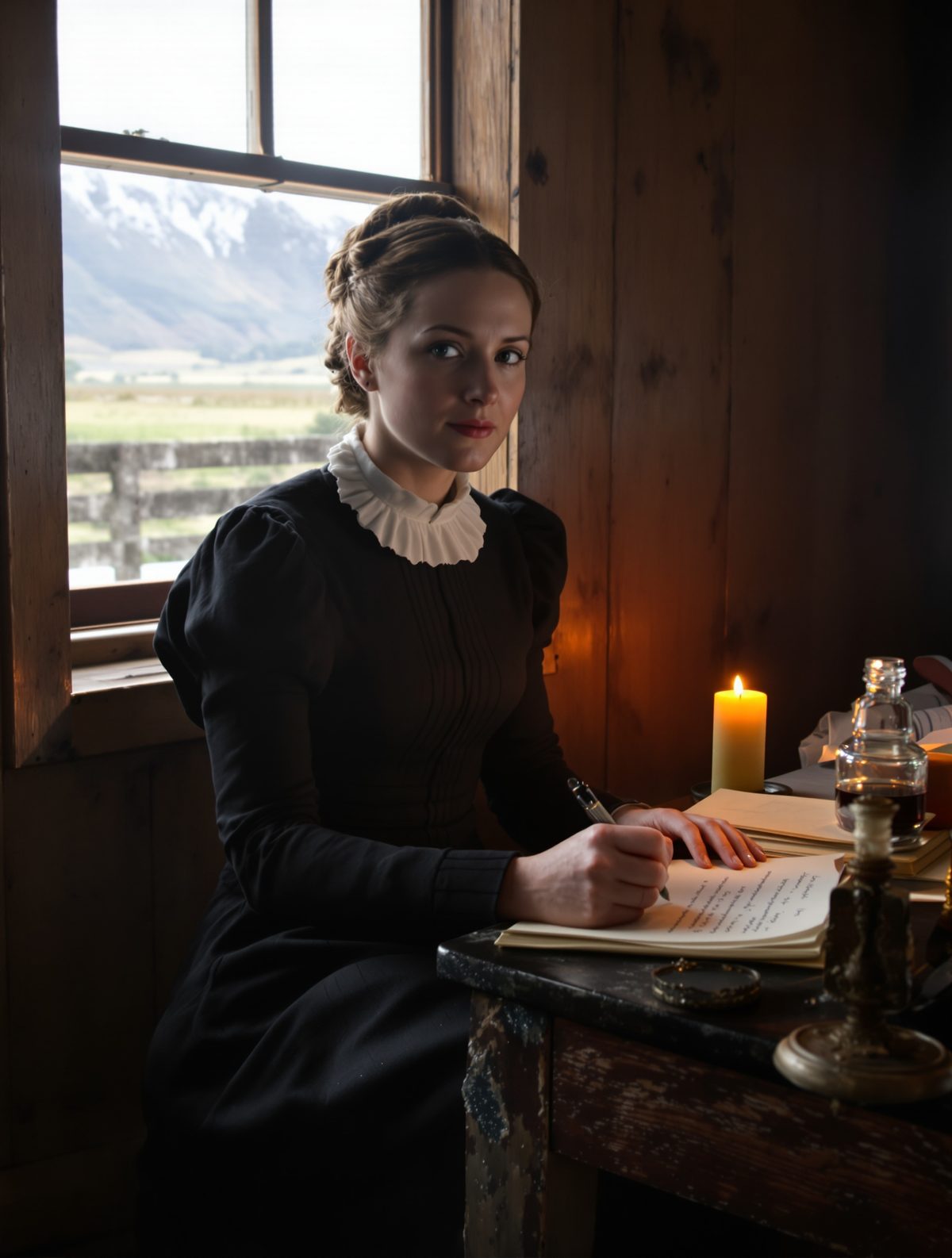
As the first rays of sunlight breached the horizon over Lyttelton Harbour on that fateful day in 1851, the air was thick with the mingled scents of brine, hope, and raw uncertainty. The settlers on board the Randolph, one of the first four ships to bring colonists to New Zealand’s Canterbury region, leaned eagerly over the railings, their expressions a cocktail of anticipation and anxiety. Among them was a woman who would wield a mighty power—not through the plow or hammer, but through the humble pen. Her name was Charlotte Godley, and though she stood as a stranger on the land's muddy cusp, her words would soon conjure an invisible bridge between the distant shores of Britannia and this burgeoning antipodean frontier.
From Somerset Parlor to Colonist's Camp
Born in 1821 in the bucolic setting of Somerset, England, Charlotte Godley was a woman of her time—and strikingly beyond it. Raised in a world where etiquette was tantamount, she was ever curious, her mind a rich tapestry woven with literature, art, and philosophy. It was through her marriage to John Robert Godley, a key figure in the Canterbury Association, that Charlotte's path veered toward the sunlit waters of the South Pacific.
Her role, however, was not one built on toil in the verdant fields of the new world. Instead, Charlotte carved her niche among the settlers through the vivid dispatches she meticulously penned and posted back to her family in England. These letters and later, diary entries offered intimate glimpses into colonial life that few obscure volumes could match for their clarity and charm.
An Ink-stained Portrait of Canterbury
In the shadow of the Southern Alps and amidst the rudimentary unpaved streets of Christchurch, Charlotte Godley's letters transformed the nascent community into a palpable tapestry for her readers back home. Not a simple recounting of events, her writings were imbued with the tones and textures of daily colonial existence. She spoke of the boisterous bleating of sheep echoing in the hills, of fires crackling in modest hearths, and the ever-present dance of the sea on the shores.
This was no paradise, she was clear. There were hardships aplenty in this new land—mud, miscommunication, and meager supplies. Yet, interspersed between each trial was a boundless potential shimmering like the Southern Cross against a night sky. Her gift lay in illustrating this potential with the breadth of her observations, making it tangible for those an ocean apart.
The Untold Legacy of a Poet's Soul
Charlotte’s writings were not mere chronicles; they were catalysts. With each word, she coaxed reality from the limitless frontier, constructing a vision of Canterbury that was both authentically challenging and enchantingly inviting. Her correspondences stirred something deep within the Victorian populace—an adventurous spirit yearning for new beginnings. It is estimated that these bound texts, circulated among the parlors and drawing rooms of England, played a significant role in encouraging subsequent waves of settlers to undertake the journey to New Zealand.
For many, her letters offered an extraordinary invitation penned in the plain language of home. The allure of a fresh chapter, punctuated by Charlotte’s vivid imagery of the land's rhythms and bounty, resonated with those seeking to trade crowded cityscapes for wide, unfettered landscapes.
Pioneering Change through the Power of Story
While Charlotte Godley did not wield a tool to erect the burgeoning town of Christchurch, her vision staked invisible foundations as enduring as timber and stone. Her correspondence, a blend of acute observation and heartfelt narrative, inspired initiatives that would mold the region's future. Farmers, merchants, educators, and clergy—the settlers who arrived in her wake carried her stories in their hearts and minds, informed by her portrayal of the land they sought to inhabit.
Indeed, Charlotte’s observations even touched upon the gentle, seldom-publicized relationships with the Māori, the indigenous inhabitants of New Zealand, portraying them not as curiosities but as fellow inhabitants, thus fostering a sense of shared community and mutual respect, a profound consideration in the era's colonial dialogue.
The Enduring Voices of the Written Word
Though the ink may have faded on the original pages, Charlotte Godley's words have lingered long into the echo of history, her voice a testament to the power of storytelling in shaping societies and capturing the human condition. In today’s world, where information travels at the speed of light and trends are ephemeral as the wind, her story endures because it strikes a chord with the timeless essence of what it means to be connected despite distance—be it geographical or generational.
Her legacy reminds us that amidst grandiose achievements often chronicled in history, it is sometimes the perspicacity of a single, resolute voice that spurs the greatest ventures. Charlotte Godley's letters paved an uncharted path with the ink of optimism, resonating with an inspiration that would help to shape a nation—promising that if one dared to imagine, the world could be so much more than it was.