October 1893. The smoke hung heavy in the air, a specter of conflict and ambition.
The Mandate of Fortune
Once, the name Lobengula echoed like a lion's roar through the dusty plains of Matabeleland. His kingdom, a bastion of ferocity and tradition, nestled between the Zambezi and Limpopo rivers, was a beacon of power in Southern Africa. Yet, to Cecil John Rhodes, it represented a stubborn obstacle in his vision of a British Africa stretching unbroken from Cape to Cairo.
The year is 1893. Rhodes—diamond magnate, imperialist, and master strategist—prepared to gamble on his dream. Lobengula's Ndebele (also known as Matabele) warriors were known for their prowess on the battlefield, their resolve as unyielding as the African sun. Yet Rhodes, undeterred by the formidable reputation of his opponents, banked on a burgeoning force: the British South Africa Company (BSAC), a chartered enterprise that blurred the lines between private and imperial ambition.
Lured by rumors of mineral wealth lying untapped in the earth, Rhodes dispatched his "Pioneer Column" northward, a procession of adventurers, prospectors, and soldiers who bore the Union Jack in pursuit of fortune and expansion. This column was more than a military endeavor; it was an expression of the Victorian dogma that the world was the British Empire's oyster—a treasure waiting to be claimed.
The Shadows of Bulawayo
The town of Bulawayo, the heartbeat of Lobengula's realm, trembled under the looming threat of conflict. Rhodes had no official government mandate for his expedition—an audacious overreach by any measure—yet his blend of bold pragmatism and wealth silenced dissent. The Ndebele, famed for their tactical use of the assegai spear and cow-hide shields, braced for a confrontation that felt woven into the very fabric of their destiny.
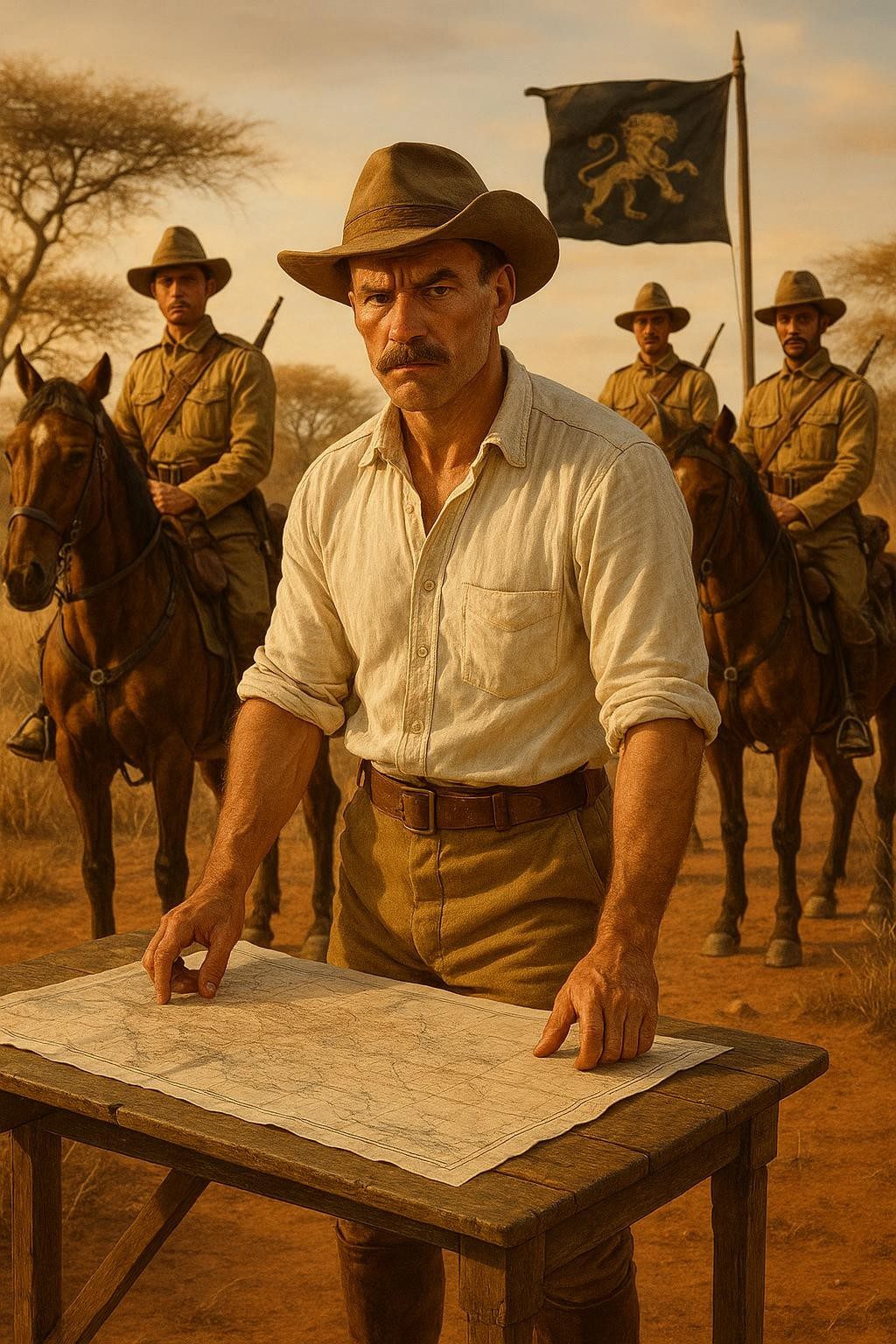
As the BSAC troops marched through the dusty savannah, their rifles a modern testament to imperial power, the contrast with the traditional regalia of the Matabele warriors was stark. The scattered veldts and acacia trees bore witness to the encroachment of an alien force that claimed both the right and might to alter the very borders of kingdoms.
Rhodes knew that to master Matabeleland was to secure the lucrative mineral riches rumored beneath its soil. His private enterprise, thinly veiled as imperial progress, was a calculated risk unmatched in audacity—a private endeavor wrapped in the cloak of empire. The shadows lengthened as the BSAC camped near Bulawayo, where whispers of uneasy alliances and fears of betrayal unraveled the night's quietude.
The Clash on the Plains
Tensions erupted into warfare—a fervid clash beneath the unrelenting African sun. It's easy now to overlook the actualities of the conflict, dismissing it as just another imperial skirmish. Yet to the warriors of the Matabele and the soldiers of the BSAC, it was a moment suspended between history and destiny, a test of wills amidst the veldt.
The Matabele were surrounded during key battles, their traditional tactics ill-suited against the rapid volleys of the Maxim gun—a recent introduction into modern warfare that skewed the balance of power irreparably. Rhodes’s army, armed with the cutting-edge technology of the age, faced Lobengula's forces in a tragic dance that would spell the end for one of the last independent African kingdoms.
Yet the Matabele fought with an indomitable spirit, their war cries echoing like thunder in the gorge between worlds. Each piece of earth over which they fought bore their heritage, each warrior a reflection of a lineage that would soon be subsumed beneath the red ink of imperial cartographers. The fields of Matabeleland, vibrant with the life of generations, became sepulchers shrouded in gunpowder mist.
The Specter of Change
In accepting the terms of defeat, Lobengula fled north, a shadow of the great chief who once stood as a pillar of resistance. His departure marked the laceration of his people’s power—a vanishing point where tradition met the relentless tide of the future.
For Rhodes, the outcome was less an end and more a genesis. The territory, remorselessly brokered into British holdings, became known as Rhodesia—an egotistic homage to the man who could not see an empire without himself entwined within its narrative. Lobengula’s doom was a cornerstone in the edifice of Rhodes’s dream of northern expansion.
The clash in Matabeleland didn’t just shape the territorial map—it redefined epochs. It spotlighted the harsh realities of colonial ambitions, illuminating the lengths to which individuals and nations stretched in their pursuit of power. The story of Rhodes and Lobengula paints the unforgiving portrait of a continent's transformation under external desires. It is a reminder of the paradigm where fortune favors the bold, yet questions linger beneath the dust of the savannah: at what cost, and for whose glory?