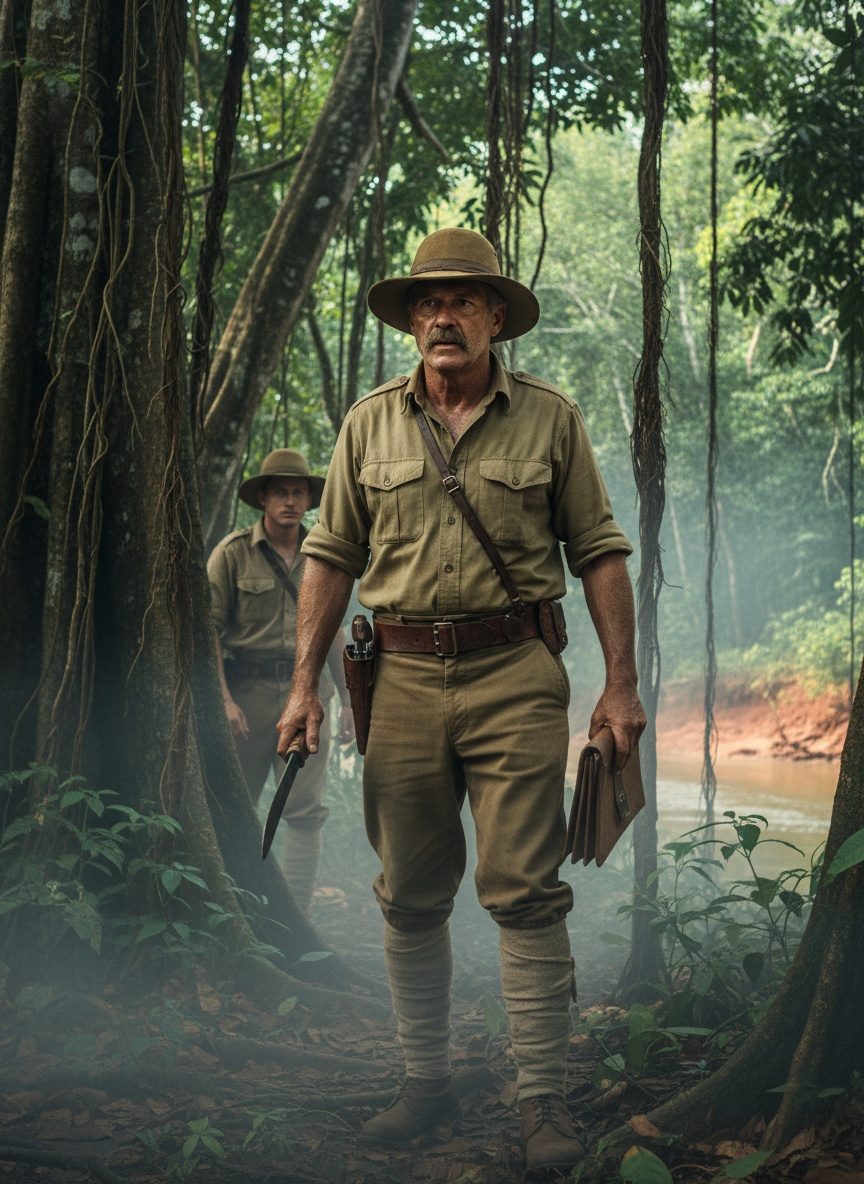
April 20, 1925. The heavy canopy of the Amazon jungle cast a shadow so dense, it seemed night was reluctant to cede to dawn.
The Undeterred Adventurer
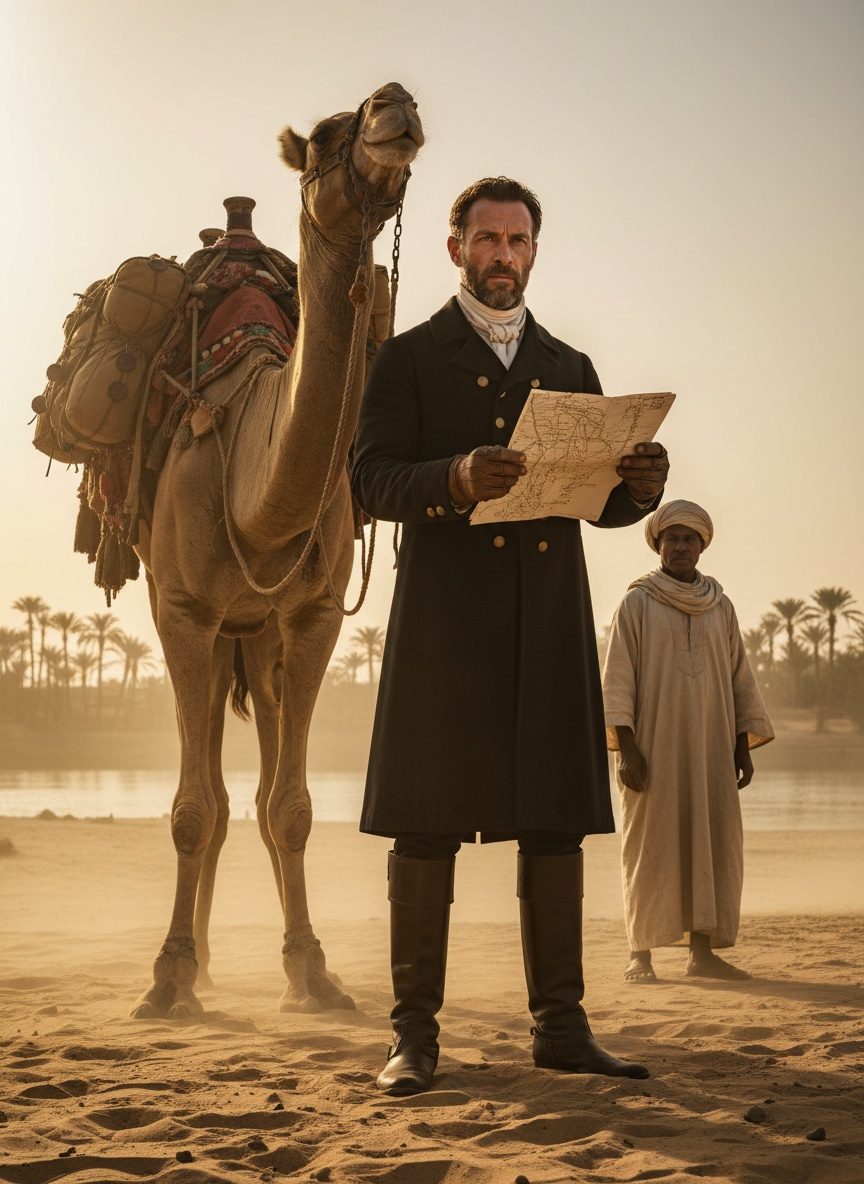
Percy Fawcett was a man unshaken by the rattling drum of skepticism that often greeted his bold explorations. Born into a world where the temperate climes of the British Isles contrasted sharply with the unfathomed wilds overseas, Fawcett became a symbol of the inexhaustible quest for knowledge and discovery characteristic of his era. He was the quintessential explorer-soldier, wedded to the idea of uncovering the vast, unexplored corners of the empire’s maps.
Prior to his ill-fated excursion, Fawcett had carved a legendary path through South America, his name attached to beautifully drawn borders on the newly inked maps of Bolivia. These maps were a testament to his determination and an unwavering belief in the precision of a compass wielded with trust and fortitude. The Royal Geographical Society lauded his efforts, but there was more to Fawcett than his professional accolades. Fascinated by tales of lost cities and ancient ruins hidden beneath the dense foliage of the Amazon, Fawcett fixated on one obsession: the city he called Z.
City Z was no mere myth to Fawcett. It was an enigma wrapped in whispers and undocumented secrets. Descriptions of this city came to him through a myriad of sources: indigenous tribes recounting folklore, half-decayed manuscripts suggesting a forgotten glory, and his own relentless curiosity. When April blossomed in 1925, it saw Fawcett, his 21-year-old son Jack, and Jack’s friend Raleigh Rimell set forth into the Brazilian interior armed with minimal supplies and a dream that weighed more in their minds than their satchels.
The Heart of Darkness
As the trio delved deeper into the verdant veils of the Amazon, each step took them farther from the predictable charting of explorers' tales and nearer to the realm of the unknown. The jungle closed in around them, a suffocating embrace that shielded secrets as lush and dense as its own thicket. Days transformed into indistinguishable stretches of survival against a backdrop of towering trees, cascading waters, and the haunting chorus of creatures hidden from sight. To outsiders, the Amazon was an expanse of impenetrable wilderness, but to Fawcett, it was a living map filled with potential paths to Z.
Communication dwindled as they ventured further. Those waiting with bated breath in the comfortable confines of the Royal Geographical Society received no messages, no signs, no assurances. The silence was a void, vast and intimidating, mirroring the jungle that swallowed their trajectory. Hope lingered, tethered to the intangible string of Fawcett's reputation — but as weeks passed, hope grew thin.
Theories arose amid the absence of facts. Had they angered unknown tribes, vanishing forever in a throng of conflict and misunderstanding? Had the jungle consumed them, claiming their last moments in a struggle with nature’s most primal elements? Or had they perhaps found their fabled city, melding into it, choosing mystery over modernity? Every possibility became a thread woven into a tapestry of speculation.
The Legacy of an Enigma
Fawcett’s disappearance ignited fervent debate for decades within the halls of the Royal Geographical Society and beyond, as scholars and would-be adventurers alike pondered the symphony of silence left in his wake. Expeditions launched in a desperate attempt to unearth answers only compounded the mystery. Each quest returned either empty-handed or embroiled in similar tragedies, poisoning the wells of certainty with even more ambiguity.
The allure of City Z grew stronger in absence; its mythical status now etched in the annals of exploratory legend, with stories passed down like scripture for curious minds. The real specter that haunted the society was not the city itself but the compelling narrative constructed by Fawcett: an unyielding belief in the unseen colored by the relentless pursuit of an enigma.
Even after Fawcett vanished, his name continued to echo in every whispered story and fervent debate, challenging the boundaries of what was possible versus what might only exist in the realm of unproven dreams. Fawcett's idolization of an idea — a hidden city amidst the Amazon’s splendor — was emblematic of an era teetering on the cusp of rediscovering its sense of wonder. Indeed, his journey spoke of an underlying human desire — to venture beyond the known, to rewrite boundaries, and perhaps most compellingly, to redefine what it means to discover.
Today, the story of Colonel Percy Fawcett and his comrades remains a haunting reminder of exploration’s uncertain tenacity, a mystery shrouded in foliage, whispering tales to those brave enough to listen.