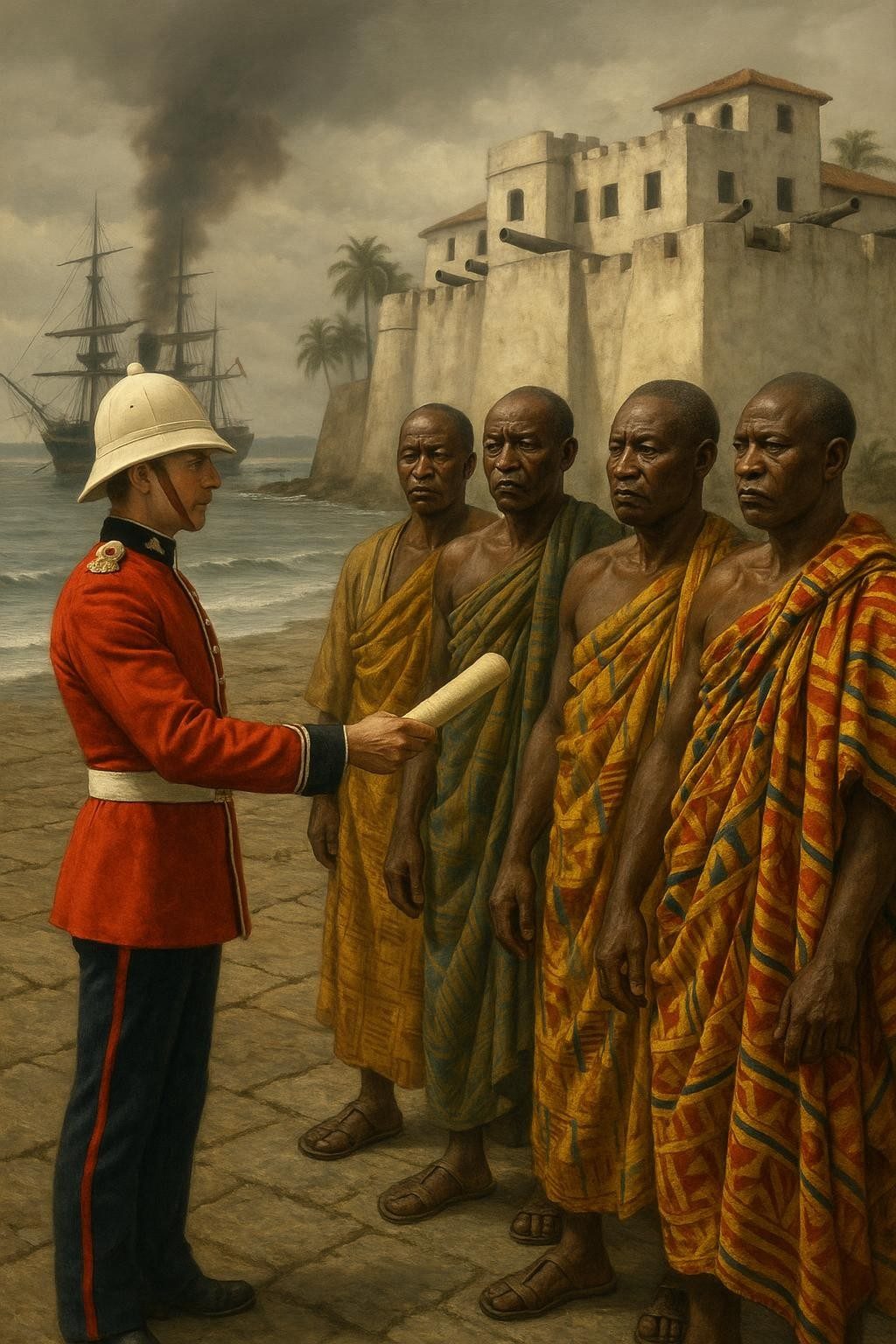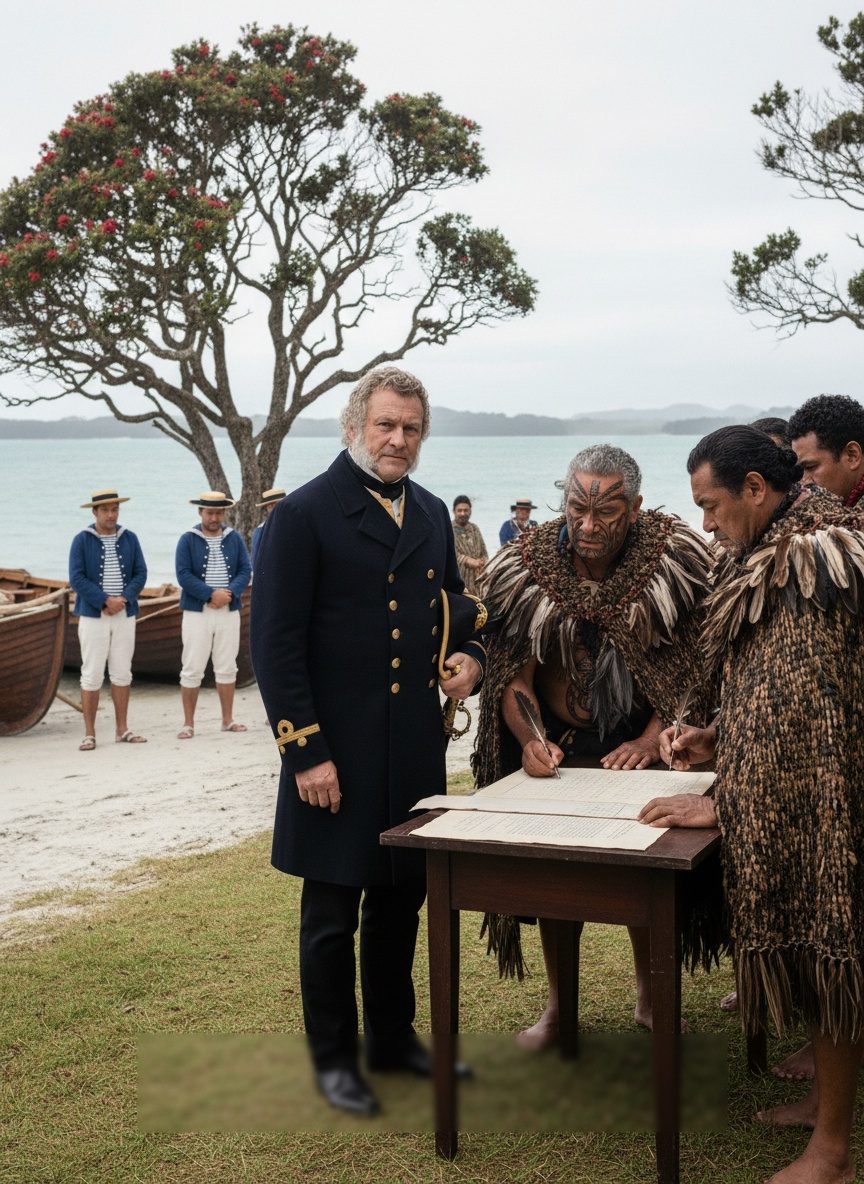
It was a blustery February day in 1840. The clouds hung low over the Bay of Islands, casting a subdued light upon the gathered crowd. The waves murmured softly as they caressed the shore, a natural accompaniment to the hushed anticipation that charged the air. This piece of New Zealand's coastline, often buffeted by nature's whims, now served as the stage for a historical drama that would forever alter the land and its people. As Lieutenant-Governor William Hobson unfurled a document, the prospect of a new governance began to unfold alongside it — a delicate dance between colonization and compromise that would echo through generations.
A Treaty on Shifting Sands
The windswept beach at Waitangi witnessed a profound moment of diplomacy as British officials and Maori chiefs came together. Among them, Lieutenant-Governor William Hobson stood, a figure tasked with a monumental mission. The Treaty of Waitangi, held in his hands, was more than just a piece of parchment. Its folds contained promises of shared sovereignty, envisaging a future where Maori and settlers would coexist under a unified legal framework, a promise that was unprecedented and fraught with complexities.
Signing the treaty introduced English common law to these shores — a system both alien and alluring. For the chiefs, it offered an opportunity to safeguard their traditional lands and retain autonomy. Yet, it also signified the dawn of profound change, casting shadows of uncertainty over long-held customs and governance structures. The ink that bonded their marks to the page tethered two vastly different worlds, charting a course into an uncharted future.
A Fractured Agreement
At the heart of the Treaty lay a tension between translation and interpretation. The Maori version of the Treaty, crafted swiftly, bore subtle yet significant differences from its English counterpart. In the Maori text, the term *tino rangatiratanga* implied a retention of chieftainship and autonomy, while the English version leaned heavily towards British sovereignty.
This fracture in understanding sowed seeds of contention that would bloom decades later. Despite the promise of protection and shared governance, confusion over land transactions and authority began to surface. Treaty's initial spirit of cooperation met with resistance as settlers expanded and translated these agreements into broader rights than what many Maori had understood or intended.
The Legal Landscape Transformed
As the Treaty took root, English common law began its complex integration into New Zealand's societal fabric. It introduced a judicial system that promised impartiality and justice, yet inadvertently marginalized existing Maori legal traditions. The conversion of land into property, a concept foreign to Maori communal ownership principles, marked the beginning of altered landscapes — both physical and cultural.
However, the resilience of Maori communities should not be underestimated. Over time, they learned to navigate this new legal milieu. This adaptability showcased a remarkable fusion of cultures, creating a unique legal identity within the realm of the British Empire. Despite early naiveté and political imbalance, Maori agency gradually emerged, finding its voice within the legal frameworks initially designed to overshadow them.
Echoes Through Time
The Treaty of Waitangi remains a living document within New Zealand's legislative and cultural consciousness — much more than just a historical artifact. Its legacy prompts essential discourse on sovereignty, justice, and reparation even in contemporary times, challenging the nation to reflect and refine its principles of bicultural governance.
The fluctuations in its interpretation have taught lessons about the fragile nature of communication between cultures and the layers of meaning that the written word cannot encompass alone. As New Zealand continues to reconcile its past with its present, the Treaty stands not only as a foundational agreement but as a persistent reminder of the importance of dialogue, understanding, and respect in fostering relationships that endure.
As waves continue to whisper along the Waitangi shore, they carry with them an unending story of a nation's genesis — a tale of promise, misunderstanding, and transformation. It calls for vigilant custodianship, inviting new generations to engage with its principles, ensuring that the rights it sought to enshrine are not lost to time's relentless tide.