Samuel Ajayi Crowther was just another name in African history. But his life resonates beyond what any textbook could contain.
Chained and Rescued: The Crucible of Captivity
The story of Samuel Ajayi Crowther begins in 1821 on the bustling yet perilous streets of a village in what is now Nigeria. Born to a Yoruba family, young Ajayi lived a life that was as normal as one could expect in a time plagued by tribal conflicts and slave raids. Yet fate was not kind. In a heart-wrenching twist, he was ripped from his family’s embrace at the tender age of twelve. Stripped of freedom, enchantment gave way to the hard reality of chains, marking the beginning of a harrowing journey.
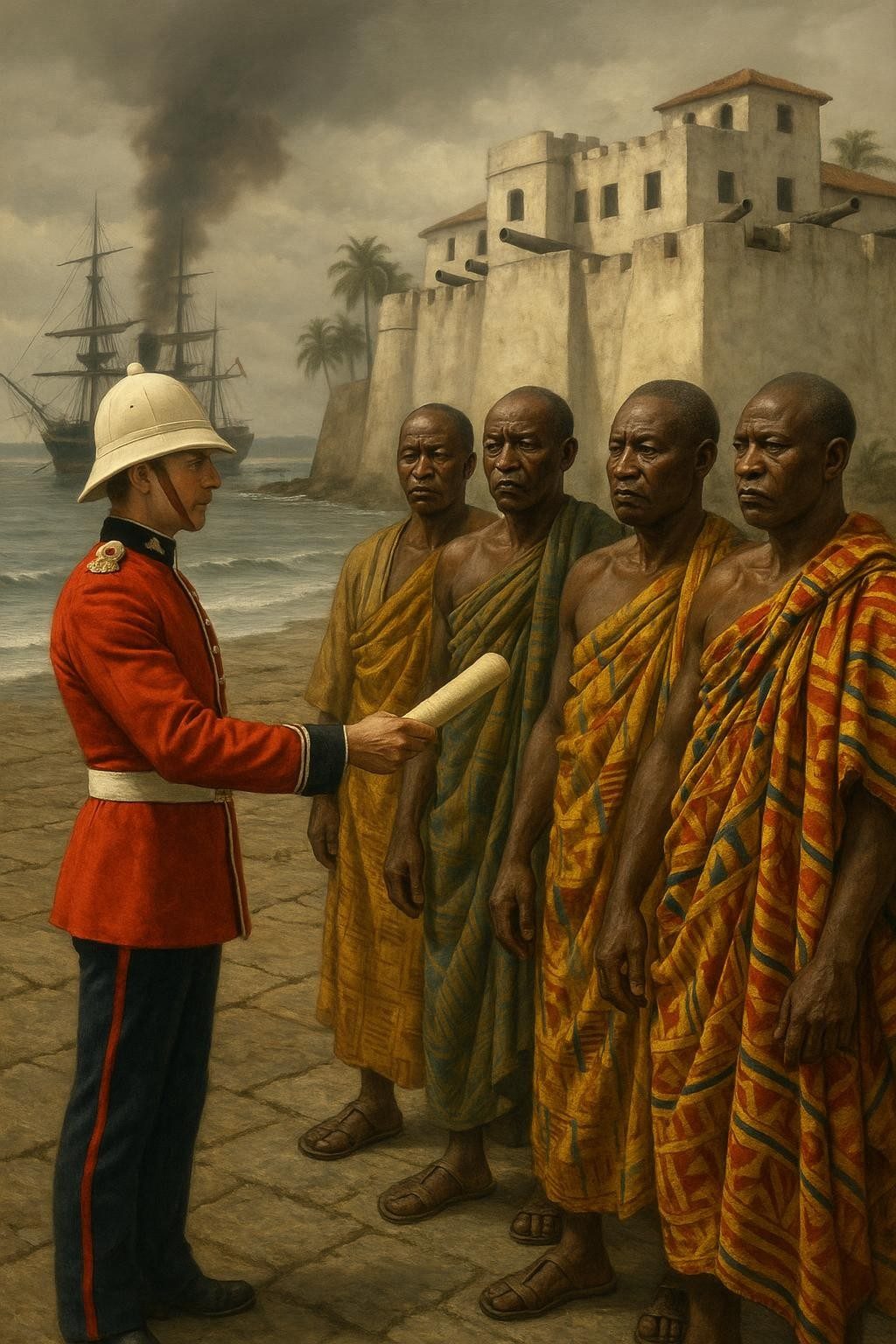
Driven by the constant ebb and flow of the Atlantic slave trade, Ajayi found himself aboard a slave ship bound for the horrors of the transatlantic journey. He wasn't just another body among the hundreds packed into that ship; he was a child, terrified and alone, his mind seared by the cries of the other captives and the stench of despair. But divine providence had other plans. In a twist of Victorian heroism, the Royal Navy, enforcing Britain's anti-slavery initiative, intercepted and liberated the vessel. This moment of salvation planted Crowther on the path of redefining not just his fate, but perhaps the destiny of a continent.
Transported to Sierra Leone, a haven for freed African slaves, young Ajayi's identity was reborn. The Christian missionaries there named him Samuel after the biblical prophet who heard God's call, and Ajayi Crowther, after a generous patron. This new identity foreshadowed his emergence as a voice for his people. It was in this realm of redemption and possibility that he first encountered the Church of England’s influence—a church that would educate, inspire, and eventually break countless centuries-old barriers through him.
Scholar and Shepherd: The Scholar's Anointing
In Sierra Leone, Crowther's intellectual prowess and spiritual fervor blossomed. He displayed an insatiable hunger for knowledge, which the Church of England satiated with its comprehensive education. The missionaries recognized his gifts and nurtured them within walls of palm-roofed classrooms. He became fluent in English, Latin, Greek, and the sacred languages that would serve his mission. But it was his mastery of native African languages that set him apart. This ability would become instrumental in bridging cultures—an endeavor much needed in an era defined by the European Scramble for Africa.
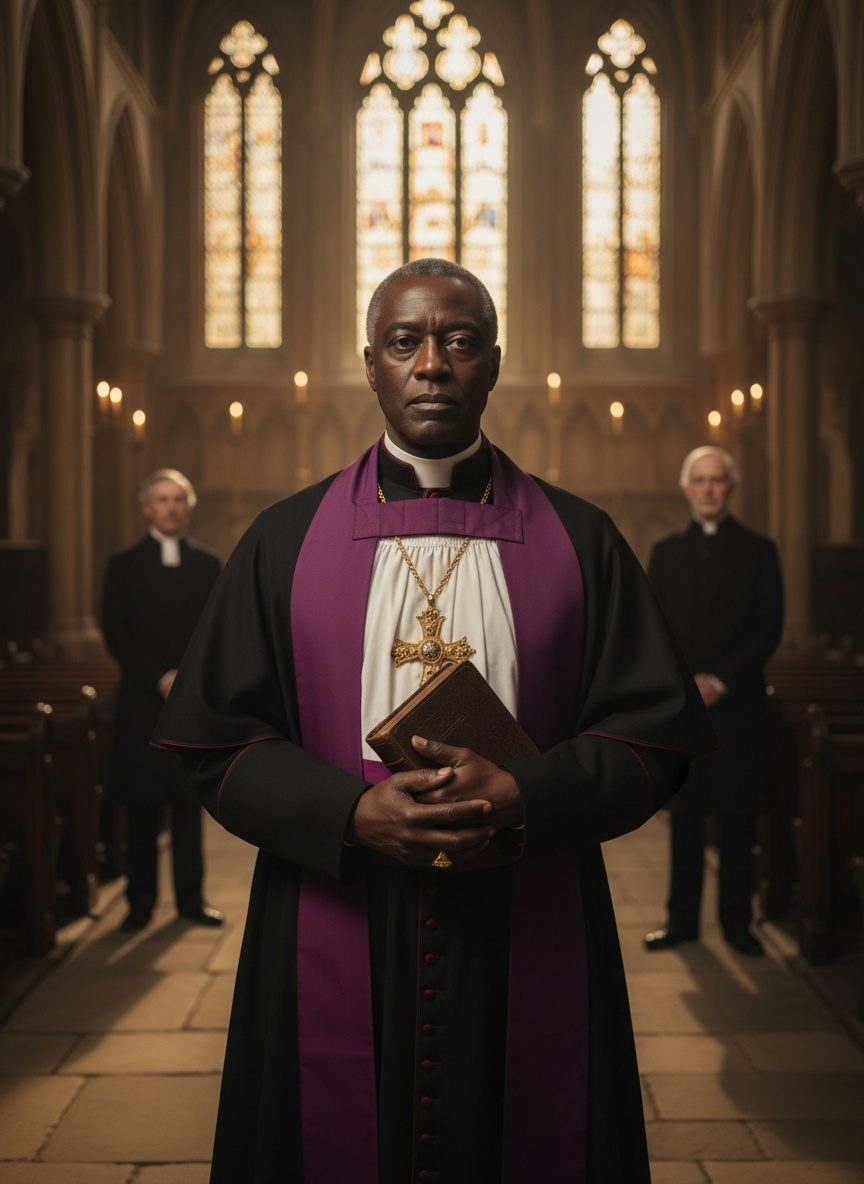
While his academic achievements were mounting, so was his spiritual conviction. It was in 1864, before a congregation filled with anticipation, that Crowther donned the robes of a bishop, the first African to do so in the history of the Church of England. This was a ceremonial recognition not just of Crowther’s scholarly accomplishments, but of the indomitable spirit that had carried him from the dark depths of human subjugation to the luminous heights of ecclesiastical authority.
As bishop, Crowther's mission reached across the rivers and savannas of his native land, promulgating Christianity and fighting against the illicit activities that once enslaved him. He championed the translation of the Bible into Yoruba, a first for his people, offering them spiritual scriptures in their mother tongue. But Crowther's endeavors extended beyond theology; they became a powerful testament to the intersection of faith and liberation. He dreamed of educated African agents who could lead their communities toward a future unfettered by colonial chains.
The Unyielding Voice: Defying the Silence of Chains
In his newfound role as bishop, Crowther was not just a passive figurehead. He was an active participant in a broader dialogue concerning Africa's future—a continent where colonial powers reigned imperiously. Crowther, however, was uniquely positioned to serve as a guardian of his people's heritage while advocating for their spiritual and educational upliftment. He refused to be silenced in a council often dominated by European voices.
It’s here that Crowther became truly extraordinary; he used his voice to critique the very institutions that had, paradoxically, both oppressed and saved him. He challenged practices within the church and European dominance that marginalized African clergy. Crowther's insistence on African leadership and self-determination within church affairs was pioneering—his was a subtle yet powerful form of resistance against the colonial structure.
Though his story began with chains, his life's work aimed to break them, not just for himself, but for countless others. In his twilight years, amid growing colonial pressures, Crowther remained unyielding in his commitment to his mission and his people. He envisioned a future for Africa that was neither overshadowed by colonial presence nor blind to western advancements.
In reflecting on Samuel Ajayi Crowther’s life, it is clear that his narrative extends beyond the personal triumphs of a once-enslaved boy who became a bishop. He exemplified courage in the face of adversity and lent his voice to a mission larger than himself. His story counters the colonial narratives prevalent during the Scramble for Africa and reminds us of the resilience and resistance embedded in Africa’s historical fabric. Crowther’s legacy challenges us to revisit and reinterpret history not from the seats of power but from the voices that refused to be silenced.