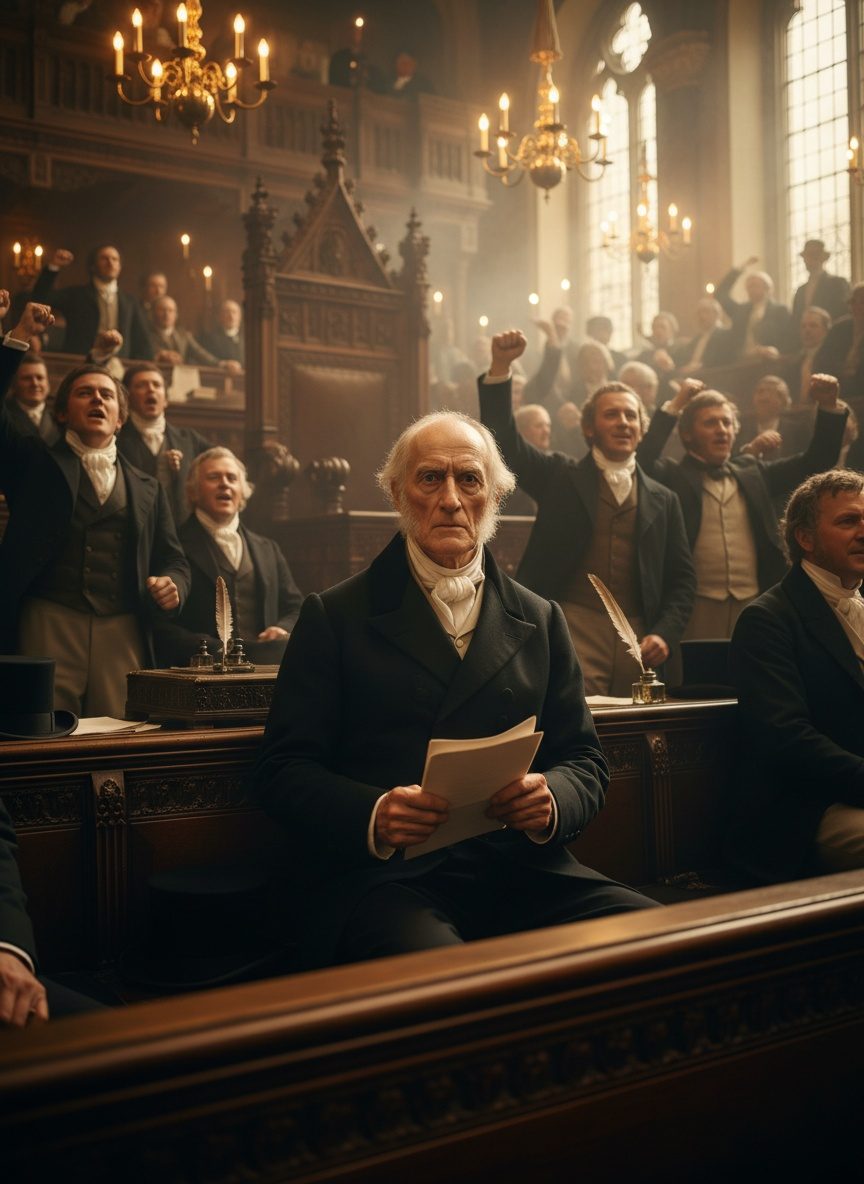
The late summer sun hung low in the London sky on a humid August afternoon in 1833, casting long shadows over the historic chambers of the British Parliament. Within the hallowed rooms, an uncommon tension electrified the air, mingling with the excitement and apprehension of an imminent seismic change—the abolition of slavery across the British Empire. As the whispers of the lawmakers converged into debates and resolutions, the fate of 800,000 souls lay precariously in balance. It was a day history had been slowly, painfully nudging towards—a day the world would mark as a pivot toward human dignity.
Whispers of Freedom in Westminster
From the confines of Westminster Palace, under the glow of flickering gas lamps, lawmakers were embroiled in a battle that had simmered for decades. The Slavery Abolition Act, a monumental piece of legislation, lay open across mahogany tables, its ink fresh but its ideals ancient. The names of those who championed this cause were already etched into history, none more prominently than William Wilberforce, a devout abolitionist who had dedicated his life's work to this singular goal. It was during the final hours of his life that word reached him of the Act's passage, a bittersweet triumph that came just days before his death. Wilberforce’s years of steadfast advocacy and tireless campaigning at last bore fruit, marking a historic turn for the Empire he served.
Echoes from the Colonies
As the Act made its way across the vast British Empire, it carried not only the hopes of reformers but also the fears and uncertainties of those who had, for generations, relied on the institution of slavery. In the Caribbean, where sugarcane fields stretched out beneath a blazing sun, slave owners grasped the gravity of their economic and social upheaval. The sugar trade, a cornerstone of Colonial wealth, now faced an uncertain future. Jamaica, Barbados, and other islands whispered with the anxious murmurs of plantation owners as the weight of change approached their shores.
For those enslaved, the news of abolition was met with a complicated mix of joy, suspicion, and disbelief. Liberation had been a whispered dream for so many, a dim ember continually threatened to be snuffed out by the harsh realities of oppression. The announcement of their freedom, received through scattered newspaper pages or spoken across communities, reverberated like heavenly choruses across fields and settlements, unleashing a wave of euphoria and cautious optimism.
The Mechanics of Liberation
The technicalities of this colossal transition were far from seamless. The 'apprenticeship' system, a compromise embedded within the Act, meant that former slaves were required to continue serving their former masters for a period, ostensibly to ease the transition. Many criticized this as a mere step away from full liberation, a shadow cast upon the bright promise of freedom. This intermediary phase lasted until 1838 and highlighted, with stark clarity, the complexities following legislation that promised to dismantle centuries of entrenched societal norms.
The economic compensation offered not to the newly freed but to slave owners—over £20 million—further complicated the moral landscape of the Slavery Abolition Act. The Empire had chosen to redress the financial costs of its decision while the formerly enslaved were left to rebuild their lives with little material aid. This decision revealed the gulf that still separated moral progress from financial realities.
The Ripple Effects of Liberty
The enactment of the Slavery Abolition Act in 1833 precipitated a cascade of reverberations beyond the immediate legal implications. In Africa, the British navy intensified its patrols off the West African coast, capturing ships still engaged in the illegal slave trade and thereby staunching the transatlantic flow that had propelled empires of exploitation for centuries. As British influence swayed toward antislavery, it catalyzed a series of similar legislative acts and moral reckonings across the globe.
Within the Empire itself, societies transformed. In cities from London to Cape Town, a burgeoning abolitionist movement intended to cement and spread the ideals that had finally triumphed. This ideological shift also sowed the seeds for other civil rights movements, inspiring generations to advocate for equality and justice beyond abolition, into realms of gender, class, and later racial equality.
A New Dawn from Unyielding Night
August 1833 heralded a new dawn, not just for the British Empire, but for the world. It was a profound statement about human rights and dignity, perhaps one of the earliest global acknowledgments of universal freedom. The echoes of that tenacious August day can still be felt today, testimony to a moment where the resolve of a few became the liberation of many. The legacy of the Slavery Abolition Act transcends its time, challenging us to consider our continuing struggles for justice as an extension of the fight inscribed in those crowded chambers of Westminster. It invites reflection on how far we have come and how vigilant we must be to protect the freedoms won.