She was a woman of mixed heritage in a time when that alone was a barrier. She charged into a war zone with nothing but her own convictions and a trunk full of remedies.
Defiance and Determination
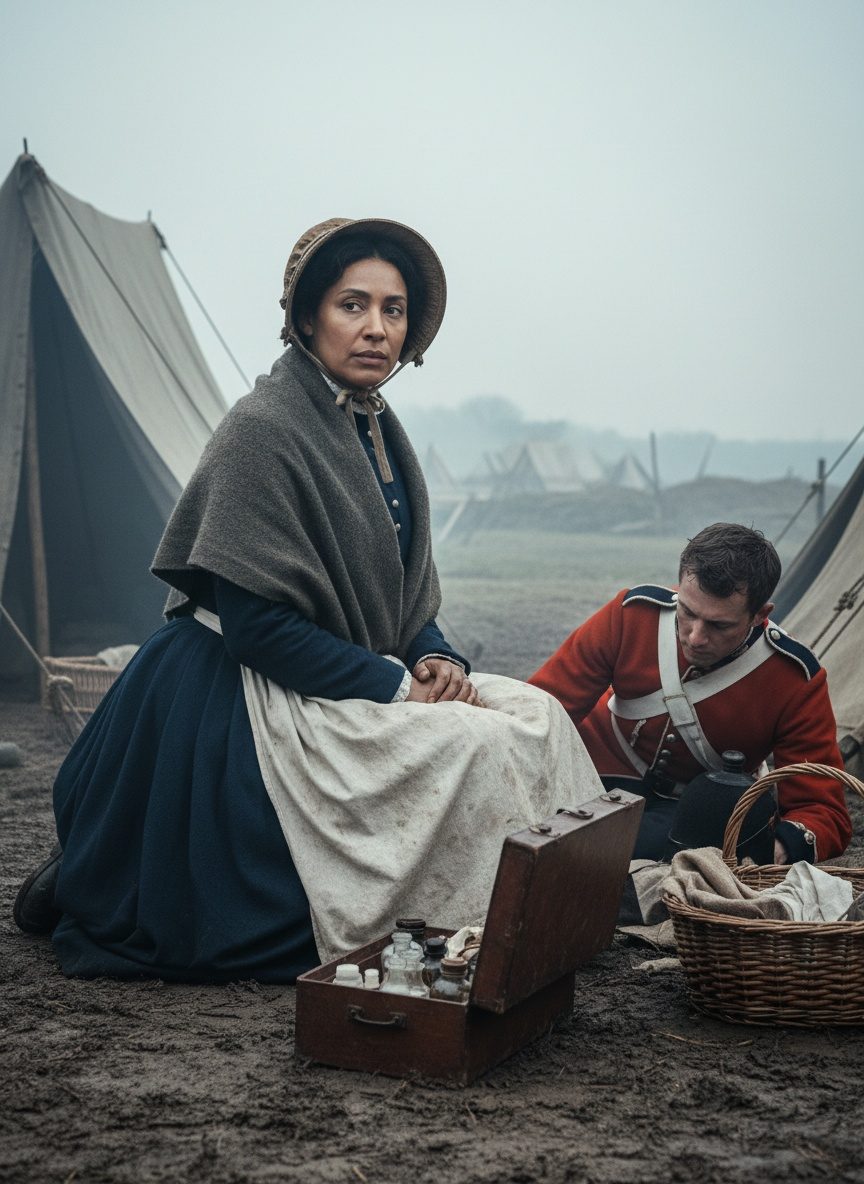
Imagine a British fortress besieged by chaos in 1855, with the air heavy with the tang of gunpowder and the sharp cries of the injured. In the midst of this turmoil, Mary Seacole emerged, undeterred by rejection. The British War Office had dismissed her applications to serve, a decision steeped in prejudices, bureaucratic inertia, and, allegedly, fiscal constraints. Yet, such setbacks couldn't extinguish her determination. Armed only with skill, resilience, and an unyielding compassion for the suffering troops, Mary Seacole funded her own passage to the Crimea.
Seacole was born Mary Jane Grant, a child of Kingston, Jamaica, with a British father and a Creole mother. Her upbringing amidst her mother's boarding house for invalid soldiers infused her with a deep knowledge of traditional medicine, and she often assisted with her mother's herbal treatments. Mary's early life was filled with learning about healing, a pursuit encouraged by her mother. This knowledge would later serve as her arsenal in the dark days of the Crimean War.
Upon arriving in Crimea, Mary established a modest sanctuary of solace, known informally as the "British Hotel." It was a place that served not just nourishing food, but comfort and healing. Her hands would deftly apply bandages, her herbs would soothe fevers, and her presence would offer the warmth of a mother's gentle embrace. This hotel, though primarily a store, became a haven for soldiers retreating from the relentless violence. Here, Seacole practiced the art of medicine amid the cacophony of war, at a time when her gender and ethnicity could have easily relegated her to the sidelines.
The Battlefield Angel
Mary Seacole's commitment did not stop at her makeshift hotel. She often ventured directly to the front lines, an action fraught with danger yet testament to her fearless nature and unswerving dedication to those in desperate need. This was unheard of—and unimagined by those who denied her—but she carried on undaunted in the face of artillery barrages and the stench of the trench. Without any official sanction or support, Seacole navigated the administrative void by standing firm in her purpose.
To witness Mary in action was to observe a symphony of disciplined care and instinctual compassion. With her medicine chest by her side, she provided immediate treatment directly on the battlefield, offering care when it was most critical. The men she treated were often on the brink between life and death, where time was the edge that defined survival. The supplies she had painstakingly prepared advanced with her every step, vapors and salves crafted from generations of herbal wisdom.
In the aftermath of skirmishes, her presence was an anchor in the turbulent seas of war. While officially overlooked, it was the common soldier who revered her, calling her "Mother Seacole" with affection and gratitude. Her efforts reflected a bold interpretation of nursing that went beyond convention and into the realms of personal sacrifice. In her actions lay both an indictment of the system that disregarded her and a celebration of the indomitable human spirit.
Why Mary Seacole Should Be Remembered
When the cannons finally stilled and the Crimean battlefield fell silent, it was not titles or official recognition that defined Mary Seacole’s legacy but the whispered thanks of the men she nursed. Her actions illuminated the stark contrast between the rigid institutions of her time and the boundless capacity of an individual to affect change. Without orders, salary, or official standing, she maneuvered within a system that had narrowly defined roles and pushed boundaries with every life she touched.
In the broader tapestry of the Victorian era, Mary Seacole’s story is one of individual agency and unfettered resolve. This narrative matters because it highlights a truth often implicit in history but seldom heralded: that courage can carve a niche even in the face of overwhelming odds. Her hands carried more than bandages; they were vessels of healing and hope. Her life was a declaration that participation in the great struggles of humanity was not exclusively for those sanctioned by authority. Instead, it was for those whose compassion refused to be tethered by convention.
Reflecting on the legends left out of the textbooks, Mary Seacole's story serves not only as an inspiration but also as a challenge to future generations: to understand that often the greatest contributions come from those who step forward when denied the simplest of credentials. A woman in a war zone with no mandate but her own, she stands as a heartening example of how individual resolve can emerge triumphant over collective oversight.