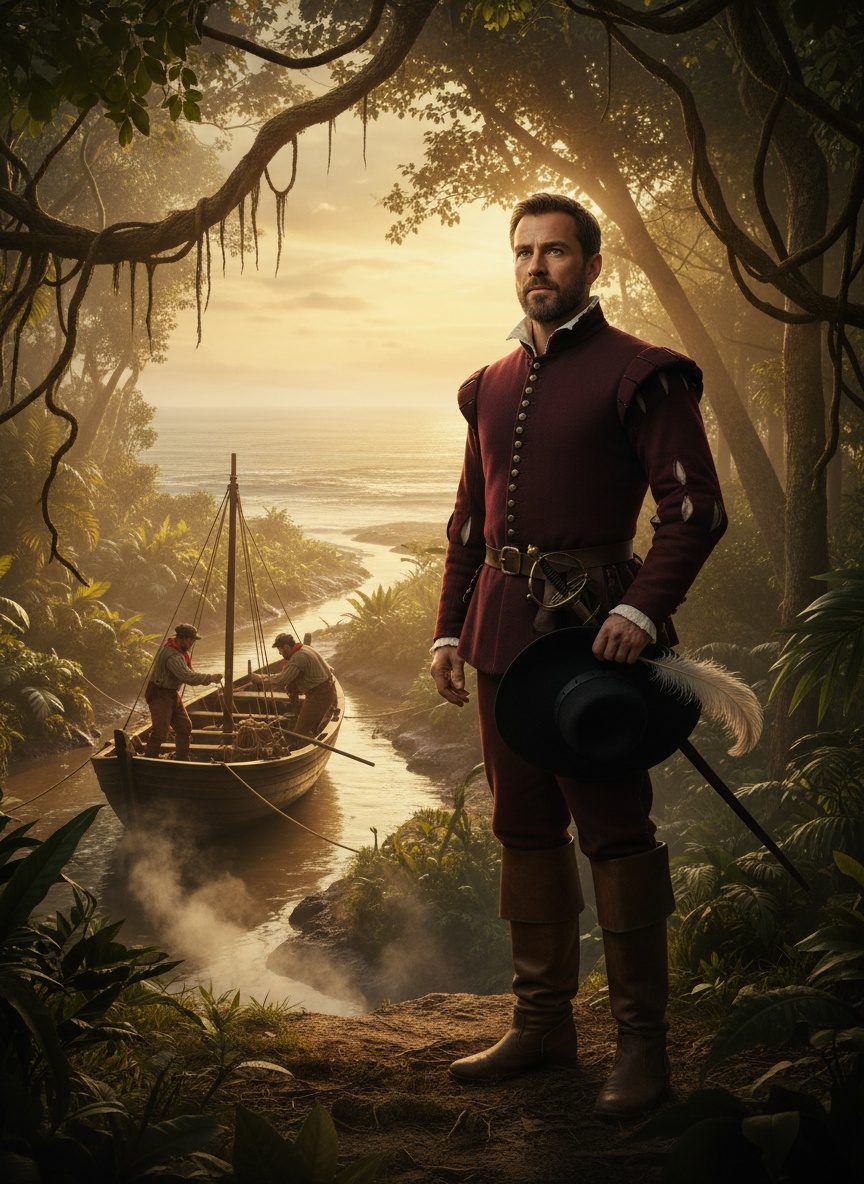
The tropical air was thick with anticipation as George Goldie extended his hand toward the chieftain. Sweat beaded on his forehead, but his grip remained firm — a silent promise of the grand schemes that danced in his mind. The sound of the Niger River's rushing waters echoed the beating pulse of the untamed land. This was more than a trade agreement; it was the birth of an empire made by his own hand, a new branch in the sprawling tree of the British Empire.
The Chessboard of Commerce
To those uninitiated in the complex dance of commerce and conquest, the Niger Delta of 1886 might have seemed like an impenetrable wilderness, but through the eyes of George Goldie, it was a chessboard. Each river and its tributaries tangled like a knotted string of pearls, guarded by African kingdoms and peppered with the outposts of French traders. It was a land ripe for the taking, but only to the player with the vision and daring to handle each piece with precision.
It was into this crowded arena that Goldie, a British merchant of unyielding resolve, had stepped a decade before. With the foundational charter of the newly formed United African Company, Goldie pursued the Niger with a singular fixity of purpose. Step by calculated step, he outflanked his rivals, purchased their resignations, and reshaped the mercantile landscape to his design. His strategy was as relentless as it was subtle; weaving treaties with native leaders, he stitched together a patchwork quilt that sprawled across the interior, threads of influence binding the far-flung reaches under his control.
By 1886, George Goldie had invested his all into the Niger — both his fortune and his reputation. The name that hung on every lip in the Delta was not that of a local king or foreign power, but that of Goldie himself. In the shadow of giant mangroves and amidst the echoes of English accents in African marketplaces, a new force was emerging. The river might rage and the jungle might encroach, but they could not deter the will of a single man bent on manufacturing destiny itself.
Mapping the Uncharted
One could imagine the distant rumble of elephant herds and the songs of exotic birds filling the air as Goldie trained his sights on what no man had yet etched with ink. The map of the Niger was little more than speculative doodles on the globe — an explorer's enigma yet to be unraveled. Yet Goldie saw not blank spaces, but a blank canvas awaiting the stroke of an empire builder's hand.
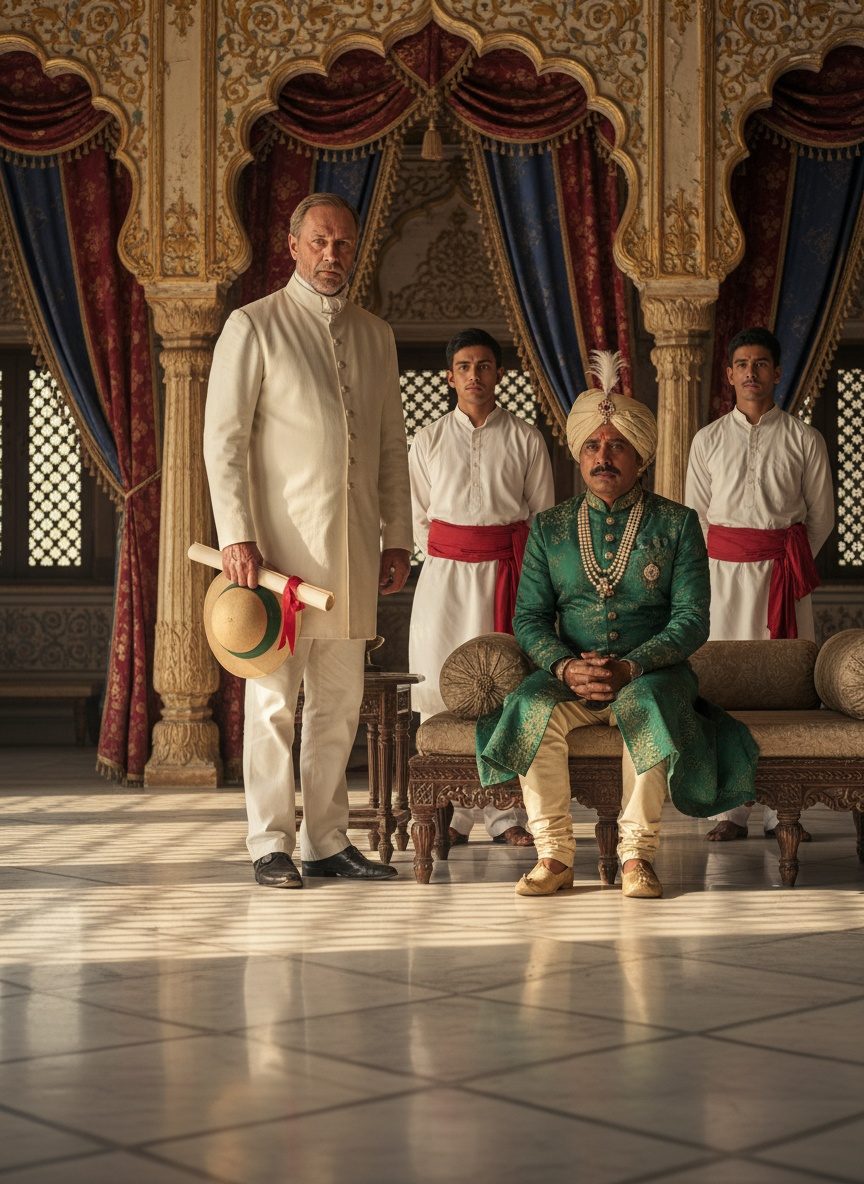
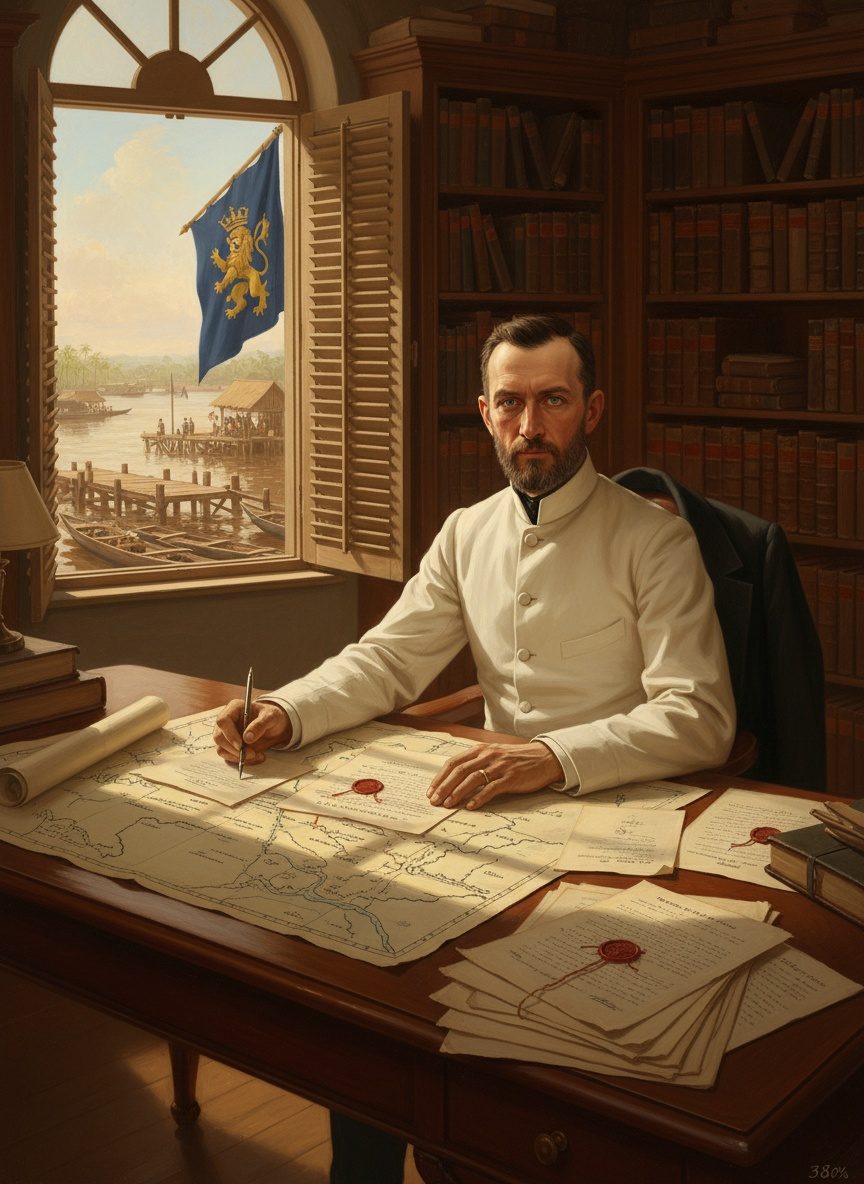
With steady diplomacy, he coaxed the loyalty of local chieftains to cast their lot with the burgeoning power of the British Crown. The treaties he forged were as much about pen and parchment as they were about mutual respect and understanding. Each agreement was a microcosm of give and take, the unhurried negotiations echoing the timeless rhythm of the tide. Goldie's ambition wasn’t to merely ground a flag and lay arbitrary claims, but to render the seemingly formless river a vital artery of trade in Queen Victoria’s vast dominion.
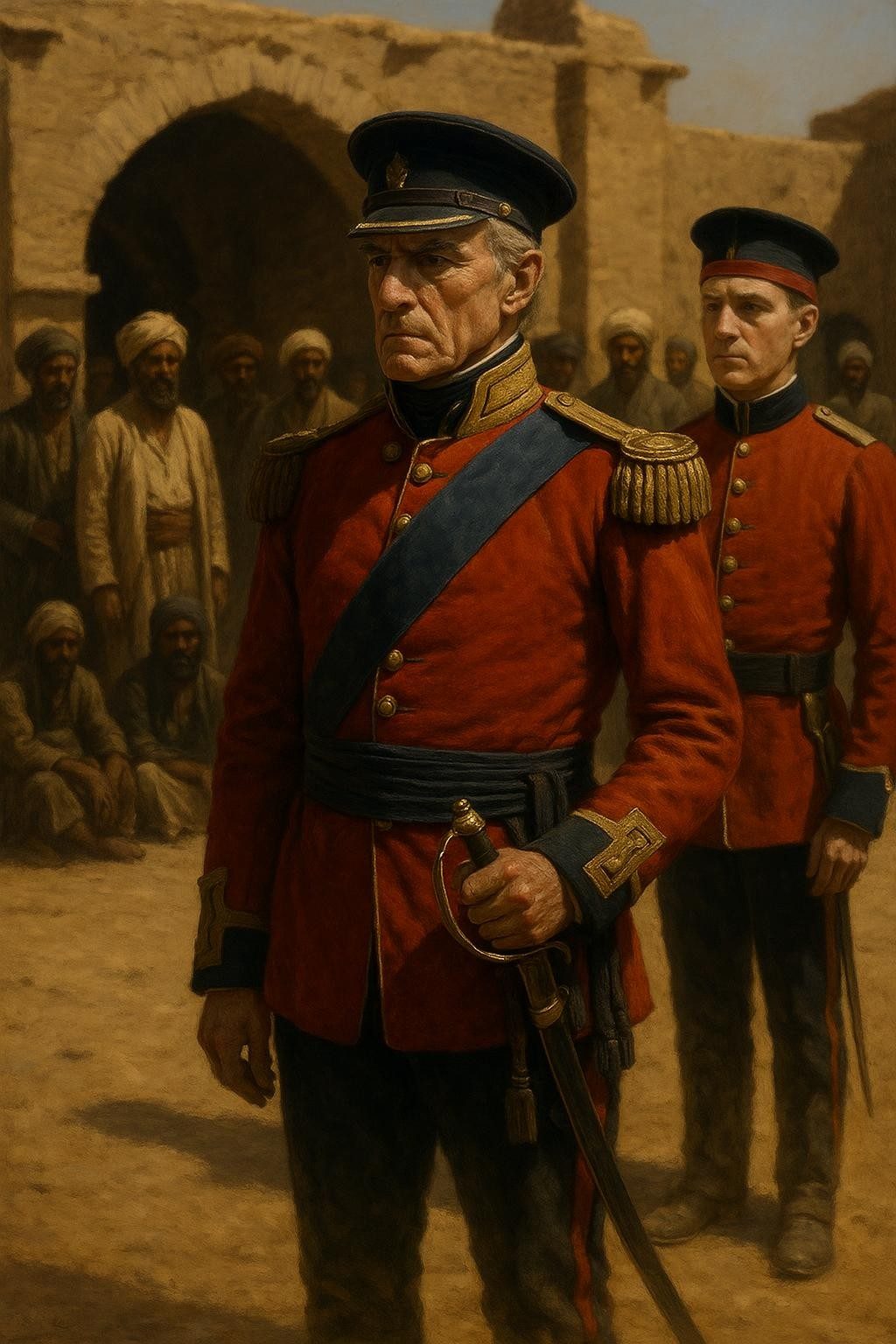
The weight of compromise rested squarely on each clause and each handshake was a pebble tossed into the pond of colonial ambition — ripples that would lap up against the shores of history. George Goldie’s endeavors drew borders where natural barriers had once held sway, his every success tightening Britain's grip on the burgeoning trade routes that crisscrossed the heart of West Africa.
Pillars of Empire Rising
Under the brooding skies of the tropics, emboldened structures began to rise, like sentinels along the riverbanks. Warehouses stood as monuments to the trade goods they stored; the sweat of countless laborers woven into their wooden frameworks. The fabric of what would become Nigeria was spreading its weave wider, as African kingdoms conceded their riches and suzerainty to the determined iconic hand of a singular British entrepreneur.
No longer were the Niger’s waters contested grounds among rival claimants, French influence washed away by the steady pull of British consolidation. The whir of industrious activity filled the steamy air, and from the smokestacks of paddle steamers, billows announced that progress might be slow, but it was inexorable.
As the year turned to 1886, Goldie's company rebranded itself as the National African Company, a coronation befitting the dominance it enjoyed. Here was a burgeoning culture of commerce grounded not merely by profit margins, but by a deeper romantic notion of civilization's expansion, the Victorian confidence in its spectral mission to marry enlightenment with enterprise at the eater’s edge of the titled British world.
The Empire Within an Empire
In this tropical crucible, the story of Nigeria began not with a grand design of parliamentarian decree. Instead, an enterprising merchant's audacity charted the beginning of an unexpected nation. By mapping the uncharted and unifying the unharnessed, George Goldie did not just raise the Union Jack over an untamed river; he raised the specter of a nation birthed from commerce, diplomacy, and the sheer force of will.
The implications of Goldie's persistent pursuits echo far beyond his own lifetime, casting new lines in a global order unwritten at the expense of others who saw fewer choices in the overcast skies. Nigeria stands today as a testament, not merely to sovereignty fought and won, but to the profound complexity of boundaries drawn by relentless commerce and strategic endurance. From the thick jungles and bustling waterways, the spirit of resilience reconciles the past with the present, an empire untold where each individual finds within the legacy a spectrum of identity awaiting the next generations.