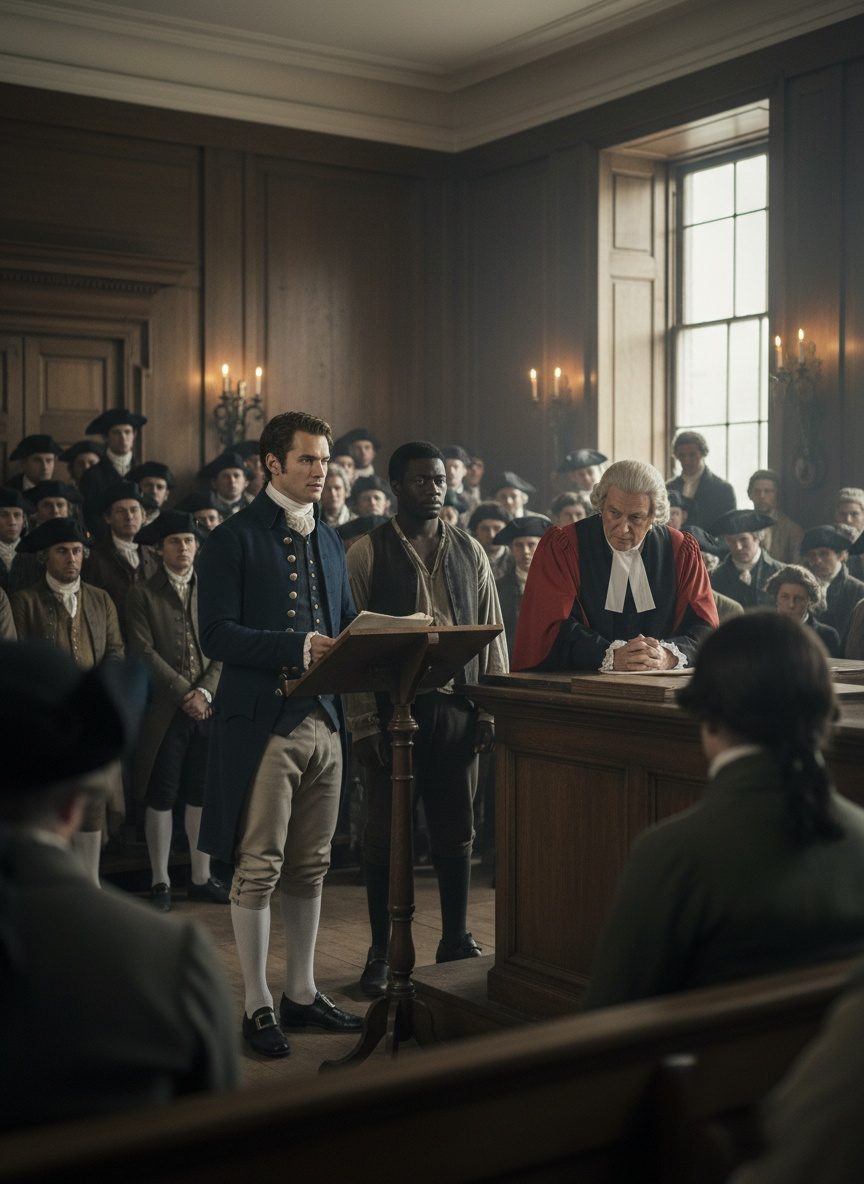
The air was heavy with anticipation in the heart of London in 1772. The sky, overcast and brooding, seemed to mirror the tensions that simmered below. Horse-drawn carriages clattered along the cobbled streets, their wheels carving sounds into the damp morning. The Old Bailey's wooden benches creaked under the weight of the gathered crowd, craning their necks to catch a glimpse of the proceedings. The setting was somber, yet the air crackled with the electricity of change. Within the hushed confines of the court, a seismic shift in societal norms was about to unfold.
It was here that James Somerset, a former slave, stood before England's highest court, with shackles more symbolic than physical clinging to his presence. His very being encapsulated the struggle of an era, a human fulcrum upon which the pendulum of freedom and oppression poised in precarious balance. The case unraveled not merely as the plight of a single man but as an interrogation into the moral fabric of a nation. Central to this momentous legal battle was not a lawyer with a prestigious pedigree nor a politician beholden to public opinion. Instead, it was a man whose name would soon echo through the annals of legal history: Granville Sharp.
Sharp's journey to this courtroom began many years prior. Though employed as a modest government clerk, Sharp possessed an insatiable curiosity and a deep-seated sense of justice. The spark that ignited his transformation into an ardent abolitionist was a chance encounter with Jonathan Strong, a young African man whom Sharp and his brother discovered battered and destitute on the streets of London. Strong, a slave who had escaped his brutal master, was given refuge by the Sharps. It was through Strong's story that Sharp first cast a discerning eye upon the institutions that perpetuated the dehumanizing trade of slaves. With each book he devoured in the realm of law, self-taught and relentless, Sharp's purpose crystallized.
Despite the odds stacked against them, Sharp took it upon himself to challenge the very foundations of English law. The path was fraught with obstacles—inequitable social constructs and entrenched economic systems made the legality of slavery a daunting adversary. Yet, the principle was unambiguous in Sharp's mind: England, a nation priding itself on liberty, must not be a land where shackles of slavery lay hidden beneath the surface. Through his painstaking research, Sharp unearthed centuries-old statutes and precedents, crafting an intricate legal argument that would position Somerset's case as a referendum on an empire's soul.
On that fateful day in June, Lord Mansfield presided over this historic case. The courtroom, cloaked in a silence thick as fog, awaited the decision that would reverberate across the British Isles and beyond. Somerset's defense rested on the notion that the air of England, weighed by moral duty, should itself be an agent of freedom. Granville Sharp had argued persuasively that the law of the land should recognize no man as property, each individual basking in the fundamental right to personal liberty.
The words pronounced by Lord Mansfield were succinct yet seismic: "The state of slavery is of such a nature, that it is incapable of being introduced on any reasons, moral or political, but only by positive law." And with that, James Somerset walked free, a living pronouncement that London could no longer ignore the weight of its conscience. The verdict did not, in itself, abolish slavery in England. Rather, it set a tangible precedent, a legal bulwark upon which future movements would bristle against the intractable stains of servitude.
The magnitude of this decision rippled far beyond the cobblestones of London. In the colonies, where slavery's shadow loomed large, echoes of Mansfield's judgment sowed seeds of hope among abolitionists clinging to the paradigm of moral progress. Granville Sharp's unwavering resolve in the face of titanic opposition invigorated the fight against human bondage, fueling debates and driving legislative reforms that would eventually crest with the abolition of the transatlantic slave trade in 1807.
In retrospect, the Somerset case was a bright beacon in the burgeoning struggle for human rights. Granville Sharp, driven by conscience and conviction, had proven that the power of a single person, armed with knowledge and tenacity, could indeed bend the arc of history toward justice. His actions exemplify the notion that true power often resides not in the office of government or the chambers of wealth, but in the relentless pursuit of what is right.
As we reflect on that overcast morning in 1772, we understand that the abolitionist movement was not born of a singular event but was a tapestry woven through the relentless efforts of individuals like Sharp. And as modern societies grapple with issues of equality and freedom, the Somerset case serves as a poignant reminder that the legal victories of the past are threads of the ongoing human narrative. Indeed, the footsteps of James Somerset, resounding heavily upon those courtroom floors, continue to echo through the corridors of time, urging us to listen and act.