The monsoon rains had paused, leaving the air heavy and expectant above the parched Indian plains. In July 1857, the city of Lucknow simmered beneath a sun that was both relentless and indifferent, casting stark shadows upon walls stained with wear. The Residency complex, an architecturally modest yet spiritually defiant fortress, stood besieged. Inside its crumbling defenses, a garrison of British soldiers, their families, and loyal sepoys faced the stifling heat, waiting for salvation amid the din of their relentless adversaries. Every breath drawn was a precarious step along the razor's edge of fate. History stood poised in their favor, though they couldn't know it yet.
The Man with a Cause
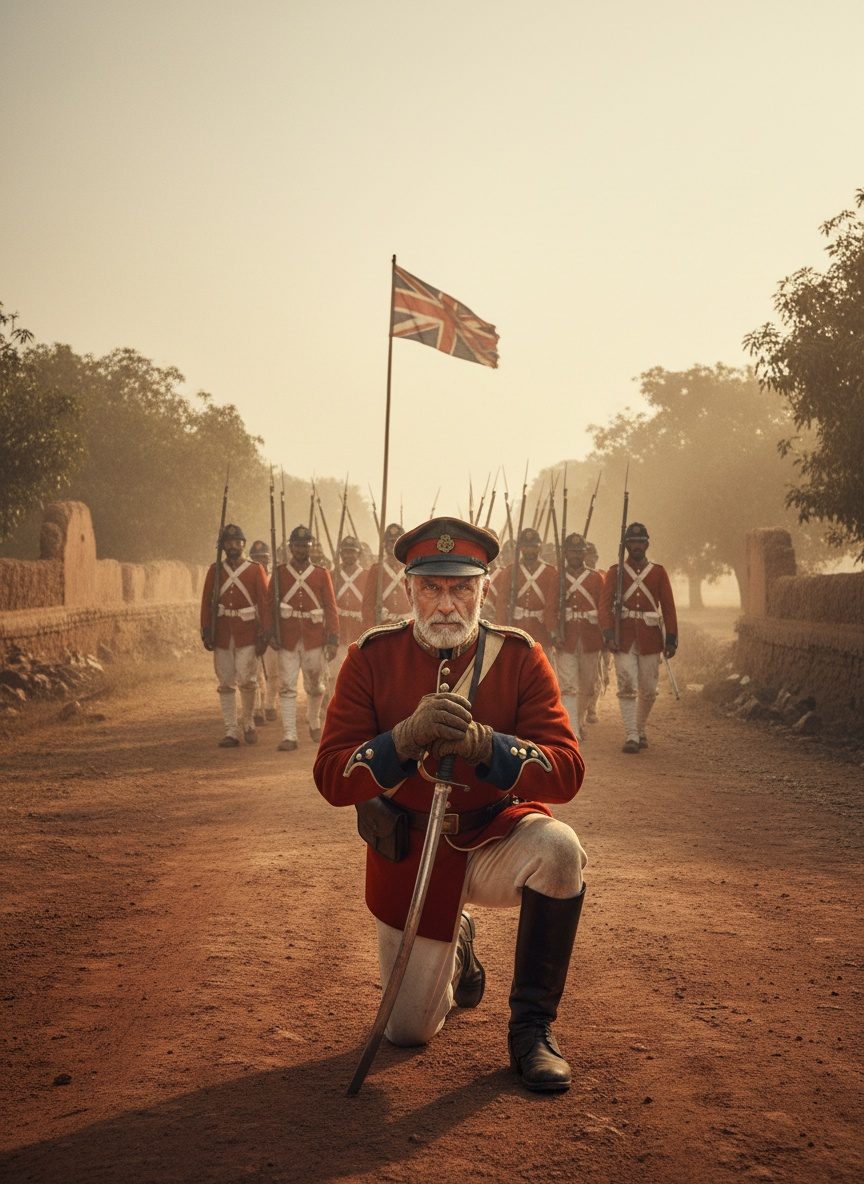
In this oppressive atmosphere, Major General Henry Havelock, a man of unassuming stature but steely resolve, prepared for what seemed an insurmountable task. He was known as much for clasping his Bible as his sword, and those who served under him respected Havelock's disciplined piety and unyielding sense of duty. For Havelock, faith was not a mere refuge from the ravages of war but a guiding star above the chaos and carnage. As he knelt in the dust of the road to Cawnpore, the chatter of cicadas surrounding him like an invisible choir, Havelock prayed fervently for the strength of men and the mercy of God. For to save the beleaguered souls of Lucknow, he would need both.
The Siege Within
Lucknow had not succumbed yet, but the fall seemed inevitable. The Residency, a pivotal fulcrum in the heart of the Indian Mutiny, held approximately two thousand souls — far too many for its strained defenses and meager provisions. Among them were women and children, faces streaked with dust and fear, peering out from collapsed shelters as the distant thunder of cannon fire reverberated through their beleaguered sanctum. Each day was a reckoning, as supplies dwindled and hope became an elusive specter, slipping through clasped fingers. Every attempt to relieve them had been thwarted, trapping them in a tightening noose.
The Road to Lucknow
Despite the desperate circumstances, Havelock's decision to march to Lucknow was as resolute as the general himself. Distances that stretched across an enemy-infested terrain did little to hinder his determination. His men, though exhausted by previous campaigns, were bolstered by his resolve and the righteousness of their mission. The road was perilous, littered with peril at every turn; rumors of hostile bands, fatigued troops, and treacherous weather conditions painted a grim picture. Yet, Havelock remained tirelessly strategic, navigating through this tumult with the acute attention of someone who knew that they journeyed not just through a land but against time itself.
The Battle to Break the Chains
When Havelock's advance guard finally drew near to Lucknow, the echo of their arrival was an electric jolt lacing through the air. They were a thin line between despair and deliverance, their arrival heralding a new chorus of hope within the weary walls of the Residency. The ensuing combat was fierce, as lines of enemy combatants stood defiant, their ranks swelling with a cause embittered by years of domination. The thunder of rifles and the cries of the fallen formed a symphony of chaos, yet amidst the blood and dust, Havelock's forces pressed on with a tenacity that seemed almost divine.
The Choice That Echoed
Havelock’s triumph in reaching Lucknow rippled far beyond the crumbling parapets of the Residency, resonating across the tapestry of Empire tales. Here was a story untold: a testament not merely of military might but of a profound and unwavering belief in duty and destiny. On the battlefield, Havelock embodied a spirit undeterred by the daunting odds that roiled around him. He knelt in the dust to pray, not out of weakness, but because he understood that in the grandeur of Empire, stones might fall, but it was the quiet convictions of individual souls which could move mountains.