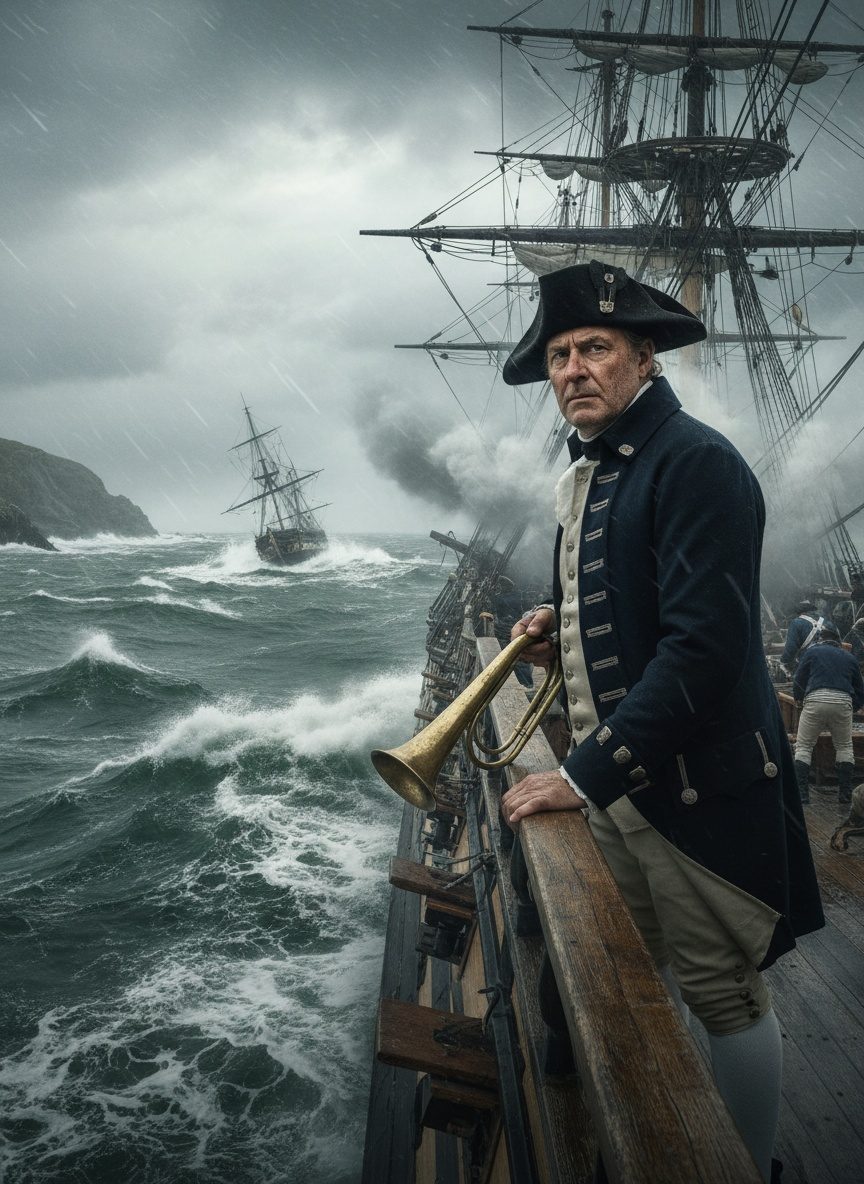
No sane captain would seek shelter amid the cruel shores of Quiberon Bay in a storm. Yet on that cold November day in 1759, sanity was not on the agenda for Admiral Edward Hawke.
The Chase into the Storm
The year was 1759, and the Seven Years' War, a conflict deeply embroiling Europe, had reached a pivotal moment. The British Navy, under the formidable leadership of Admiral Edward Hawke, faced the daunting task of halting a French invasion fleet. Months of cat-and-mouse pursuit across the Atlantic approached a climax as the French ships aimed for the supposed refuge of Quiberon Bay on France's western coast.
Quiberon Bay, nestled among treacherous shallows and perilous rocky outcrops, was considered suicidal for any vessel to navigate in foul weather. The bay's geography, riddled with submerged threats, could destroy ships with as much efficiency as any cannon shot. Yet, amidst mounting storm squalls, the French Admiral Conflans chose it as the rallying point, believing it both a safe haven from the chasing British and a strategic position for future operations against England.
As the Atlantic tempests heaved towering waves upon their decks, fog and rain obscuring vision, Hawke's fleet saw no obstacle in their path, only an opportunity for a decisive strike. The order was issued: "into the bay!", a decision that defied common sense and seemed akin to madness. Guided by courage and instinctual knowledge of each other's capabilities, Hawke and his captains pressed forward into the heart of peril.
The Battle of Quiberon Bay
The ensuing battle was one for the annals of war and sea—a rare moment when nature and human warfare entwined. The British fleet, consisting of hawkish men with the ardor of lions, bore down on their Gallic foes. The scene was chaotic: torrent winds lashed unforgiving froth across ship decks, sailors shouted orders over the roar of cannons and crashing waves alike. It was as if Neptune himself had taken offense at this human quarrel.
Amidst this tumult, the French fleet struggled to maneuver. Their elegant lines of battle crumbled into confusion, with many ships running aground on unyielding rocks. The sight of ships splintering on the reef, their crews desperately trying to save what they could, was a testament to both the ferocity of the sea and their opponent. Here was not just a clash of nations, but a testament to human tenacity against elemental force.
Hawke saw the chance for final victory and gripped it with unflinching resolve. His sailors surged through harsh squalls, closing the distance between their gunports and those of their beleaguered enemies. The British leapt aboard French ships in bouts of combat that left no room for hesitation. The French, once hopeful of evading the confrontation, now found themselves contested and cornered in their own planned redoubt.
The Tide Turns for Empire
The day drew to a close with the British triumphant. The gale-swept bay bore witness to the wrecks of France’s ambition, yet even in the depths of chaos, it also highlighted an age ruled by naval mastery. Few corners of the world had not been touched by the great power struggles of the Georgian era, and in this small bay, the fate of nations had been indelibly etched upon the savage rocks.
Admiral Hawke's bold strategy saw most of the French ships captured, sunk, or driven ashore. This decisive action tore a hole in France’s naval supremacy and marked the decline of French hope in staging a successful invasion of Britain. The English Channel, often seen as England's moated guard, now felt even less assailable with disasters on this scale deterring anyone who might envision crossing it under the French flag.
This lesser-known battle is more than a window into the past; it's a narrative with ripples over the tapestry of time. Here was proof of how the balance of power could hinge on a single decision, shaped by relentless pursuit and courage to defy convention. As the storm passed and the next dawn broke, Britain's mastery over the waves had been reaffirmed, setting precedence for the expanding British Empire. It reminds us that history, like the sea, is made of tides turning, crashing against entrenched dominance and sculpting the future in its wake.