He was short and unassuming. Yet Henry Havelock, a devout Baptist, etched his name into history amidst the violent chaos of India's 1857 uprising. It is often said that history is written by the victors, but the story of Havelock's relentless march to Cawnpore and the tragic events he encountered stand as a powerful exception to this adage. The Indian Mutiny, or the First War of Indian Independence as it is often called today, was a turbulent epoch that saw the flame of rebellion reignite old animosities and foreshadow the end of an Empire’s control. Amongst the heat and horror, it was Havelock's benevolent determination that emerged distinctively stark and poignantly human.
The summer of 1857 was merciless. As temperatures soared, so did tempers, bubbling up into a full-scale uprising that engulfed much of northern and central India. Cawnpore, a strategic and affluent British possession, was among the pivotal locations affected. Fortified by the British residents' overconfidence in their dominion and lack of adequate defenses, the city's fall was inevitable under relentless pressure from the rebel soldiers. The siege was ruthless, and the eventual massacre of British civilians would become one of the conflict's most notorious incidents.
Havelock, meanwhile, was a man driven. News of Cawnpore's dire situation goaded him into action, but circumstances conspired to keep the hero on the march. With a column of merely a couple of thousand men, Havelock scorned conventional wisdom and orders from higher ups. He burned through the Indian plains in defiance of what he deemed bureaucratic lethargy, pressing on through fatigue and dwindling resources. This unprecedented drive, fueled by his formidable spiritual convictions and a profound sense of duty, saw him engage in no less than four pitched battles in just eight days.
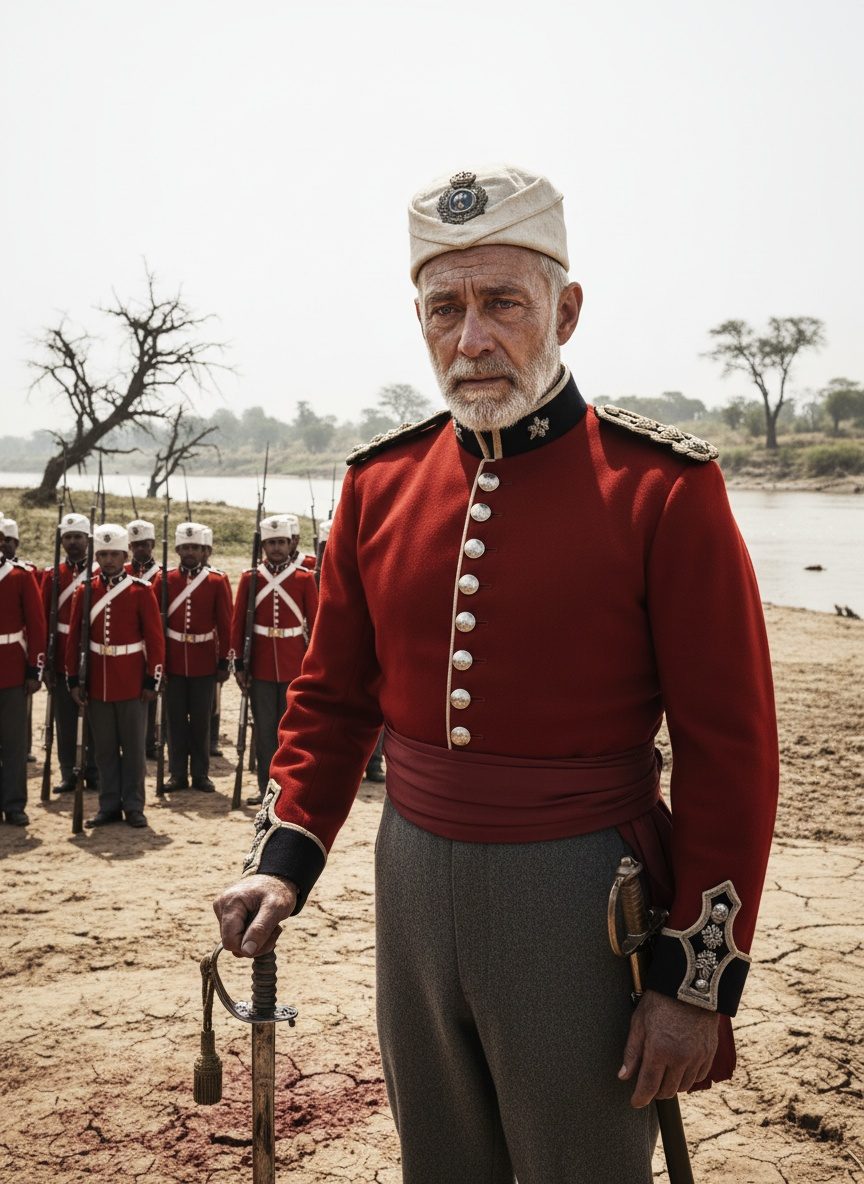
The grueling treks and combat eventually brought Havelock to the Ganges, a daunting natural barrier for any advancing army. The river, shimmering under the oppressive Indian sun, was both an obstacle and a symbol of perseverance. Havelock crossed the Ganges and proceeded toward an awaited reality at Cawnpore, only to be met not by jubilant cries of liberation but the grim specter of massacre and misery.
By the time Havelock reached Cawnpore, the city was a mausoleum telling tales of its captured inhabitants' final hours. The massacre of British women and children there was news that reverberated with horror throughout the Empire, enraging many and setting a new, darker tone for the rest of the conflict. Discovering the women's remains was a blow that even the Stoic Havelock couldn't withstand without emotion; the general wept, his heart burdened by the weight of his failure to save them.
Yet, in the true spirit of Victorian resolve and perhaps internalizing a sense of divine purpose, Havelock did not linger long in despair. Emotional defeat transformed into a steadfast resolve, and the journey was not yet over. Cawnpore was a poignant prelude, an irreplaceable tragedy steeped in mourning but also a grim reminder of the nature of British India's then-precarious foothold. Gritting his teeth against sorrow, Havelock turned his gaze to Lucknow, where more British lives awaited rescue.
Lucknow, under constant siege, was the next potential tragedy Havelock sought to prevent. The race was still on, and relentless in his pursuit, he pushed his exhausted troops forward, testing the limits of endurance and resilience. As he pressed on, it was not just logistics he struggled against, but the psychological scars Cawnpore had etched into his and his men's consciousness. Each skirmish recalled the ghosts of failures past, and each step seemed a battle in itself against waning hope and the staggering scope of their mission.
Havelock's march was no ordinary military maneuver; it was an exposé of moral and spiritual conviction mirrored in military gallantry. These moments were encapsulated in stories told by his men—stories of courage under fire and humanity amidst horror. Systematically overshadowing the flesh and blood man were the tales of his humility and prayer amid battlefield chaos, further romanticizing an already larger-than-life commitment to his cause.
Even today, memories of Cawnpore haunt the corridors of history, a somber vignette of the mutiny’s brutality. “The legends they left out of the textbooks” not only summarize the acts of Havelock but also hint at the broadly reshaped narratives of British colonial rule post-1857. This transformation, catalyzed by events such as those witnessed in Cawnpore, set off political and historical repercussions that reverberated far beyond the Indian plains.
Havelock's experience, distilled through the filter of tragedy and tenacity, carries forward as a reminder of the inherent complexities in historical narratives. History unfolds not just through its celebrated outcomes but in the intimate, raw interludes where human spirit and frailties play against the backdrop of larger-than-life political upheavals. By the time the Empire lifted its pen on paper to document these episodes, the haunting grounds of Cawnpore had already become an indelible emblem of the perils of imperial arrogance, and of the few, like Havelock, who dared to chart a different course.