October 20, 1954. The morning fog hung low over the Thames, shrouding the Houses of Parliament in a ghostly embrace.
The Crumbling of Old Pacts
In the immediate aftermath of World War II, the world grappled with the devastating memories of conflict that had scarred a generation. Among the resolutions of the victors was a vow never to rearm Germany—a nation that had twice plunged the globe into turmoil within half a century. This pledge was seen not merely as a political measure but as a moral imperative, a bulwark against the resurgence of European militarism.
Kenneth Younger, then a Ministry official in the Labour government, was instrumental in shaping this vow. A figure often overlooked in grand political narratives, Younger was a man of principle and foresight. He understood the weight of the commitment, the solemnity imbued in its inception. Yet, as the Cold War's chill spread across Europe, alliances shifted, turning old enemies into potential allies against the looming shadow of Soviet expansion.
By 1954, it became evident that the political winds had changed direction. Security and power dynamics were rapidly evolving, as the United States and Britain eyed the potential military strength of a re-armed West Germany within NATO. It was here, amidst geopolitical maneuvering, that former vows collided with new realities—leaving Kenneth Younger at a crossroads between past pledges and current pressures.
A Stand for Integrity
As debates heated in the British Parliament, Younger's resolve was tested like never before. Under the leadership of Labour Prime Minister Clement Attlee, Britain sought to embrace a pragmatic shift in policy, recognizing West Germany's potential role as a bulwark against the Soviet Union. However, for Younger, the matter transcended political calculus; it was a question of conscience and integrity.
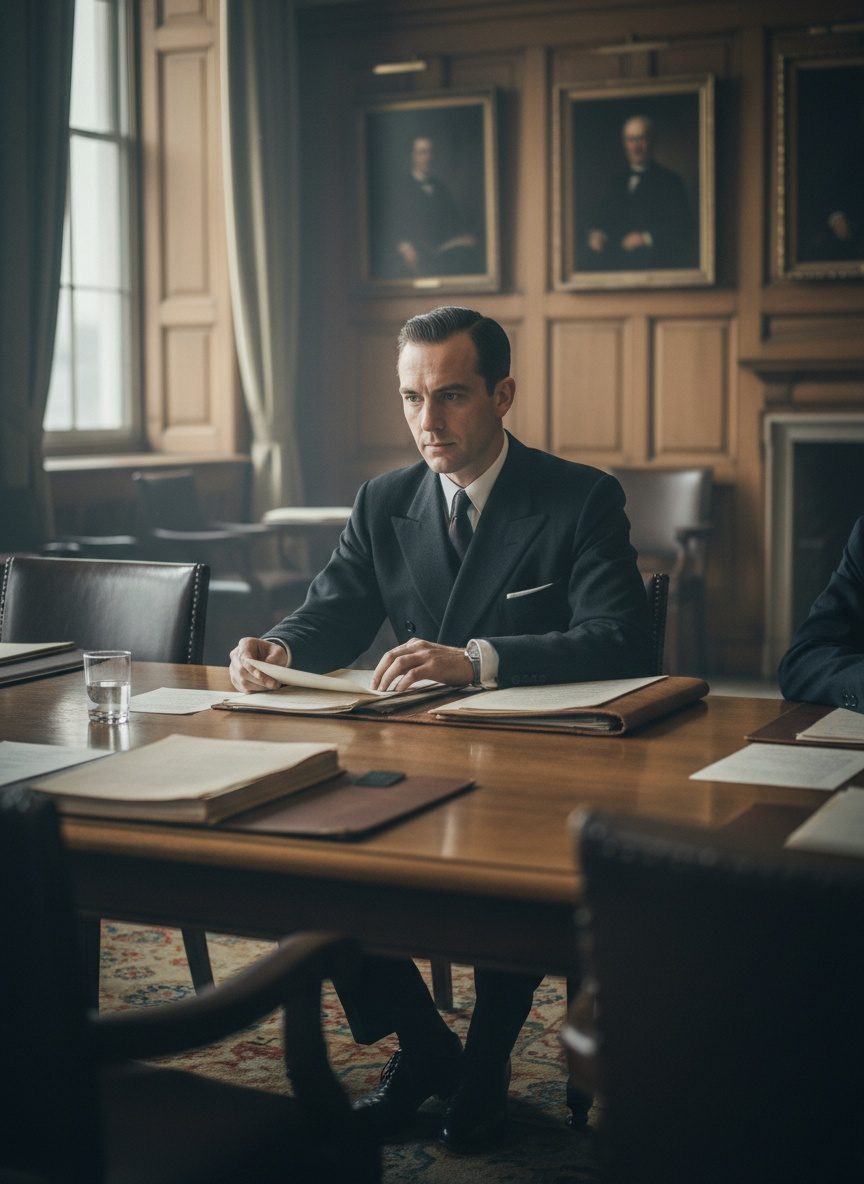
On that fog-draped October morning, Kenneth Younger rose from his seat in Parliament not as a follower of party lines—it was as though every eye in the chamber was fixated on him. The tension in the room was palpable. Here stood one of the architects of the original anti-rearmament pledge, now expected to dismantle it.
He spoke plainly, with the gravitas of a man unyielding in his convictions. Younger articulated not just the promise made but the implications such a promise held for future generations. The weight of war’s horrors and the fragile peace that followed were etched into his words. "This is no ordinary piece of political maneuvering," he asserted. "It is the abandonment of a moral principle that binds our better nature."
The Price of Defiance
Younger's decision to vote against the rearmament of West Germany was not without consequence. By defying his own party's leadership, he effectively severed himself from the political apparatus that had nurtured his career. The vote, symbolic of a broader ethical conflict, resulted in Younger losing his role within the Labour government.
The political cost was immediate and brutal. Younger was sidelined, his dedication to principle painted by some as naiveté, by others as obstructionism. Amidst the Cold War's realpolitik, where alliances were vital, such a stand was regarded by many as reckless. Yet despite professional ramifications, Younger remained unbowed, his belief in the enduring need for political promises to transcend transient circumstances firm as ever.
If history often remembers victors, it sometimes chooses to forget those who resist the tide. However, Younger's solitary vote against rearmament was a moment that illuminated the persistent moral complexities of Cold War politics. Despite momentarily being cast into the shadows, his stance captured the imaginations of those who valued integrity over expediency.
A Legacy of Principle
The intervening decades have cast Younger's defiance in a different light. As the Cold War ended and Germany reunified, historians reevaluated the paths taken; they scrutinized the choice to rearm a divided Germany. Many now appreciate Younger's foresight in cautioning against the erosion of pledges meant to anchor the peace.
Today's conversations around diplomacy and international pledges echo Younger's insights. His stand in 1954 serves as a reminder that the bedrock of lasting peace is often laid not in grand strategy, but in the quiet, steadfast voices that hold firm under pressure. Kenneth Younger's story reminds us of the enduring power of individual integrity in shaping the larger currents of history—an evergreen reminder that principles, once compromised, can unleash unforeseen consequences, reverberating through time.