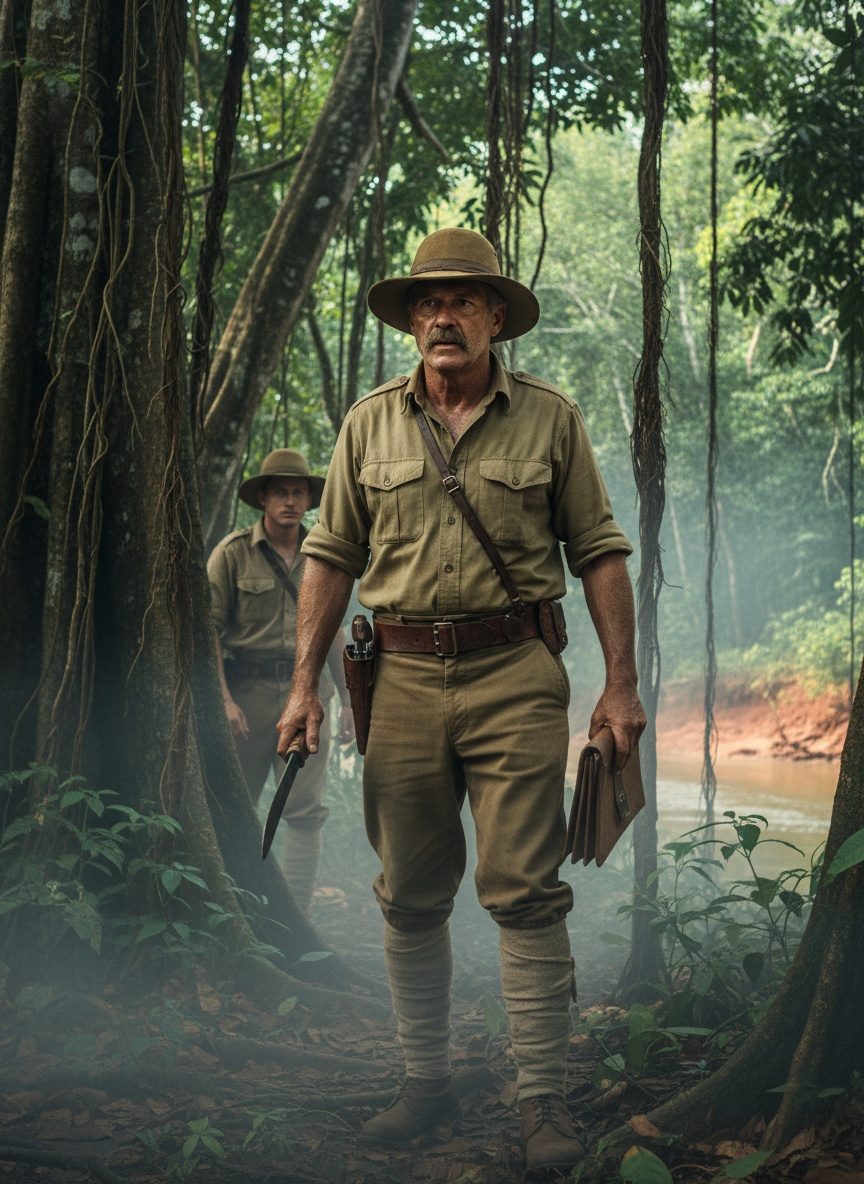
The British Army had artillery. The Scouts had something different—resourceful courage.
Improvised Combat on the Edge of Empire
In the arid and rugged landscapes of the North-West Frontier, the British Empire's hold was perpetually tenuous. The region, now part of Pakistan, was a fiercely independent territory, populated by tribes whose knowledge of the hills was unparalleled. Here, the Empire's conventional tactics often evaporated into futility, much like the morning mist in the unforgiving heat. The tribal Waziri fighters, with intimate knowledge of the mountainous terrain, could materialize and disappear in an instant, making fixed artillery placements impractical and often disastrous for the British forces attempting to enforce their rule.
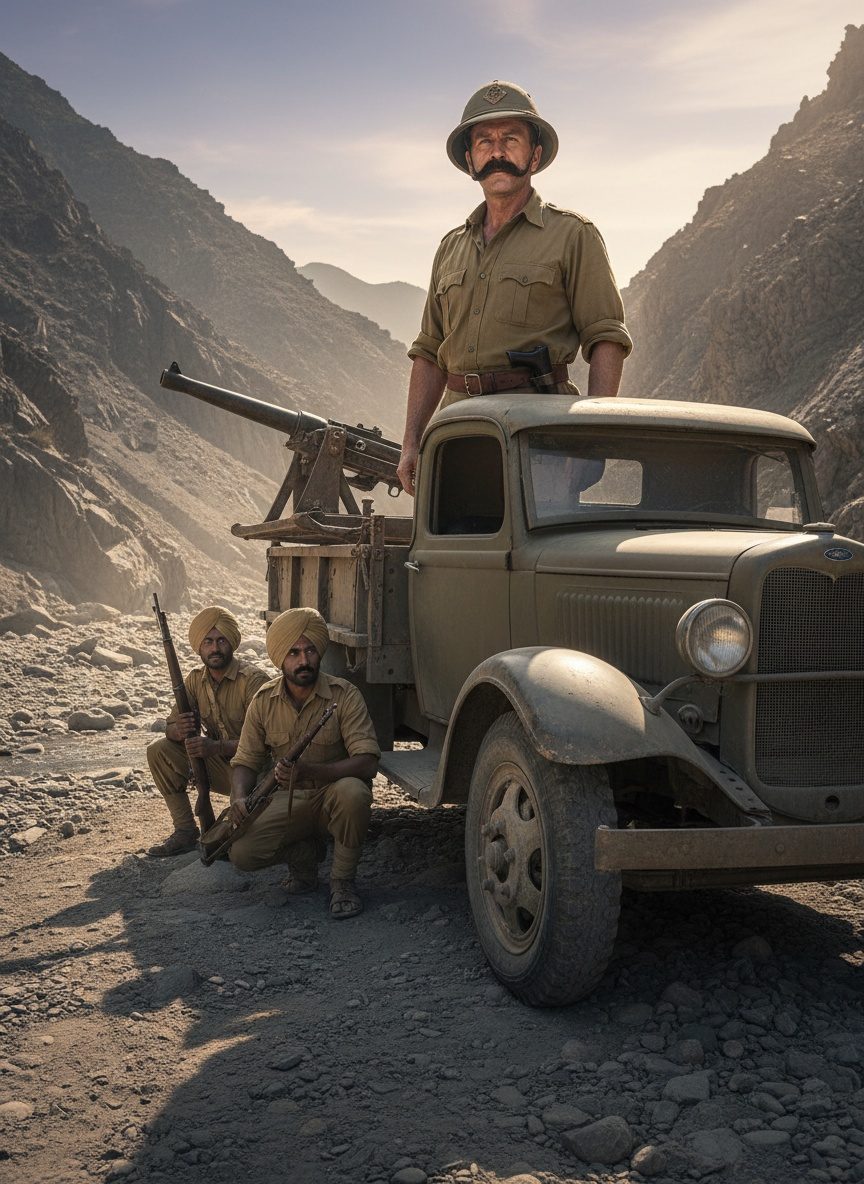
Yet the Tochi Scouts, a paramilitary force made up of seasoned soldiers and local recruits, knew better than to rely solely on the unwieldy artillery support from the traditional command. In a stroke of ingenuity that later generations would admire, they altered the very notion of battlefield engagement. The concept was radical in its simplicity—take mobility to the enemy. By taking a standard Ford truck and mounting a powerful 3-pounder naval gun onto its chassis, they created a weapon that was both fast and deadly. This unorthodox vehicle transformed the dynamics of frontier conflict.
While it may seem like a rudimentary transformation, the implications were profound. Before this creation, engagements with Waziri tribesmen often entailed lugging heavy artillery pieces across rough terrain, only to set them up when the action had already moved elsewhere. With their new contraption, the Scouts could bring the full force of a field gun to bear on the rebels almost as quickly as they could flee, closing the gap between arrival and deployment to a matter of minutes.
The Art and Danger of Frontier Innovation
The ad-hoc weapon, with its jostling utility, was christened with a nod to its hybrid nature. A contraption designed in desperation became an emblem of frontier innovation. The Scouts' truck was less a vehicle and more an unpredictable juggernaut, capable of delivering firepower alongside maneuverability. Its often screeching, dust-kicking movements through narrow passes and sharp inclines revealed both its flexibility and the boldness of its operators.
This approach was not without its hazards. Driving the truck at top speed through the rocky outposts where engagements were common was perilous work, yet the Scout drivers, one hand on the wheel, the other close to their revolvers, adapted swiftly. They faced the duel challenge of navigating the unpredictable terrain and maintaining the element of surprise against an enemy skilled in ambush tactics. The gun-mounted truck became more than a tool; it was a test of nerve and innovative military adaptation.
While its armoured resilience was limited, the truck's ability to dash through surprising points of attack allowed it to compensate through agility and surprise. It was not uncommon for the enemy to vanish into crevices just as the vehicle banked around a cliffside, arriving to unleash its payload in the tight quarters of a mountain pass. Throughout its deployment, there were numerous close calls and collisions, but the end result was a clear advantage in terrains where survival often came down to speed and unpredictability.
A Legacy Left Untold
This historical footnote in military technology reveals much about the broader reality of conflict in marginal territories. Traditional military historians might overlook such improvisations in favor of documented battles with clear outcomes, yet these improvisations illustrate how soldiers on the ground often crafted their tools from necessity rather than decree. This unheralded weapon did not only reflect resourceful tactics; it bespeaks the nature of warfare where rules were often rewritten by the challengers and the challenged alike.
Most fascinating, perhaps, is how this invention provides a glimpse into the mindset of those soldier-explorers committed to maintaining a foothold in an unruly land. Frontier warfare epitomized the essence of unpredictability, with boundaries as fluid as the alliances between clans. Each modification made to the truck was more than just field engineering—it was an emblem of a larger struggle to adapt, survive, and ultimately find new means to assert authority over the sands and snowcaps beyond the Empire’s formal edges.
Today, as sophisticated technologies continue to dominate modern warfare, the memory of a dusty Ford truck outfitted with a navy gun reminds us of the humbling lessons history often repeats: innovation is born not always from the labs but from the frontline, where necessity knows no bounds and defies anticipation. Understanding these legends left out of the textbooks enriches our appreciation of the courage and creativity of those who fought on the Empire's most remote peripheries.