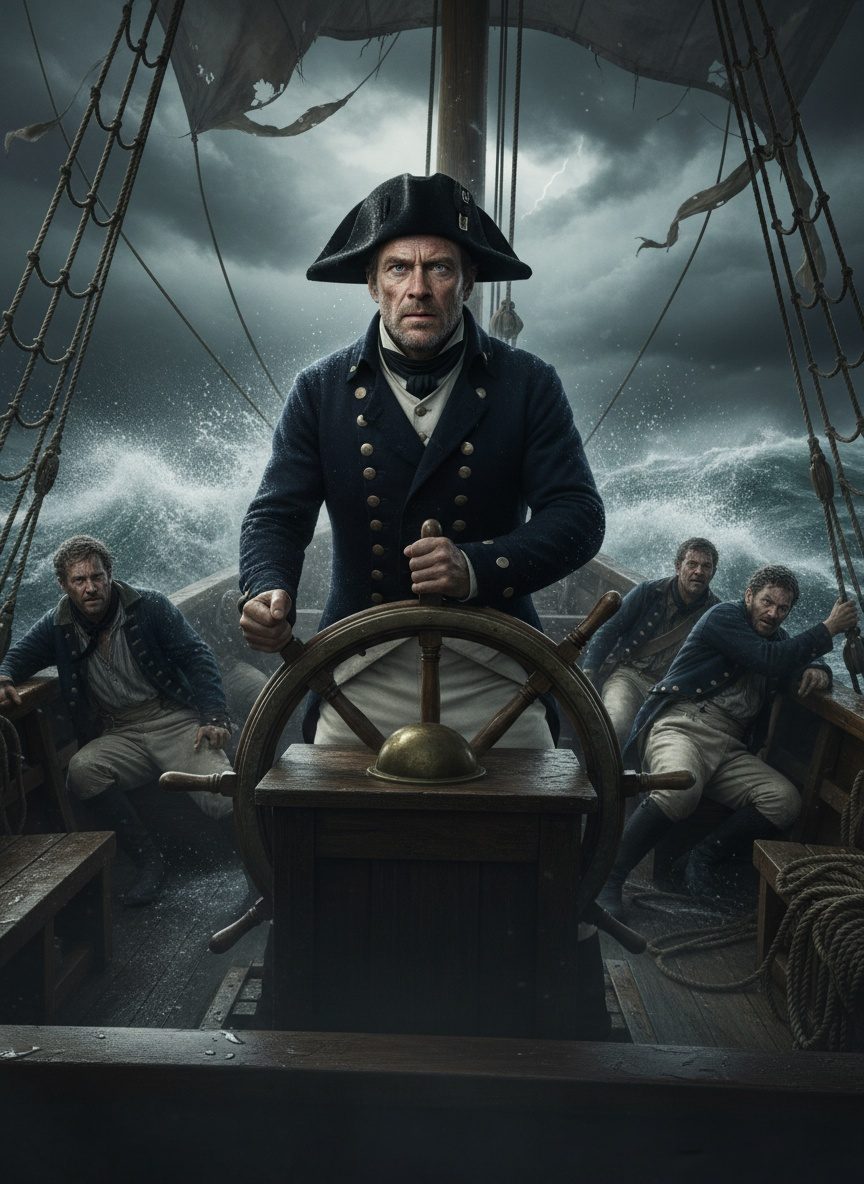
Henry Hudson was a man not of grand speeches or legendary swordsmanship but of maps and stars. He was, in all aspects, a meticulous navigator with dreams as vast as the oceans he charted. Though his career is marred by the mysterious end of his final voyage, few people know that the intrepid explorer never intended to be king of the Arctic seas. He was consumed by one singular task: finding the infamous Northwest Passage.
The chill of June in the year 1611 was biting, a piercing reminder of the nightmare of ice that refused to release its grip on Hudson and his crew. Named after their captain, the waters of Hudson Bay promised new passages in the world map of oceans, but the promise was a bitter one. Frozen in place and starving, Hudson's men were at their wits' end. They had withstood the frigid embrace of the previous winter, convinced that come spring, open waters would lead them back to the warm lands they called home. Yet spring hadn't released the ice, and madness took root where hope should have flowered.
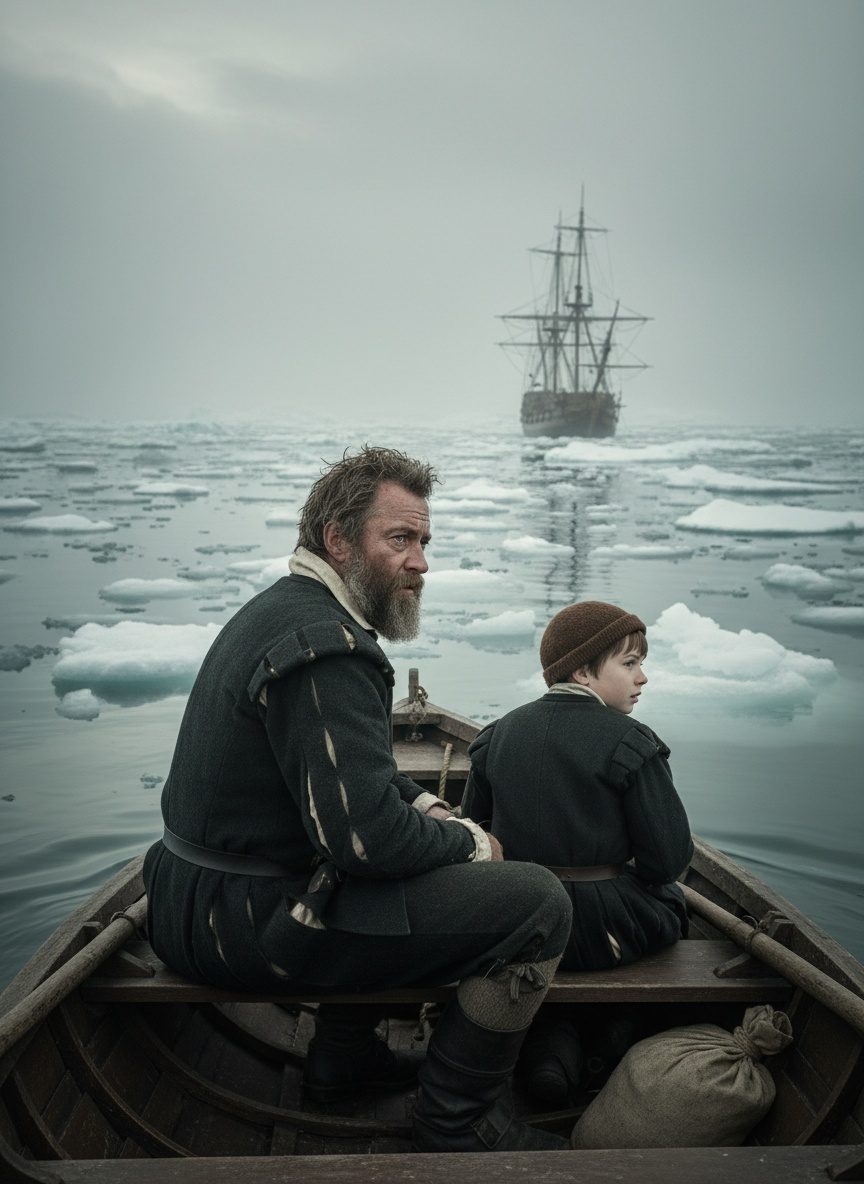
On a dawn like others and yet unlike any other, the crew decided their destiny was no longer tethered to Hudson. Their mutiny was silent, shrouded in the resolve they had gathered over months of hard-hearted survival. They seized him, along with his teenage son, John, and a handful of loyal crew members, forcing them into a small boat. As they cast them adrift on the open, unforgiving bay, their actions would write their own myth into the pages of history—one they could never escape, nor erase.
The drama of their mutiny is amplified by the desolation of the scene. Hudson's previous explorations had ventured so far and to places so remote that European maps had to be redrawn in his wake. Only a few had dared to sketch the arctic coastlines, where icebergs loomed like monstrous white fortresses rising against an endless horizon. Yet here he was, not standing triumphantly on new lands but in the heart of the bay that would carry his name, floating away from everything he had achieved.
Those left on the ship must have faced immediate repercussions of their actions. For all the authority wrested away from Hudson, they still grappled with the same harsh elements and dwindling food supplies. Navigating a way home without their captain's expertise would have been a daunting challenge, a perilous gamble in a game where the rules and the outcome were dictated by nature herself.
Henry Hudson and his son disappeared into history like the stars veiled by thick northern clouds. No trace of their fate reached the ears of their families in England, nor did they return to the lands of the newly formed British Empire eager to expand east and west. The Northwest Passage remained elusive, a tantalizing glimpse of commerce yet to be discovered, a route promising shorter voyages at the expense of countless mariners' lives.
Centuries have only added layers of mystery over Hudson's final days. Was he pulled into the frigid depths by the weight of despair or did he find solace in the notion of dying a seafarer, his body given back to the element he revered above all? Did his son fight despair with him, a boy forced into a man’s struggle for survival, only to understand too quickly the harshness of exploration's promise?
In the years following, the story of Hudson’s castaway ordeal served as a warning—a chilling tale told in the mess halls of sailors and recounted in the drawing rooms of the gentry interested in the spoils of exploration, but safely distanced from the sea's treacheries. Hudson's mutinous crew faced their own perils upon returning without him, a somber reminder that not even the most desperate of actions was free from retribution.
The moral complexities of their story linger on like specters, challenging the glorified narratives we often weave for explorers. In an era when European empires expanded with little regard for indigenous peoples or the challenging environments they encountered, Hudson’s fate stands apart. It reflects a raw truth about the age of sail, a clarion call about the thin line between courage and madness, between leadership and rebellion.
As new generations probe the icy waters of Hudson Bay and traverse the Arctic for research, commercial, or climatic study, the silent echoes of Hudson's last journey serve as a testament. They remind us that humanity's unyielding spirit of discovery is marred by hubris as much as it is led by curiosity. Though the pages of history may appear static, stories like Hudson's rise to caution and inspire, daring us to look beyond the textbook passages and into the icy abyss where legends are born and interred, in silence, beneath the northern lights.