The morning mist clung to the Blackwater River like a funeral shroud. It was August 14th, 1598, and Marshal Henry Bagenal had no idea he was marching 4,000 English soldiers into the most perfectly orchestrated trap in Irish military history. By sunset, the bog would be carpeted with English dead, and Hugh O'Neill—the man Elizabeth I had once called her most loyal Irish lord—would have delivered a blow so devastating it would shake the very foundations of English rule in Ireland.
This wasn't just another skirmish in a distant province. This was the moment when a Gaelic chieftain outplayed the greatest military power in Europe at their own game, using tactics that would make modern special forces commanders nod with respect. Welcome to Yellow Ford—the battle that nearly broke an empire.
The Earl Who Learned Too Well
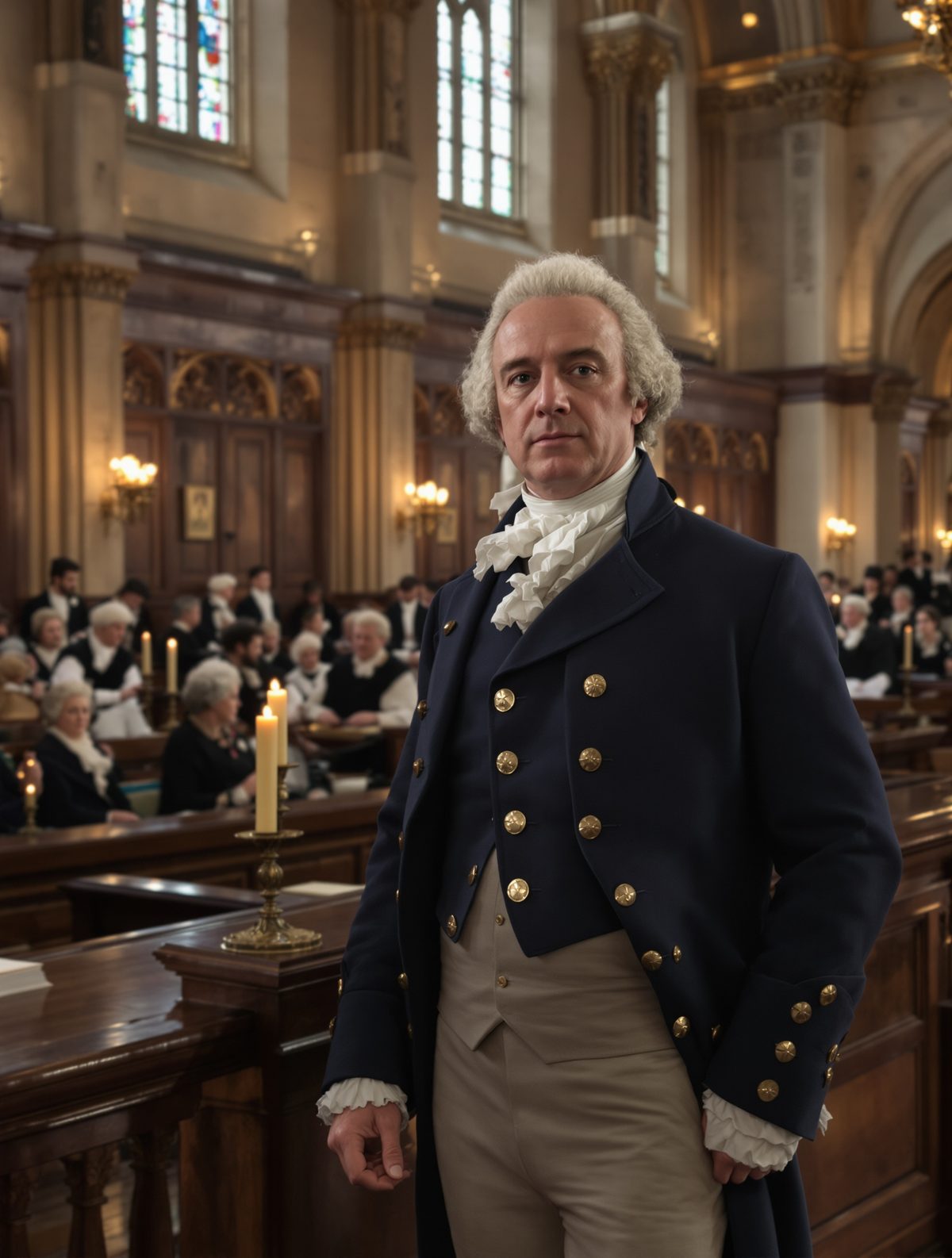
Hugh O'Neill wasn't your typical Irish rebel. Raised in the heart of Elizabethan England, educated by the Crown's own tutors, he spoke perfect English and knew how to bow gracefully at court. The English had taken him as a boy—a common practice designed to create loyal puppet rulers. They taught him military strategy, courtly manners, and the art of Renaissance warfare. What they didn't realize was that they were creating the most dangerous enemy they would ever face in Ireland.
By 1598, O'Neill had been playing a masterful double game for years. Officially, he was the Earl of Tyrone, Elizabeth's loyal servant in Ulster. Unofficially, he was forging the most sophisticated Irish military force in centuries. While English officials received his polite letters of submission, O'Neill was secretly importing Spanish weapons, training his men in European tactics, and building a network of alliances that stretched across Gaelic Ireland.
The man tasked with bringing him to heel was Marshal Henry Bagenal, a Protestant colonist who had built his reputation crushing Irish uprisings. Bagenal had personal reasons to hate O'Neill—the Earl had eloped with his sister Mabel in 1591, creating a family feud that would end in blood on the banks of the Blackwater. It was about to become the most expensive grudge in English military history.
The Perfect Storm Brewing
The crisis came to a head at Blackwater Fort, a English stronghold strategically placed to control the river crossing into O'Neill's heartland of Tyrone. By summer 1598, O'Neill's forces had besieged the fort for months, slowly starving the garrison. The symbolic importance was enormous—if Blackwater fell, it would signal that English power in Ulster was crumbling.
Elizabeth's war council faced a terrible choice. Abandon the fort and lose face across Ireland, or send a relief column through territory now completely controlled by O'Neill. Bagenal, burning with personal hatred and professional ambition, volunteered to lead the mission. He would march from Armagh with over 4,000 men—the largest English force assembled in Ireland for years.
What Bagenal didn't know was that O'Neill had been planning for exactly this moment. The Irish chieftain had spent months preparing the battlefield, studying every bog, every hill, every narrow passage along the route from Armagh to Blackwater Fort. He knew the English would have to come this way, and he had turned the landscape itself into a weapon.
The English army that marched out of Armagh on August 14th was impressive on paper: veteran infantry, cavalry, artillery pieces, and siege equipment. But they were marching into terrain that O'Neill knew like his own heartbeat, against an enemy who had learned every lesson they had taught him and added a few innovations of his own.
The Master Class in Guerrilla Warfare
O'Neill's plan was a masterpiece of tactical deception. Rather than meet the English in open battle—where their superior discipline and firepower would tell—he would bleed them slowly as they advanced, then crush them at the moment of maximum vulnerability.
The harassment began almost immediately. Irish skirmishers, armed with muskets and moving like ghosts through the countryside, picked off English soldiers from concealed positions. Every ford was defended, every hill occupied by snipers. The heavy English column, weighed down by artillery and supplies, could only advance at a crawl.
But the real genius lay in O'Neill's understanding of English psychology. He knew Bagenal was impatient, proud, and driven by personal hatred. So he gave the Marshal just enough small victories to keep him advancing—a hillside abandoned here, a ford yielded there—all the while drawing the English deeper into the killing ground he had prepared.
At Yellow Ford, where the road crossed a tributary of the Blackwater, O'Neill had prepared his masterstroke. His men had dug concealed trenches across the path, creating obstacles that would break up the English formation. The surrounding hills bristled with hidden marksmen. Most cunningly of all, O'Neill had positioned his main force to attack from an unexpected direction—not blocking the English advance, but ready to strike at their flank once they were committed to the crossing.
When the Trap Snapped Shut
The moment came in the early afternoon. As the English vanguard struggled to negotiate the hidden obstacles at Yellow Ford, their neat formation began to fragment. That's when O'Neill struck with the precision of a master swordsman.
The attack came from three directions simultaneously. Irish soldiers emerged from concealed positions like deadly flowers blooming in the heather. The deadly crack of musket fire echoed across the bog as O'Neill's marksmen found their targets. Most devastating of all, Irish cavalry—something the English hadn't expected the "primitive" Gaels to possess—smashed into the confused English ranks.
Marshal Bagenal, desperately trying to rally his men, lifted his helmet visor to see the battlefield clearly. It was his last mistake. An Irish musket ball found its mark, killing the English commander instantly. With their leader dead and their formation shattered, English discipline—the cornerstone of their military superiority—simply collapsed.
What followed was less a battle than a massacre. Panic swept through the English ranks like wildfire. Soldiers threw down their weapons and ran, only to find that O'Neill had blocked every escape route. The bog that had seemed like difficult terrain became a death trap, sucking down heavily armored men who stumbled in their desperation to flee. The proud English banners disappeared beneath the murky water, along with the men who carried them.
The Blood-Red Reckoning
When the sun set on August 14th, 1598, the scale of the catastrophe was almost unbelievable. Over 2,000 English soldiers lay dead—more than half of Bagenal's army. The survivors who stumbled back to Armagh told tales that seemed like something from a nightmare: entire companies wiped out, officers cut down as they tried to surrender, and the flower of English Ireland's military elite feeding the crows in an Ulster bog.
The material losses were staggering. O'Neill's men captured artillery pieces, thousands of muskets, military supplies, and—most symbolically—the English battle standards. For weeks afterward, captured English banners flew mockingly from Irish strongholds across Ulster. The psychological impact was even greater than the military one.
News of Yellow Ford spread across Europe like wildfire. In Madrid, Philip III's advisors whispered that perhaps the time was right to support Irish independence more actively. In Rome, Pope Clement VIII saw the hand of God striking down Protestant heretics. Across Ireland, Gaelic chieftains who had been sitting on the fence suddenly rediscovered their ancient hatred of English rule. The Nine Years' War, as it came to be known, had truly begun.
For Elizabeth I, Yellow Ford represented something she had rarely experienced: absolute, unmitigated defeat. The Queen who had faced down the Spanish Armada now found herself confronting an Irish chieftain who had learned her own military lessons too well. She would spend the rest of her reign—and a staggering fortune—trying to undo the damage that O'Neill had inflicted in a single afternoon beside the Blackwater.
The Empire That Almost Wasn't
Yellow Ford reminds us that the English conquest of Ireland was never the foregone conclusion it appears in hindsight. For a brief, shining moment in 1598, it seemed possible that a Gaelic revival might sweep the colonists into the sea and restore an independent Ireland centuries before Michael Collins was born.
Hugh O'Neill's victory also illuminates a broader truth about empire and resistance. The English assumed that superior technology and organization would always triumph over "primitive" opponents. O'Neill proved that an enemy who understands your strengths can turn them into weaknesses—and that local knowledge, tactical flexibility, and sheer determination can sometimes overwhelm overwhelming odds.
Perhaps most remarkably, Yellow Ford shows us what might have been. In our timeline, English power eventually recovered, Irish resistance was crushed, and centuries of colonization followed. But for one bloody afternoon in 1598, the future hung in the balance beside a muddy Ulster river, and a Gaelic earl who had learned his lessons too well nearly rewrote the history of two nations.