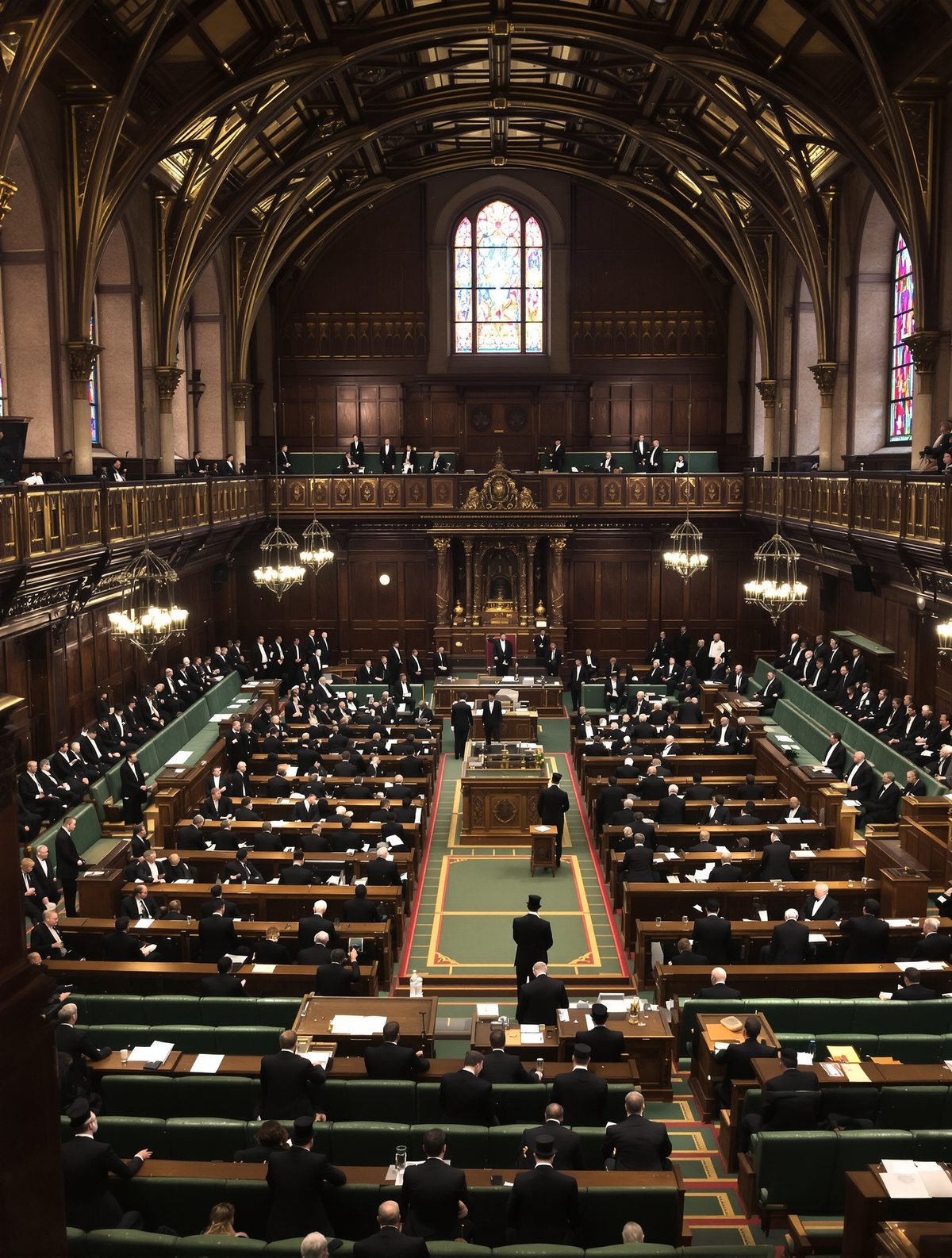
The medieval rafters of Westminster Hall had witnessed the trials of kings and the fall of dynasties, but nothing quite like this. On February 13th, 1788, as snow dusted the cobblestones outside, Britain's political elite filed into the ancient chamber to decide the fate of an empire. In the defendant's box sat Warren Hastings—the man who had transformed a struggling trading company into the de facto ruler of 200 million souls across the Indian subcontinent. The question before Parliament wasn't just whether he was guilty of corruption, extortion, and judicial murder. It was whether the British Empire itself was built on blood money.
What followed would become the longest trial in British parliamentary history—a seven-year legal marathon that would consume careers, bankrupt fortunes, and ultimately determine whether Britain's eastern empire would survive into the next century. This is the story of how one man's midnight decisions in the fever-soaked palaces of Calcutta nearly brought down the most powerful corporation the world had ever known.
The Ruler of Millions Who Started as a Clerk
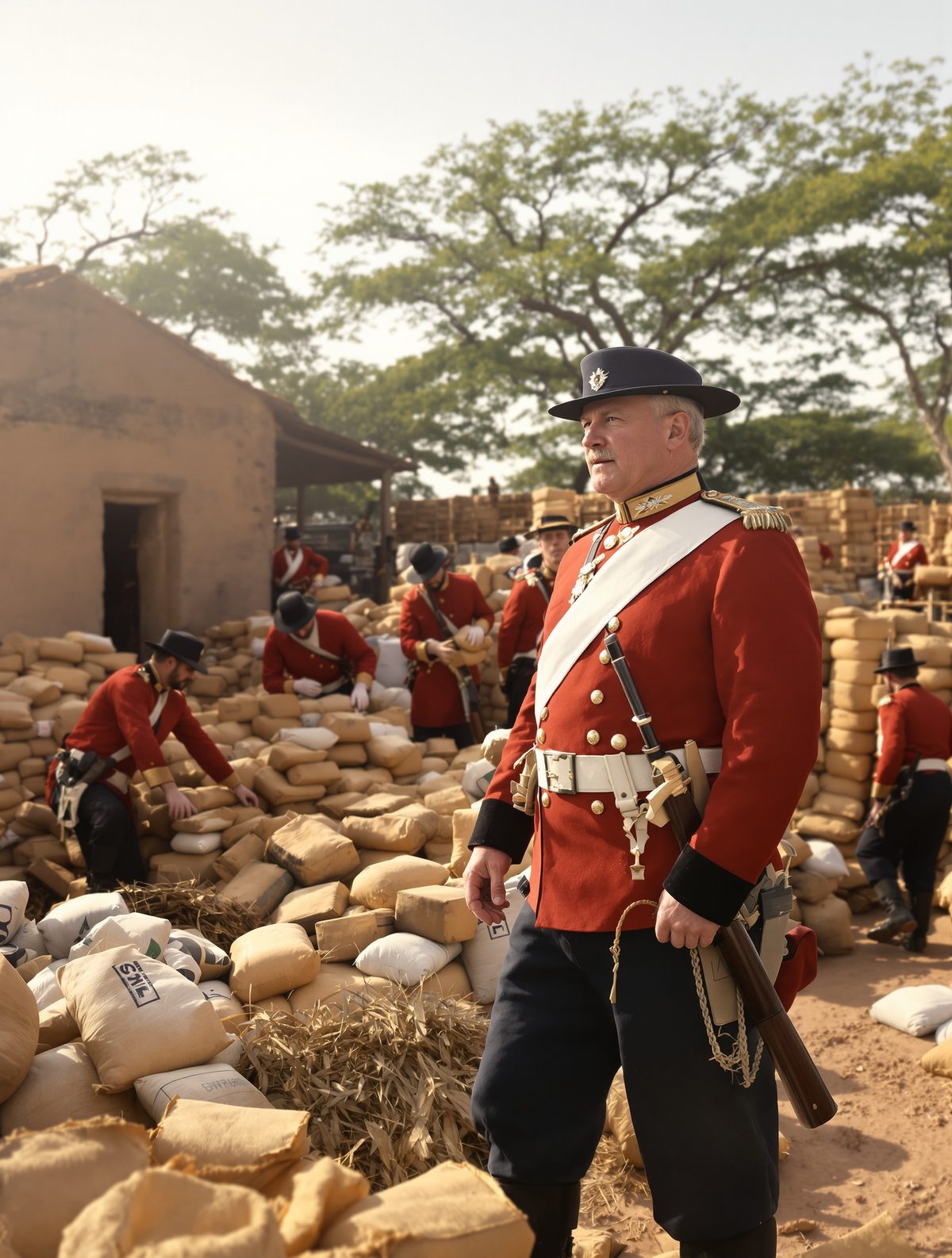
Warren Hastings arrived in Calcutta in 1750 as an eighteen-year-old clerk earning £5 a year—roughly what a London chimney sweep made. By 1773, he had clawed his way to become Britain's first Governor-General of India, wielding more absolute power than any English monarch had enjoyed for centuries. Under his rule, the East India Company evolved from a collection of coastal trading posts into a territorial empire larger than all of Europe.
But empire-building in the 18th century was a brutal business. When the Nawab of Bengal demanded tribute, Hastings ordered his troops to extract it from villages already devastated by famine. When rival Indian princes threatened Company territory, he hired mercenary armies and funded them by emptying temple treasuries. When his own council members opposed him, he fought a dawn duel with pistols in the Governor's garden, wounding his chief critic in the hip.
Perhaps most controversially, when two Indian nobles named Nuncomar and the Begums of Oudh accused him of taking bribes, both found themselves facing Hastings' handpicked judges on trumped-up charges. Nuncomar was hanged on what many considered fabricated evidence, while the Begums—elderly women who controlled vast treasuries—were imprisoned and allegedly tortured until they surrendered their wealth to Company coffers.
By 1784, these midnight dealings had reached the ears of Parliament, where a rising political star named Edmund Burke was building a reputation as the conscience of the empire. Burke would soon discover that bringing down Hastings would require more than righteous indignation—it would demand a legal spectacle unlike anything Britain had ever seen.
Burke's Crusade Against "Geographical Morality"
Edmund Burke was an unlikely imperial reformer. Born in Dublin to a modest family, he had never set foot in India and spoke none of its languages. But he possessed something perhaps more dangerous to the Company directors: a brilliant legal mind and an unshakeable belief that British power abroad should be governed by British principles of justice.
Burke spent months poring over Company documents smuggled back from Calcutta, building what he called a case against "geographical morality"—the convenient fiction that different moral standards applied in different hemispheres. In speech after speech, he painted Hastings not as a patriotic administrator but as an oriental despot who had adopted the methods of the very princes he claimed to be civilizing.
The evidence was damning. Company records showed that Hastings had accepted enormous "gifts" from Indian rulers—including 234,000 rupees from the Raja of Benares alone. His personal fortune had mysteriously swelled from nothing to over £200,000 during his tenure, despite his official salary of just £25,000 per year. Most shocking of all, Burke uncovered testimony suggesting that the torture of the Begums of Oudh had been carried out in Hastings' name, with thumbscrews and other instruments applied to extract not confessions but cash.
On April 3rd, 1786, Burke rose in the House of Commons to demand Hastings' impeachment. His four-hour speech was so electrifying that hardened politicians wept openly. Even Hastings' supporters found themselves nodding along as Burke thundered: "I impeach Warren Hastings in the name of the people of India, whose rights he has trodden under foot, and whose country he has turned into a desert."
The Trial of the Century Begins
Westminster Hall had to be specially renovated for what everyone knew would be the show trial of the century. Temporary galleries were erected to accommodate over 1,000 spectators, with box seats selling for 50 guineas—more than most working families earned in a year. The Queen herself attended opening day, along with the Prince of Wales and virtually every member of high society who could beg, borrow, or buy their way inside.
The proceedings began with all the pageantry of a medieval tournament. Burke and his fellow prosecutors entered in full court dress, followed by 174 members of the House of Commons acting as Hastings' accusers. The Lords took their places in scarlet and ermine, while Hastings himself—now 55 and gray-haired—sat alone in a chair surrounded by the assembled power of the British state.
What nobody anticipated was how long it would all take. The prosecution alone consumed nearly four years, with Burke delivering speeches that stretched across multiple days. Richard Brinsley Sheridan, the famous playwright turned politician, spoke for five days straight on the Begums of Oudh, with breaks only for meals and sleep. His performance was so emotionally charged that ladies in the gallery fainted and had to be carried out by ushers.
But Burke's most devastating moment came when he described Hastings' treatment of Indian subjects. Holding up chains allegedly used in Company prisons, he declared: "I impeach him in the name of human nature itself, which he has cruelly outraged, injured, and oppressed, in both sexes, in every age, rank, situation, and condition of life."
Hastings Fights Back
Warren Hastings was many things, but he was not a man who surrendered easily. Despite being denied access to most Company records and facing bankruptcy from legal costs, he mounted a defense that gradually shifted public opinion in his favor. His strategy was brilliant in its simplicity: remind Britain exactly what he had accomplished in India and what they stood to lose.
When Hastings first arrived in Calcutta, he pointed out, the Company controlled three isolated coastal enclaves and was nearly bankrupt. British merchants lived at the sufferance of Indian princes who could revoke trading privileges at will. French armies were advancing across the Deccan, threatening to drive British influence from the subcontinent entirely. The Marathas, Mysore, and dozens of other powers viewed the Company as weak prey ripe for conquest.
By 1785, when Hastings departed India, the situation had been transformed beyond recognition. Company armies had defeated French forces and their Indian allies in multiple wars. The treasuries of Bengal, Bihar, and Orissa were filling British coffers to the tune of £3 million annually—revenue that now funded a quarter of the Royal Navy and made possible Britain's expanding wars against revolutionary France.
Most importantly, Hastings argued, his allegedly harsh methods had actually saved countless lives. The strong rule he established had ended decades of civil war that had devastated Bengal. The tribute he extracted from Indian princes was a fraction of what they had previously spent on their own military adventures. Even his treatment of the Begums, he claimed, had prevented a succession war that would have plunged Oudh into chaos.
Seven Years Later: An Empire's Verdict
By April 1795, the trial had dragged on so long that many of the original participants were dead or had lost interest entirely. Public opinion, initially sympathetic to Burke's moral crusade, had shifted decisively toward Hastings as the reality of Britain's strategic situation became clear. The French Revolution had transformed European politics, and few politicians wanted to appear ungrateful to the man who had secured the Indian revenues now funding Britain's survival.
The final vote was closer than either side expected, but decisive nonetheless. On every major charge—corruption, oppression, judicial murder—Hastings was acquitted by margins of two to one or greater. After seven years, £70,000 in legal costs, and testimony from hundreds of witnesses, Parliament had essentially ruled that whatever Hastings had done in India, the results justified the methods.
But Burke had achieved something perhaps more important than a conviction. The trial had established, for the first time in British legal history, that imperial administrators could be held accountable for their actions abroad. The East India Company's days of operating as an unregulated private empire were numbered. Within a generation, the Government of India Act would place the subcontinent under direct Crown control, with governors-general answerable to Parliament rather than Company shareholders.
The Empire's Reckoning
Warren Hastings lived another twenty-three years after his acquittal, quietly managing his estate in Gloucestershire and watching as the empire he had built expanded to encompass nearly a quarter of the world's population. He died in 1818, the same year that Britain emerged victorious from the Napoleonic Wars—funded in large part by the Indian revenues his controversial methods had secured.
But the questions raised during those seven years in Westminster Hall have never been fully answered. Can liberal democracies maintain overseas empires without compromising their foundational values? When strategic necessity conflicts with moral principle, which should prevail? How do we judge historical figures who achieved undeniably important results through undeniably questionable means?
Today, as modern democracies grapple with the ethics of military intervention, economic sanctions, and the treatment of foreign populations, the trial of Warren Hastings offers sobering lessons. It reminds us that the gap between a nation's ideals and its international behavior is often measured not in miles, but in the moral compromises that distance makes possible. The midnight decisions that built Britain's eastern empire were made by men who genuinely believed they were serving civilization—a belief that made their actions not less dangerous, but infinitely more so.