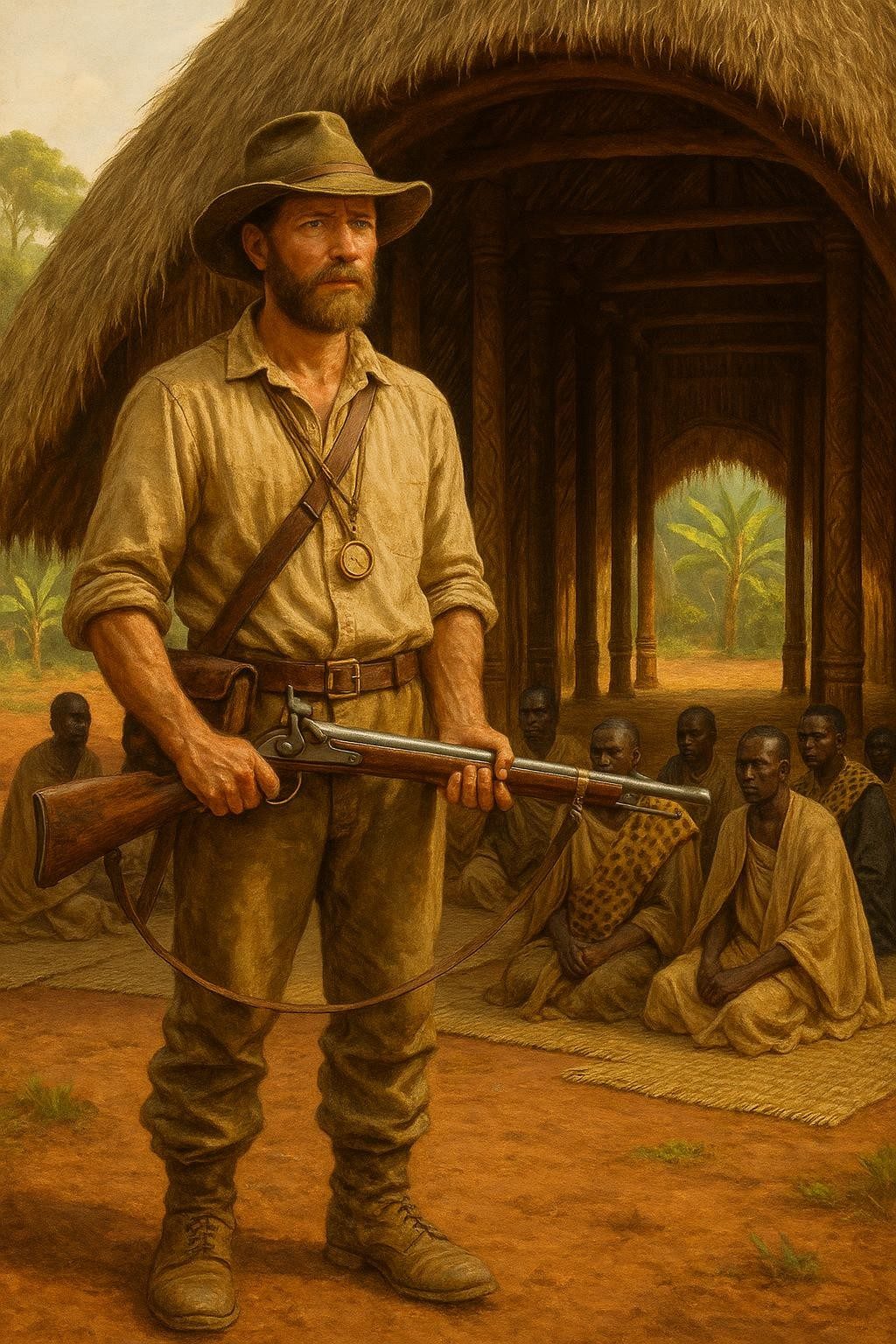
Through the shifting sands of time, many stories of exploration and empire remain obscured in the mists of history. Yet, in 1862, a daring expedition unfolded that would alter the course of history and entangle the fabric of two vastly different worlds. This is the tale of John Hanning Speke’s extraordinary journey into the heart of Africa and his encounter with the enigmatic Kingdom of Buganda, a saga that transcends mere exploration and delves into the realms of discovery, cultural exchange, and the relentless pursuit of knowledge.
The Lonely Path to Discovery
The year was 1862, and John Hanning Speke, a man driven by an insatiable curiosity and the courage to act upon it, embarked upon a journey that would challenge the very limits of endurance and resolve. Born in 1827, Speke was a British army officer and explorer who possessed a singular vision: to discover the source of the mighty Nile River. No small feat, this venture required not only daring but a willingness to undertake a 1,000-mile trek across some of the most inhospitable terrains known to man.
Speke’s journey began from the east African coast, traversing lands dominated by unforgiving climates and landscapes filled with myriad dangers, from wild beasts to the ravages of disease. His supplies were meager, and often he relied on the goodwill—and occasionally the hostility—of the local tribes. It was a journey fueled not by glory, but by an unyielding quest for geographical truth and the allure of the unknown.
An Enigmatic Kingdom Revealed
After enduring innumerable hardships, Speke arrived at the borders of the Kingdom of Buganda, a realm concealed in the lush landscapes of what is now modern Uganda. This was no ordinary dominion; it was a kingdom of remarkable sophistication and culture that few Europeans had ever laid eyes upon. Despite the rigors of his journey, Speke was captivated by the intricate social structure, the economic acumen, and the military prowess that characterized Buganda under the rule of its unchallenged monarch, Kabaka Mutesa I.
Kabaka Mutesa, who had ascended to the throne in the mid-1850s, wielded power with a blend of intelligence, vision, and absolute authority. The capital of Buganda, a sprawling settlement with a population numbering in the tens of thousands, was a hive of activity and commerce, its grandeur both unexpected and inspiring to Western eyes accustomed to underestimating African civilizations. Buganda struck Speke not merely as a kingdom but as an emblem of an ancient legacy of governance and culture, thus cementing its place beyond the limitations of mere colonial narratives.
When Worlds Collide: An Unforgettable Encounter
The meeting between Speke and Kabaka Mutesa was a moment rife with theatrical defiance and underlying curiosity. Speke, weary from his trials yet imbued with determination, approached the king in the official court. Mutesa, draped in regal attire, gazed upon Speke with a piercing yet contemplative stare. The explorer stood alone, no other British officer having reached this pinnacle of cultural and geographical exploration.
Unexpectedly, the initially tense atmosphere shifted dramatically when Mutesa—against all expectations—burst into laughter and had Speke made a guest of honor. It was a moment that defied historical expectations, a testament to the king’s wisdom and strategic benevolence. Mutesa had been aware of the escalating European interest in Africa, and his gestures reflected both open arms and shrewd calculations. Speke’s stay in Buganda opened doors to an intricate exchange of ideas, where both parties sought to understand the other, effectually bridging two worlds that had hitherto remained distant.
A Rich Tapestry of Culture and Diplomacy
During his time as an honored guest, Speke gained insights into the inner workings of Buganda’s society. He marveled at the kingdom’s political and economic structures—a central government headed by the kabaka, interior administration detailed in hierarchy, vibrant marketplaces teeming with goods from distant territories, and a disciplined military that safeguarded Buganda’s borders.
Speke's observations debunked many European misconceptions about African societies. He meticulously documented his experiences, detailing the lingual complexities and the unwavering spirit of the people. His journals reflected respect and admiration, providing one of the rare ethnohistorical accounts that offered a glimpse into the rich, albeit complex, tapestry of Buganda’s legacy.
The End of One Journey, The Beginning of Another
Ultimately, Speke's journey did not only illuminate a long-sought geographical truth when he traced the Nile’s source to the great Lake Victoria; it initiated new dialogues and understandings between European and African societies. This encounter—unexpected, enlightening, and transformative—paved the way for future interactions where discovery was not just about claiming lands, but about recognizing the depths of cultures that existed far beyond European shores.
John Hanning Speke returned to Britain in 1863, bringing with him tales of his adventures, newfound knowledge, and an encounter that would be remembered in the annals of history. His narratives informed the world about Buganda, challenging previously held Eurocentric views and sowing the seeds for subsequent explorers and historians.
Today, as we reflect on this momentous meeting between Speke and Kabaka Mutesa, we are reminded of the importance of approaching history with a lens of understanding and a respect for cultural nuances. As our modern world grows ever more interconnected, this tale from the Victorian era underscores a lasting truth: that the bridges we build between disparate cultures have the power to reveal a shared humanity, and ultimately, change everything.