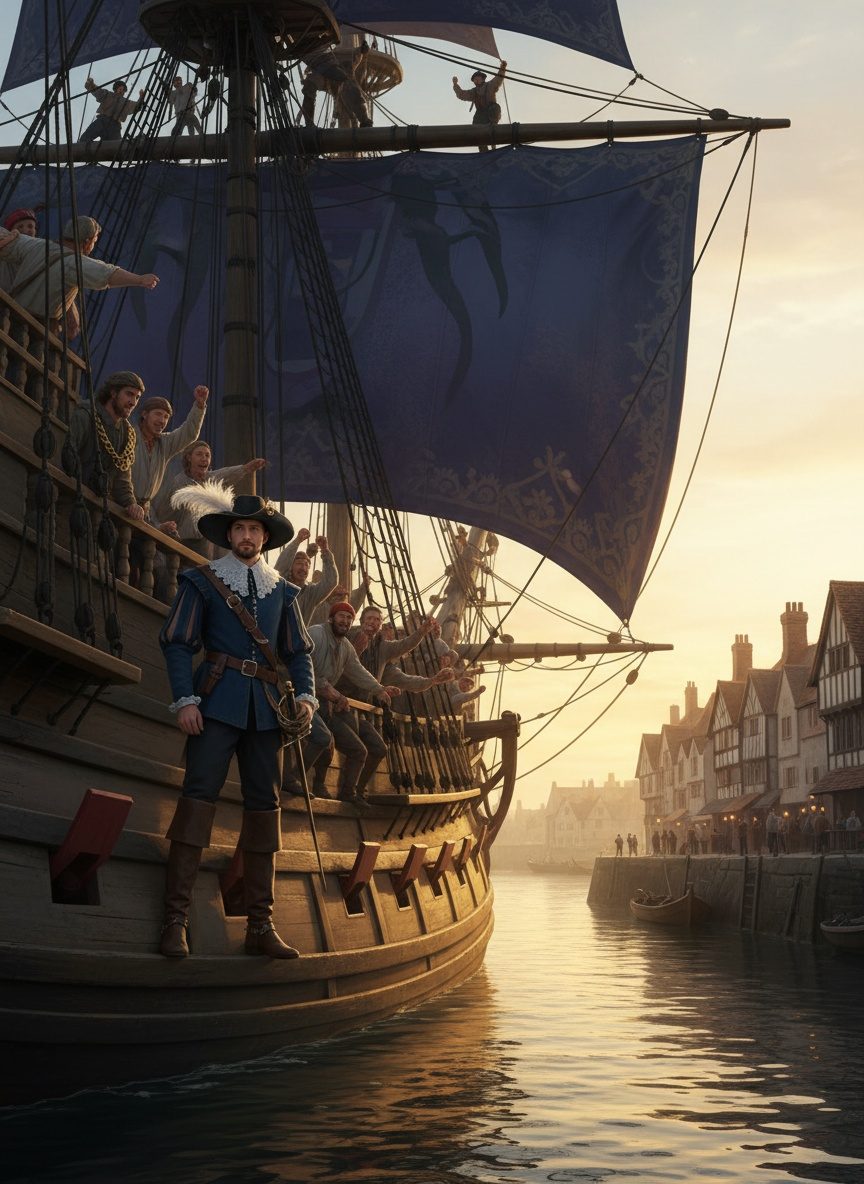
Picture this: The morning mist is just lifting over Plymouth Harbour on a September day in 1588. Out of the ether emerges the sight of sails—splendid blue damask fluttering in the gentle breeze. As the craft draws closer, a sense of awe grips the onlookers. Aboard is Thomas Cavendish, his crew adorned with chains of gold, returning from an audacious journey around the globe. At merely 26, this Suffolk gentleman had accomplished what few dared to imagine. Welcome to the extraordinary world of Thomas Cavendish, the intrepid adventurer who carved his name into the annals of exploration with bravado and an ounce of youthful audacity.
The Call of Adventure
Born in 1560 to a well-to-do family in Suffolk, Thomas Cavendish was destined for a life of comfort. However, like any true child of Elizabethan England, with its lure of the seas and whispers of untold treasures, the young Cavendish had an insatiable appetite for adventure. In 1585, at the tender age of 25, he set his sights beyond the horizon. Rather than languishing as a country gentleman, Cavendish commissioned a small fleet comprising the Desire, Content, and Hugh Gallant. In 1586, with a crew of 123 men and little more than rudimentary maps, he embarked on a voyage not just to explore, but to conquer.
The High Seas
Equipped with nothing but his grit and charm, Cavendish set sail across the Atlantic. By March 1587, he had reached the Brazilian coast, where the lush forests cloaked the unknown. The expedition meandered down the coast of Patagonia and traversed the perilous Strait of Magellan. It was here that Cavendish's tactical genius came to the fore. Understanding that the key to his enterprise rested on speed and clandestine movements, he adopted the tactics of swift strikes and covert retreats.
It was during this leg of the journey that fortune favorably smiled upon him. Cavendish captured several Spanish settlements along the coast and, more significantly, plundered Spanish ships laden with riches that would fuel his passage—and his legend—further.
The Spanish Galleon: A Fortune Secured
The pinnacle of Cavendish's plundering career came when he set eyes on the Spanish treasure galleon, the Santa Anna. This wondrous vessel was carrying precious goods from the Philippines to Mexico. On November 14, 1587, in an overpowering assault, Cavendish and his men seized the ship, acquiring vast riches including 600 tons of East Asian spices, silks, and gold. Such bounty could challenge even the imagination of the most fanciful Elizabethan storyteller.
Famously, Cavendish invited the captain of the Santa Anna to dine on the conquered ship, illustrating not just his merciless ambition but his instinct for honorable conduct. This act was a mark of the complex character of a man straddling the line between pirate and statesman, forging a rapport even amidst conflict.
Crossing the Pacific: Perils and Triumphs
With his spoils secured, Cavendish turned his sights on the vast, enigmatic Pacific Ocean. The crossing demanded relentless perseverance. Facing untold weather conditions and relying solely on celestial navigation, Cavendish fostered a spirit of kinship among his men. It was crucial to hold morale high while rations dwindled and the vast sea offered nothing but relentless emptiness. Yet, adversity bore camaraderie, and the young leader's charisma held sway.
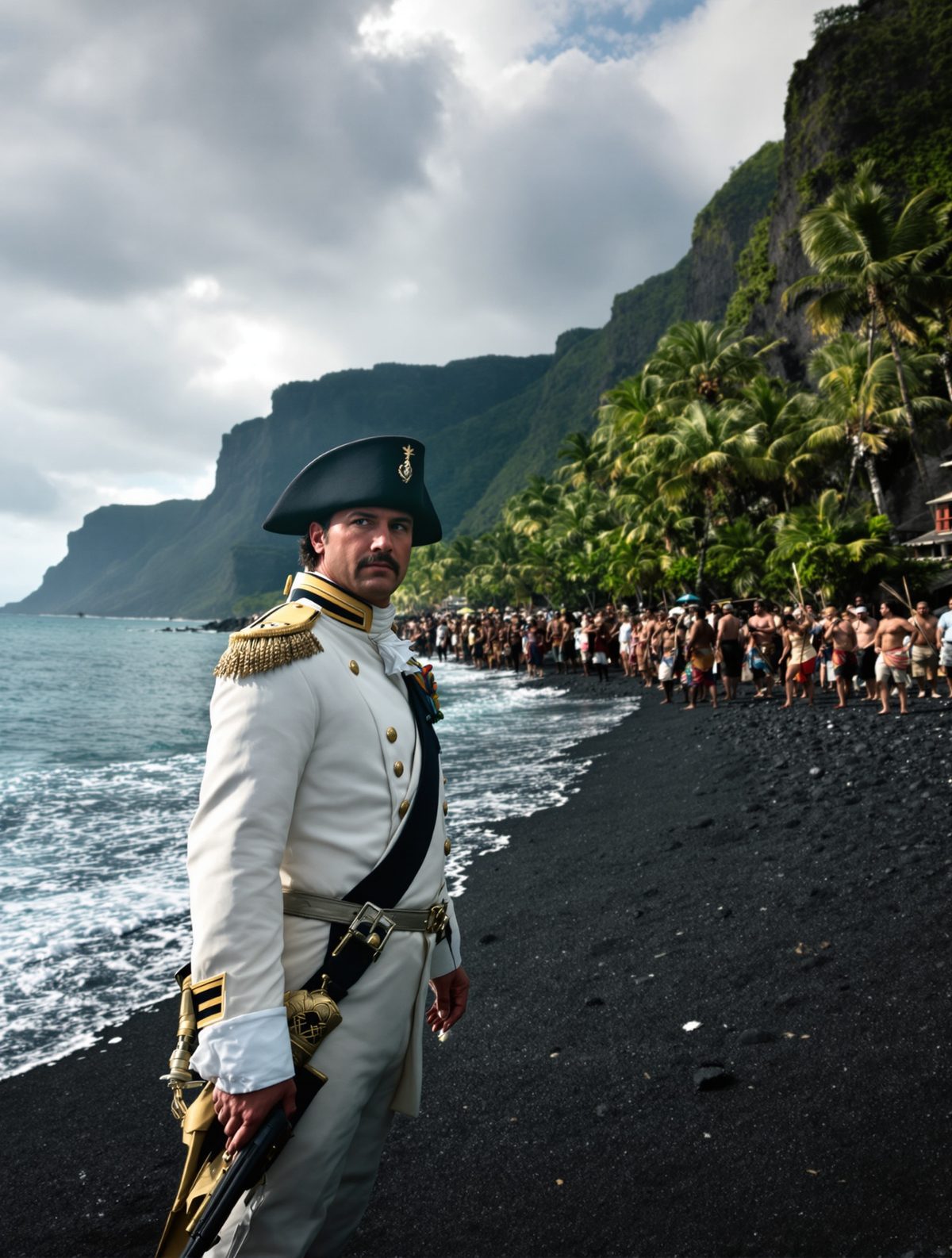
Finally, in 1588, Cavendish and his crew made landfall in Southeast Asia, stopping by the remote island of Java to replenish supplies. His journey through the timeless waterways of the world was as much a testament to human endurance as it was an exercise in expanding the realm of possibility. Their physical passage lit an intangible spark, solidifying England’s resolve to claim its place in a rapidly globalizing world.
The Young Conqueror Returns
On September 9, 1588, with a mere two of his original three ships and only 50 men remaining, Cavendish sailed triumphantly back to Plymouth. His homecoming was a celebration not just of personal triumph but of national pride. England, flush with the afterglow of the defeat of the Spanish Armada, welcomed this new flicker of glory.
His tales of the world would invigorate the imaginations of a generation, urging Englishmen not to look into mundane mirrors of familiarity, but instead through the window of opportunity the world offered. That day, young Cavendish stood not merely as a traveler, but as a symbol of how audacious dreams, when powered by daring action, shape the destiny of empires.
Legacy: Why Cavendish Matters
In every swashbuckler story told thereafter, in every subsequent endeavor of exploration, lies a morsel of Cavendish’s undaunted spirit. Not content to be a mere footnote, his expedition cemented him as the third Englishman after Drake and Magellan to circumnavigate the globe. In a world where the horizon still held the promise of uncharted discovery, Cavendish's voyage stretched the limits of human daring and ingenuity.
Thomas Cavendish's legacy extends beyond his fabled treasures. He signifies the youthful zeal, the embrace of uncertainty, and the unwavering resolve to create ripples across the ocean of history. As we navigate today's vast seas of information and innovation, Cavendish's story compels us to recognize that the edges of our mapped world are not the bends of limitation but the frontiers of opportunity.
Let his tale remind us of the boundless potential that arises from fearless exploration—the kind often left out of textbooks, but vital to the stories we continue to write today.