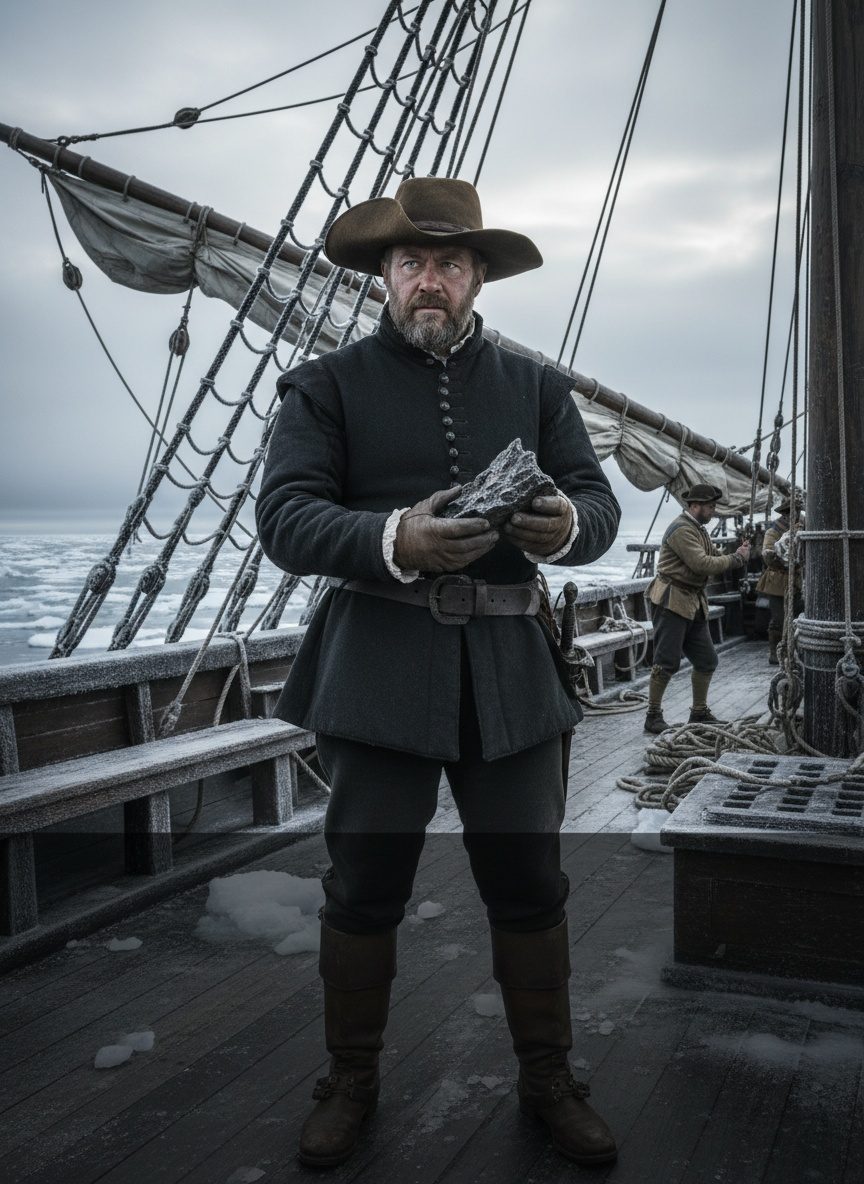
He sought riches in strange and distant lands, yet he died in staggering debt. Martin Frobisher, an audacious sea captain and privateer, was captivated not by gold's glitter but by the silent promise of uncharted territories. The year was 1576, when Frobisher first departed the familiar quays of England, steering his course into the unbroken ice of the Arctic. The realm of icebergs and polar silence veiled the treasure he pursued, but Frobisher returned not with mere tales of explorers’ bravado but with a handful of mysterious black rock that shimmered with a prospect as golden as Elizabethan England’s imperial dreams.
The tempestuous age of Elizabeth I begot aspirations that reached for both knowledge and wealth. The promise of the New World kindled a spark in countless hearts, and Frobisher saw beyond the tempest to the golden horizon. On that first journey, as his vessel carved a path through unknown waters, the unforgiving Arctic churned and sighed. Yet, upon his return, it was not just Frobisher’s account of icy seas that gripped the nation but the supposedly aurous stones that London’s streets soon buzzed with. The rocks, as dark as the swirling Arctic depths, seemed to hold the sunlight within and captivated the English crown and country alike.
Backed by enthused investors and emboldened by his own certainty, Frobisher set sail again in 1577 and once more in 1578, determined to extract a veritable bounty of this newfound Arctic ore. The might and marvel of fifteen ships set forth, each scratched by Atlantic winds and whispered to by the tales of mermaids beneath the sail-laden waters. More than a mission for gold, these voyages became testaments to human tenacity, where men braved bitter cold and bitterer defeats, spurred on by dreams thicker than the fog that clung to their shivering bones.
But what transformed this saga from one of success to a tale of woe was not the harsh journey but a cruel twist of nature’s own deception. The fervor of those prospectors, who toiled day and night beneath the eerie, unending daylight of summer in the Arctic Circle, saw vast quantities of the black rock quarried and loaded onto their grand flotilla. Two thousand tonnes of it, they clawed from the icy grasp of desolate, harsh shores, captured in the cargo holds as if they held the very keys to England’s wealth and dominion.
The grand return in late 1578 was less a triumphal procession and more a rolling wave of anticipation, pressing upon the very heart of Elizabethan London. The thought of unparalleled wealth infused the capital like a drug, every clink of coin on cobblestone juxtaposed against imagination’s gold. The equanimity of English society, from merchant to monarch, hinged upon the expected revelatory yield of Frobisher’s black ore.
Yet, like fool’s gold, the dream dissolved. The glittering handful that first seduced England’s gaze succumbed to the scrutinizing scrutiny of keen-eyed assayers. Beneath the steely gaze of science, away from Frobisher’s hopeful adventurers, the dreams were dashed. The ore was worthless, bearing naught but empty promises and reflective surfaces; a deceptive dance of light against the shadows.
Frobisher himself stood at the edge, the sea’s salt still on his skin, as long-anticipated confirmation wove its dirge through the schemes of men. With every ship unladen of its futile cargo, the echo of riches vanished like whispers dispersed by shifting winds. The consequences rippled through investors’ minds, the purse strings snapping one by one, a symphony of fiscal ruin resounding in the failing light of fortune’s fading sun. England felt the sting of cold metal that was not gold, and Elizabeth’s treasurers lamented the loss more deeply than the explorers felt the frostbite of persistent hope.
The curious saga of Martin Frobisher does not end merely with a financial tumble but with a ponderance on the brittleness of dreams. For all their daring, the men who followed the improbable dreams of gold left not castles or crowns, but a narrative shapeless as Arctic fog yet eternal in its lesson. The treasure they sought illuminated the folly so inherent in human desire, the gamble of ambition when set against the unfathomable bounds of the Earth’s cruelties.
This story resounds today not just as a cautionary tale of enterprise and the risk of ruin but as a mirror to mankind’s eternal quest. In the veins of rock lonely above the Arctic line remain whispers of what might have been, testaments to the verve of the age and a captain who sailed beyond the map’s edge, only to discover lands that yielded nothing yet lessons that last endlessly. As we chart new unknowns, be they Arctic ice or celestial dust, Frobisher’s venture into illusion reminds us that every quest holds its shadows, and within, the greatest treasures might be intangible, unseen, save by those who dare to dream.