The Forbidden City of Lhasa had been sealed from the West for centuries. Yet, in 1904, it opened its gates to an audacious British officer’s bluff.
The Spectacle of the Himalayas
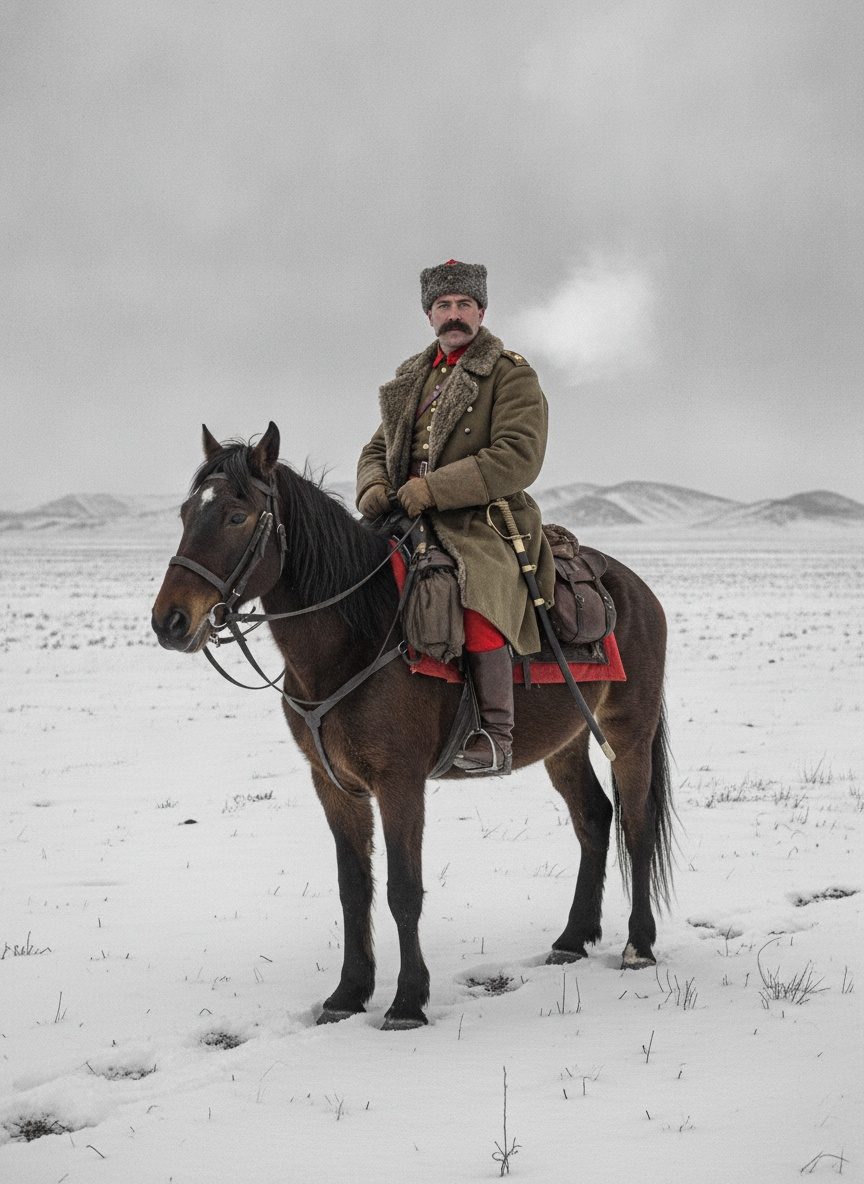
Imagine the relentless march of 3,000 men, pounding across the world's most punishing terrain. The Himalayas were both a natural fortress and an unforgiving adversary, where the very air could turn from a breath of life to an icy specter of death in a heartbeat. It was into this realm of extremes that Francis Younghusband, a British Army officer with a flair for the audacious, ventured with a robust force. Their mission? To reach Lhasa, the heart of Tibet, a place that had resisted the pull of the West for over two hundred years.
The expedition was as much a display of British imperial ambition as it was an act of defiance against the natural elements. As Younghusband’s troops braved blizzard-swept passes and knife-edge ridges, they peeled back layers of frostbite and exhaustion. Many troops succumbed to the altitude, and yet, Younghusband pressed on. It was not just a journey of conquest but an expedition wrapped in a cloak of enigma. What lay beyond the towering peaks was largely unknown, spun into legends that whispered of a city as sacred as it was impregnable.
The Man Behind the Mission
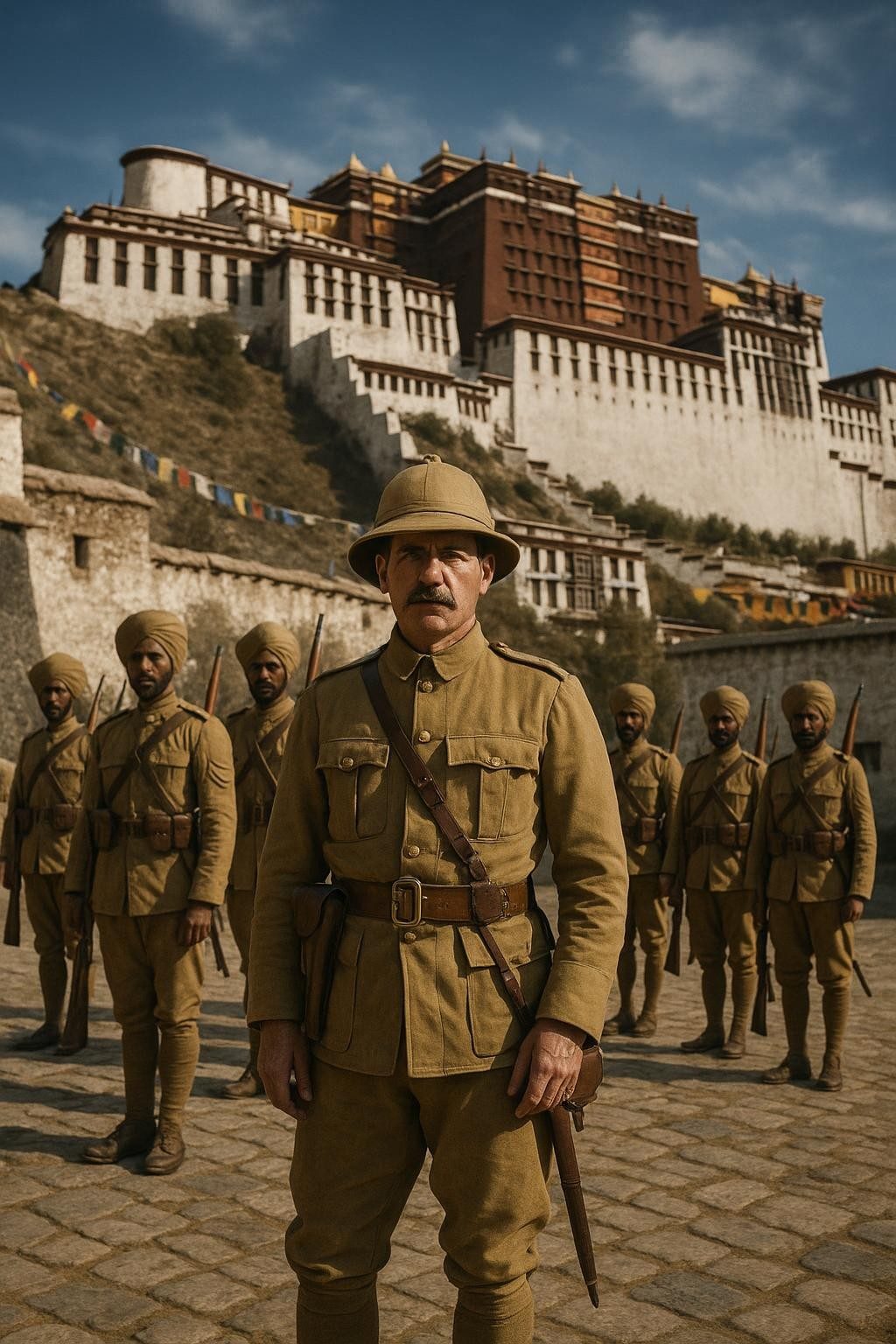
Francis Younghusband was no ordinary officer. With his handlebar mustache and penetrating gaze, he was the very picture of Victorian-era bravado. Yet behind this veneer lay a soul driven by mysticism as much as pragmatism. Born into the British upper class and shaped by the ethos of imperial service, Younghusband had already carved a niche out of a landscape filled with extraordinary exploits. His curiosity about the East was matched only by his appetite for the unknown.
Under the guise of protecting British interests, which the Empire perceived as threatened by Russian advances in Central Asia, Younghusband and his men made their perilous approach to the sacred city. The geopolitical poker game of the Great Game was at its height, with Tibet caught awkwardly between giants in a rapidly shrinking world. Younghusband’s gamble was as much a diplomatic overture as it was an imperial display — and it worked, against all odds.
Bluffing the Gates of Lhasa
When the British forces finally reached the gates of Lhasa in August 1904, Younghusband faced a critical moment. With sheer numbers on his side but limits to his power, the task of entering the city lay not in the force of arms but in sheer audacity. Younghusband executed what would become one of history's most prodigious bluffs: he managed to convince the Tibetan authorities to open the doors of the Forbidden City, not through subjugation, but negotiation.
Accounts of this pivotal moment paint a tapestry of tense diplomacy and strategic gambles, as Younghusband played on Tibet’s fears and hopes. He promised them protection and cooperation instead of conflict and ruin. It was a masterstroke of psychological gamesmanship in a land where honor and face held currency alongside gold and arms.
The Roof of the World Revealed
As Younghusband walked through the gates of Lhasa, the cold mountain breeze subsided into the awe-filled stillness of history unfolding. Here lay the Potala Palace, a magnificent embodiment of Tibetan Buddhism's spiritual heart, casting its shadow over a city where few foreigners had trod. This was a moment that collapsed centuries of separation between East and West, leaving both wonder and tension in its wake.
For the British, it was a triumph of exploration and imperial assertion, yet it underscored the precarious imbalances that lay ahead. For Tibet, the intrusion signaled a period of upheaval and change, a crossroads between tradition and the burgeoning influences from beyond its mountainous borders. The stakes were as high as the Himalayas themselves, mapped on the city’s cobblestones and echoed in the halls of the Potala.
Why the Gates to Lhasa Opened
Why does this story matter? It's not simply the tale of a man leading his men through one of the world's harshest environments; it's about the unfolding dynamic between cultures, empires, and the relentless march of time. Younghusband’s expedition was a microcosm of the larger narrative of imperial expansion and cultural collision, a story mirrored in diverse theatres across the globe during the turn of the century.
In the opening of Lhasa's gates, we find more than a strategic gain; we see the complexity of human interaction where power meets endurance, diplomacy dances with disbelief, and history writes itself on the mettle of individuals willing to forge new paths. It stands, not as a relic of conquest, but as a chapter that speaks volumes about the interplay of resolve, negotiation, and the boundless curiosity that pushes boundaries — often challenging the very myths we hold about them.