January 22, 1879. A crimson sun descended behind the hills of KwaZulu-Natal, casting a hellish glow over the mission station at Rorke's Drift.
The Storm Gathers
On the banks of the Buffalo River, nestled at the heart of Zulu territory, sat a modest mission station. It was a British outpost, once intended for peaceful religious work but now transformed into a fortification, bracing against imminent attack. The day had seen tragic losses at the nearby Battle of Isandlwana, where over a thousand British and colonial troops fell in one of the most profound defeats for the Empire. Now, a small contingent of 139 British soldiers awaited their fate at Rorke's Drift, a name that would soon echo across history.
Under an anxious sky, the air was thick with anticipation. The men busied themselves reinforcing makeshift defenses — biscuit boxes and mealie bags piled high — turning the mission's boundary into a barricade. Sporadic bursts of light and sound punctuated the eerie calm as they readied their rifles and checked their ammunition. Yet, it was the brave echo of a solitary bugle that would signal one of history's most storied last stands.
The Inferno Within
With barely any notice, the Zulu warriors descended upon Rorke's Drift. They were 4,000 strong, a tide of muscle and might, armed with shields and spears, hearts fueled by their victory earlier that day. Inside the station, men hastened to their posts, the realization dawning upon them — they were David facing a Goliath of epic proportions.
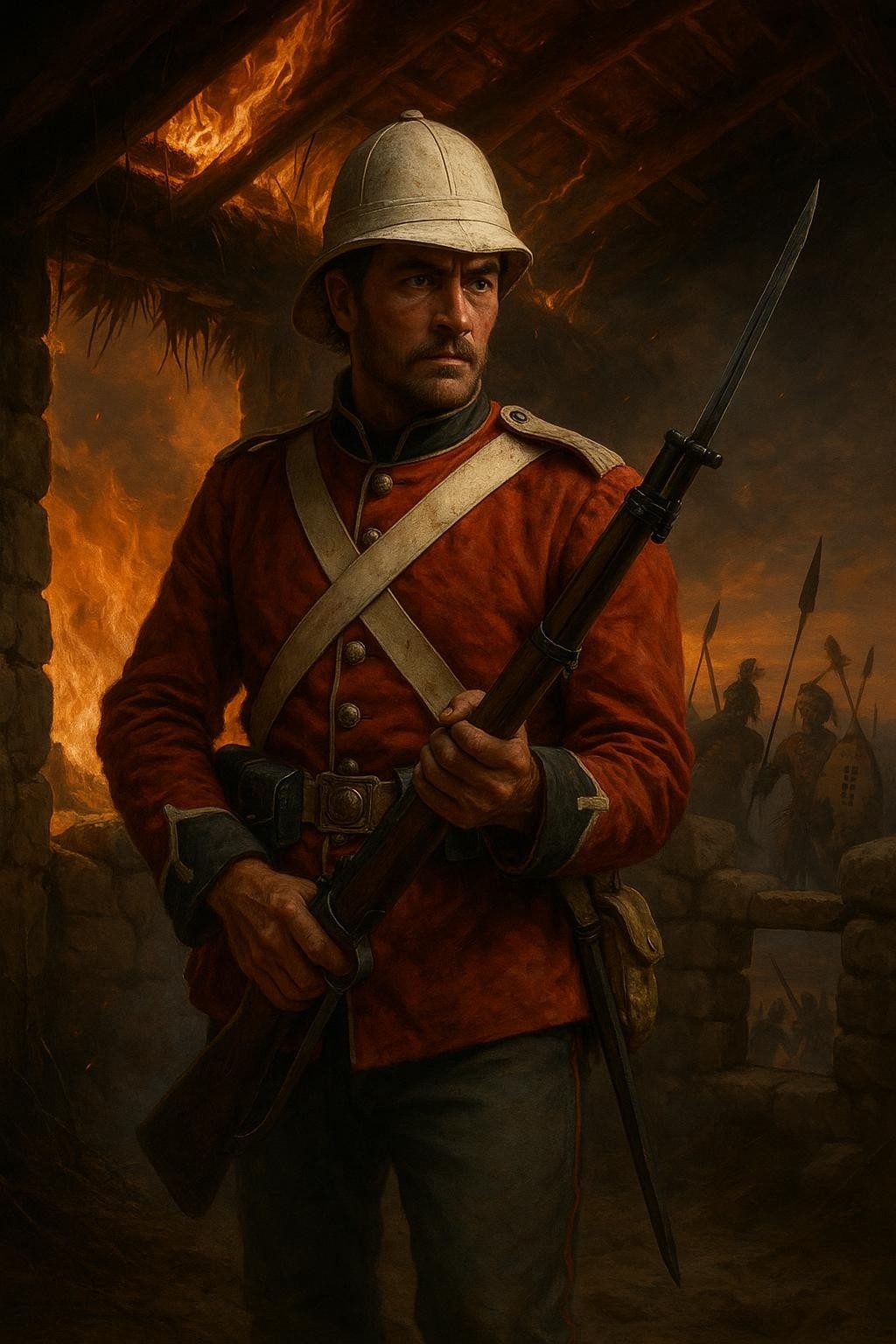
Among the ranks was Private Henry Hook, assigned as a hospital orderly for the night. His actions, in these critical hours, dared the annals of history to forget him. Inside the makeshift hospital, panic ensued as Zulu warriors set the thatch roof ablaze. Firelight clashed with gunfire, and the air choked with smoke and cries.
Hook, however, was undeterred. Methodically, with determination forged in the crucible of chaos, he rescued eleven patients, many of whom were too wounded to stand. In the confusion and darkness, Hook's resolve did not falter. Under relentless enemy fire, he bore his comrades on his back, one after another, through windows and into relative safety behind the lines. His gallantry that night was no less fierce than the flames he battled.
A Night of Steely Resolve
The struggle persisted under the shrouding cloak of African night. A chilling mix of Zulu war chants and sporadic gunfire reverberated through the valley. The garrison held its breath, steadfast through each terrifying assault that crashed against their defenses. The ingenuity of makeshift barricades was put to the ultimate test, and in that desperate time, the bugler's call became a lifeline — a call that rallied the men, connecting them in purpose and resolve.
Through the long, harrowing hours, acts of valor were not born of heroism alone but necessity and fraternity. The officers and soldiers, from Private to commanding rank, shouldered the weight of survival on their aching backs, and amidst the darkness, courage became more than disposition — it was a mandate.
At the dawn's fragile light, the Zulu tide receded. Exhausted, many of the men sank to the ground, shells of their former selves, yet infused with a newfound bond forged in the fire of mutual struggle. The Zulu warriors had not breached the defenses, and the garrison at Rorke's Drift had lived to see another sun rise.
The Aftermath and Enduring Legacy
The battle of Rorke's Drift was an emblem of endurance, a david-and-goliath narrative that chroniclers would recall with reverence. Eleven Victoria Crosses were awarded to the defenders, and among them, Private Henry Hook: the gallant figure who saved eleven men from a burning inferno. Each recipient symbolized the defiance and grit that the Empire had come to, perhaps unjustly, expect of its soldiers.
This near-mythical siege was, at its core, a reflection of broader imperial struggles—of territories carved by ambition and defended with blood. The bravery at Rorke's Drift, contrasted sharply against the devastation at Isandlwana, underscored the unpredictable nature of warfare and the relentless spirit of those who fought.
In understanding this legend, we glimpse the human heart laid bare against the backdrop of the Victorian era's complexities. Rorke's Drift was not merely a moment of military resilience but a manifestation of the timeless bond between those who stand together against overwhelming odds. Though history often echoes with grand narratives of empires, it finds its profundity in the acts of individuals—like a bugler's charge or a hero's rescue—etched across the annals, resonating with echoes of courage and camaraderie.