1826. The sun beat harshly on the ancient caravan route leading into Bokhara, casting an unforgiving heat upon the vast plains of Central Asia. This legendary city, veiled in mystery and danger, was a coveted prize for any explorer but remained sternly off-limits to European eyes. Nestled in the heart of the Emirate, Bokhara was known as a perilous enigma, a place where the allure of discovery was tempered by the very real threat of execution for outsiders. Amongst this risk-laden setting, Alexander Burnes, a Scotsman of remarkable audacity and ingenuity, embarked on a journey that would etch his name into the annals of the Great Game.
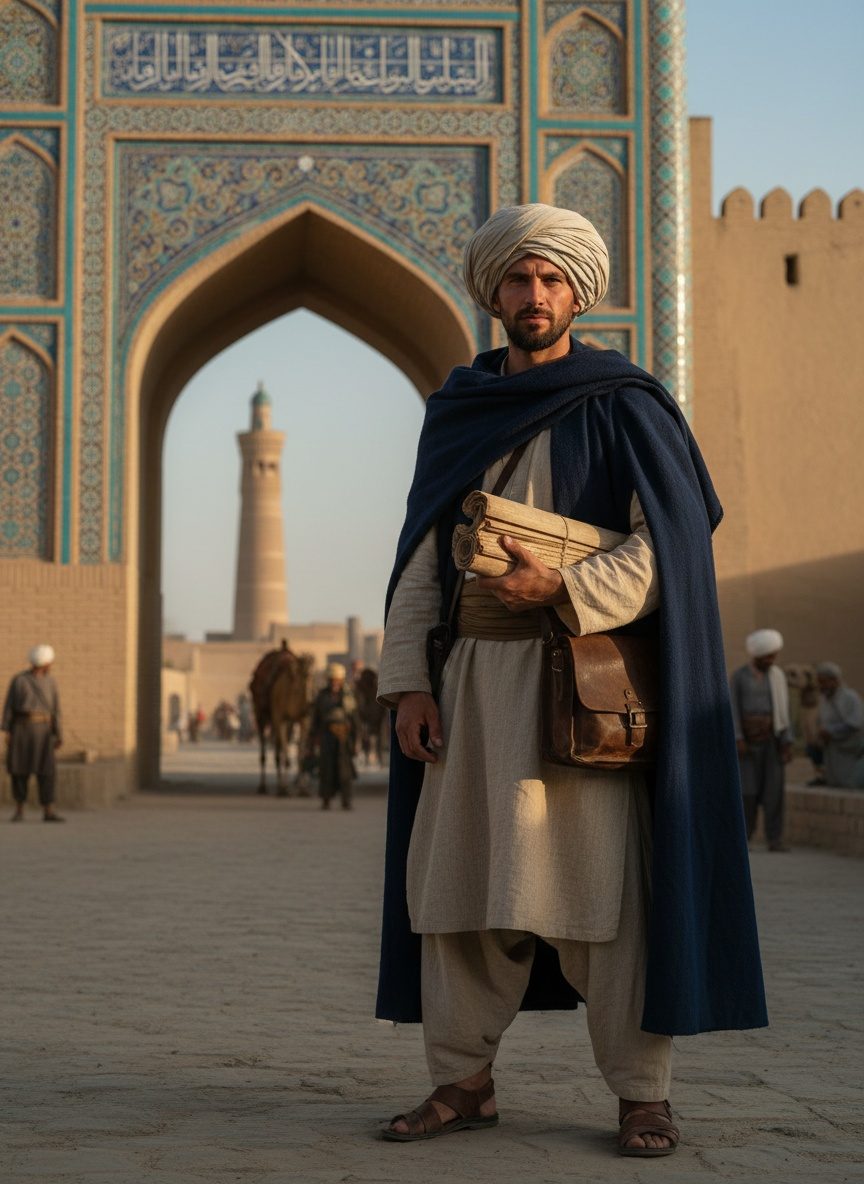
From the coastal town of Montrose in Scotland to the swirling streets of Bokhara, Alexander Burnes' journey was nothing short of incredible. The young officer of the British East India Company was driven by a thirst for exploration and a keen understanding of geopolitical intrigue. A natural linguist and a master of disguise, Burnes donned the garb of an Afghan merchant, seamlessly blending in with the myriad traders and nomads that traversed the Silk Road. Fluent in Farsi, he navigated conversations with the ease and confidence that belied his European origins.
Bokhara stood as the most formidable city on the sandswept expanse of the Asian steppe. Its towering minarets and the sacred arc of the Registan seemed to whisper tales of its illustrious past—a city that was once a glittering jewel in the empire of Genghis Khan. But beneath this splendor lay an aura of menace, its gates heavily guarded by the emir's men, ever vigilant for any trace of Western incursion. Every cobbled street, every bustling bazaar hummed with tales of foreboding—Europeans, it was said, rarely saw the light of day once they crossed into Bokhara. For those daring souls who ventured too far, the emir's justice was swift and ruthless.
Burnes, undeterred by tales of doom, saw opportunity where others saw oblivion. Armed with maps and an intimate understanding of Middle Eastern political currents, he traversed into Bokhara's labyrinthine heart. His mission was audacious and improbable: to gather intelligence and return unscathed, bearing secrets that could tip the delicate balance of power in what would soon become known as the Great Game—a shadow war of espionage and diplomacy waged between imperial Britain and Tsarist Russia.
Within the confines of Bokhara, Burnes observed the intricate dance of cultures that played out daily. The main bazaar was a vibrant jumble of sights and sounds—a kaleidoscope of merchants peddling wares from the far reaches of the earth. Camels loaded with silks and spices shared alleyways with donkeys bearing loads of intricately woven carpets. Beneath the dome of the Mir-i-Arab Madrasa, theological debates resonated, while the cries of hawkers echoed off the azure tiles of Kalyan Mosque.
In this bustling nexus, Burnes' ability to merge language and demeanor with the facade of an Afghan trader became his means of survival. He maneuvered through the city's veins, witnessing both its opulence and its hidden turmoils. The emir's court, a tableau of elaborate ceremonies, displayed a fragile elegance underpinned by an undercurrent of political tension. Burnes, with consummate skill, captured the city's layout, fortifications, and political sentiment, committing them to memory with the precision of a seasoned cartographer.
Perhaps his greatest challenge lay in the unpredictability of human interaction. Each encounter, whether brushing shoulders with a Tajik merchant or sipping tea at a chaikhana, was fraught with peril. In an environment where a misplaced word could unravel his charade, Burnes' adeptness at cultural camouflage was tested to its limits. Yet, it was not just what he saw and heard that made Burnes' journey significant, but the delicate intelligence he wove from a city resistant to foreign inquiry.
As days turned to weeks, Burnes gathered insights that would ripple beyond the lifetime of the regnant emir. His revelations about Bokhara's trade networks, its military capabilities, and the intricacies of its alliances informed British strategy, providing an invaluable advantage in their imperial chess game with Russia. This knowledge, meticulously recorded once he emerged from Bokhara's grip, would become part of Burnes' celebrated dispatches, lending him fame as one of the foremost explorers of his age.
Returning from Bokhara in ways no European had before, Burnes' triumph rested not merely in the survival of his physically perilous journey, but in the intellectual bounty he carried home. He had pierced the heart of a city that lay at a strategic crossroads where the axis of empire tilted, offering his nation the first glimpses beneath its exotic, yet impenetrable veneer.
In the years that followed, Burnes' exploits in Bokhara became legendary, setting the tone for numerous British expeditions that would seek to unravel the East's deepest mysteries during the Victorian era. His success catalyzed a surge of interest in the region, eventually weaving modern-day Afghanistan, Central Asia, and their political landscapes into the broader British imperial narrative.
The journey of Alexander Burnes into Bokhara is not just a tale of individual bravery or cunning. It's a meditation on the power of intercultural exchange and the pivotal role it played during a time when access to information was as guarded as the gates of Bokhara itself. His story echoes through time, reminding us of the delicate balance between exploration and exploitation, and of a world on the brink of vast geopolitical transformation. As we reflect on Burnes’ journey, we are reminded that the art of influence often lies in the most unexpected encounters in the most improbable places.