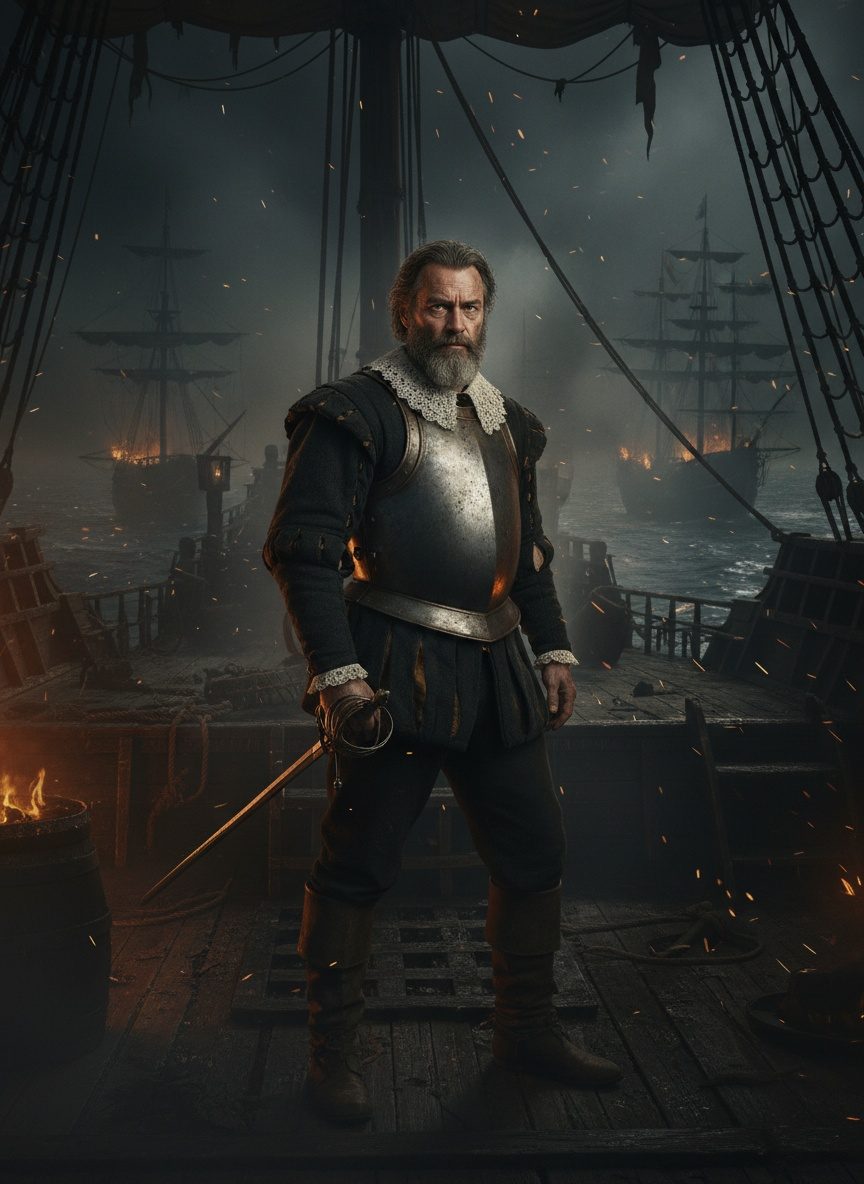
The sun dipped low against the horizon, casting long shadows over the restless expanse of the Atlantic Ocean. The waters shifted and hulled in ceaseless motion, painting light and shadow in equal measure beneath azure skies tinged with the fiery hues of a setting sun. Amidst the rhythmic crash of waves against wooden hulls echoed the clamorous din of clashing swords, the harsh thunder of cannon fire, and the defiant cries of men fighting for their lives. The stage was set for an epic confrontation that would etch itself into the annals of history as a saga of undaunted courage and steadfast resolve. This was the tale of Sir Richard Grenville and his ship, the Revenge, a lone steadfast bastion against the immense power of the Spanish fleet in August 1591.
The Calm Before the Storm
As summer waned in 1591, the limpid waters off the Azores belied an impending confrontation that promised to test the limits of human endurance. This scattered group of islands, distinguished by rugged coastlines and lush greenery, lay at a critical junction of the mariner's world—a stepping stone for fleets under sail between Europe and the New World. The tranquility of these waters often gave way to the abrupt arrivals of merchants, explorers, and warships cruising in anticipation or defense of the flotas transporting American gold to Spain. In this arena, commerce and conflict went hand in hand, a fact not lost on the infamous Spanish treasure fleet returning homeward.
It was against this backdrop that the Revenge, commanded by Sir Richard Grenville, found herself a lone sentinel in the path of a formidable foe. The English warship had lingering memories of earlier naval triumphs, yet here she stood, facing a gathering of fifty-three Spanish vessels—an armada that represented the might and ambition of an empire at the apex of its power. Significant for their skill and strength, each ship was part of an intricate naval tapestry woven from strategic necessity and the lust for riches. In contrast, Grenville's Revenge seemed almost insignificant, a solitary point against a sweeping backdrop of maritime dominance.
The Courageous Defiance of Sir Richard Grenville
"We fight, gentlemen," Grenville must have declared with resolution in his voice as the bracing winds carried his words across the pitching deck. His decision to engage fifty-three Spanish ships with but a single vessel was not merely an act of bravado; it was a testament to his uncompromising nature and unyielding spirit. There had been countless opportunities to flee, to save the crew and ship from certain destruction, but retreat was never a consideration for one so steeped in the code of honour and valour.
As daylight waned into creeping shadows, Grenville orchestrated a defense that would stamp his name into history's pages. The Revenge, though dwarfed in size and firepower, became a fortress of fury and determination. Drawing on his disciplined manpower and seasoned naval acumen, Grenville engaged the overwhelming forces with a tactical genius that belied the seemingly impossible odds. Time and again, the resolute voices of Englishmen echoed across waters as they repelled each advancing Spanish ship with unerring cannon precision and delirious courage.
The Night of Relentless Resolve
The final moments of daylight vanished into an abyss, shifting the theatre of battle into a realm of palpable, smothering darkness. The inky night seemed to conspire with the sense of impending doom. Yet the Revenge, with its guns blazing furiously, became a beacon—a lone bastion of defiance cutting through the night's opaque shroud. The harrowing clash unfolded over fifteen agonizing hours, a brutal symphony underpinned by the cacophony of combat resonating over the murmuring seas.
In those merciless hours, as masts splintered and decks heaved under the relentless pounding of enemy fire, Grenville fought on, undeterred even as severe wounds sapped his strength. A hellish spectacle unfolded on that slivered deck, a dying commander urging his men to withstand until the last ounce of life ebbed from his veins, his whispers a call to glorious immortality. It was this spirit that electrified the final stand—a feeling of shared defiance in the face of insurmountable odds.
Beyond the Battle's End
When the shroud lifted on that fateful night, the staggering fact remained: only after Grenville lay critically wounded, close to death, did the Revenge finally succumb. Though captured, the ship's resolute stand had carved an indelible impression on friend and foe alike. Grenville's refusal to surrender, even in the face of certain defeat, transcended mere military engagement, instead drawing into sharp relief one man’s resolve to defy reality. This was no ordinary battle; it was a saga of honour, chivalry, and the indomitable human spirit.
Reflecting on Grenville’s steadfast stand raises critical questions about the character of leadership and the parameters of courage—what it means to challenge fate with valor despite the certainty of sacrifice. This moment in history stands not only as a testament to a unique confrontation but also as a powerful reminder of the noble convictions that continue to inspire human endeavor across the ages. Sir Richard Grenville and the Revenge proved that the flames of human courage need no greater fuel than honour itself, capable of lighting even the darkest nights.