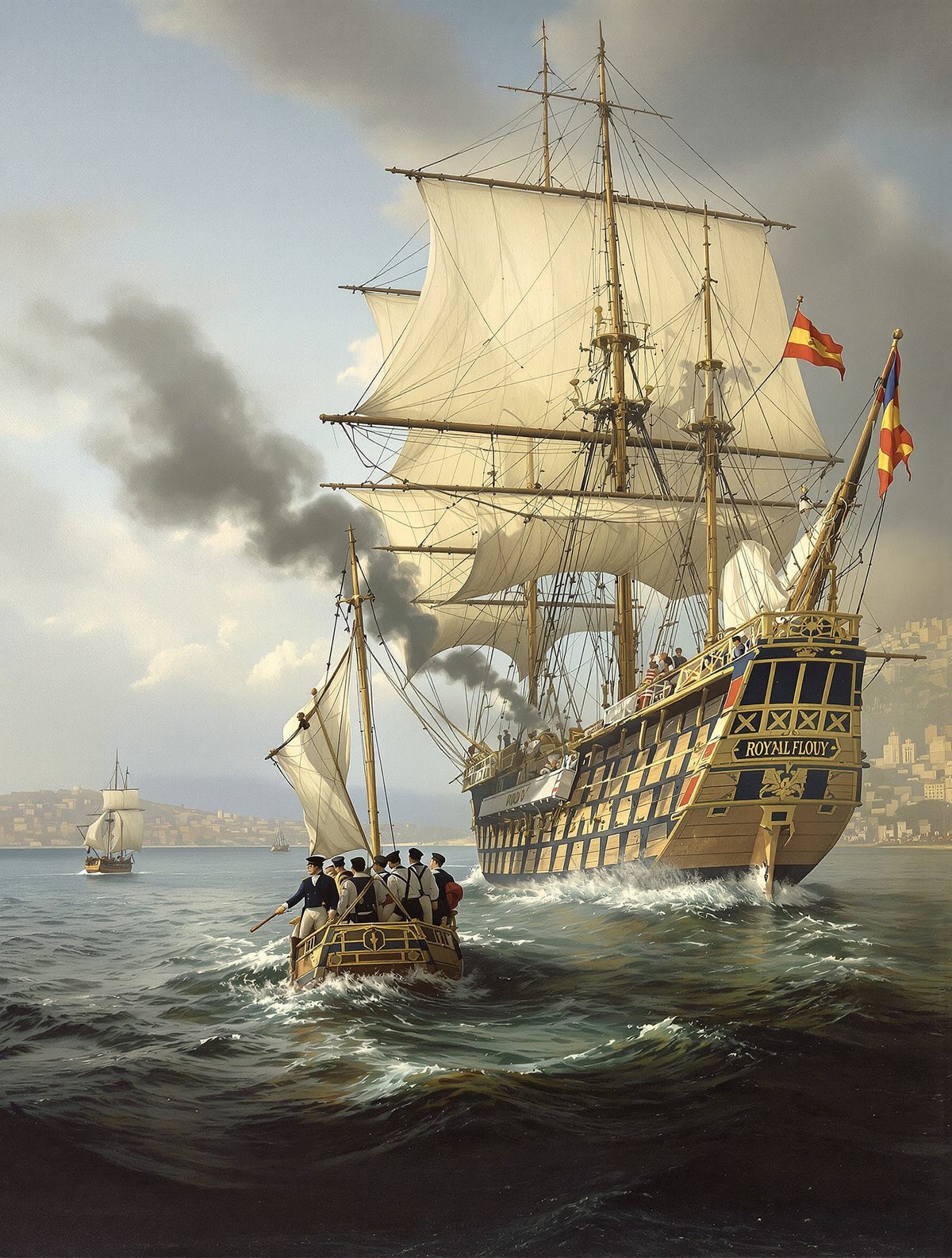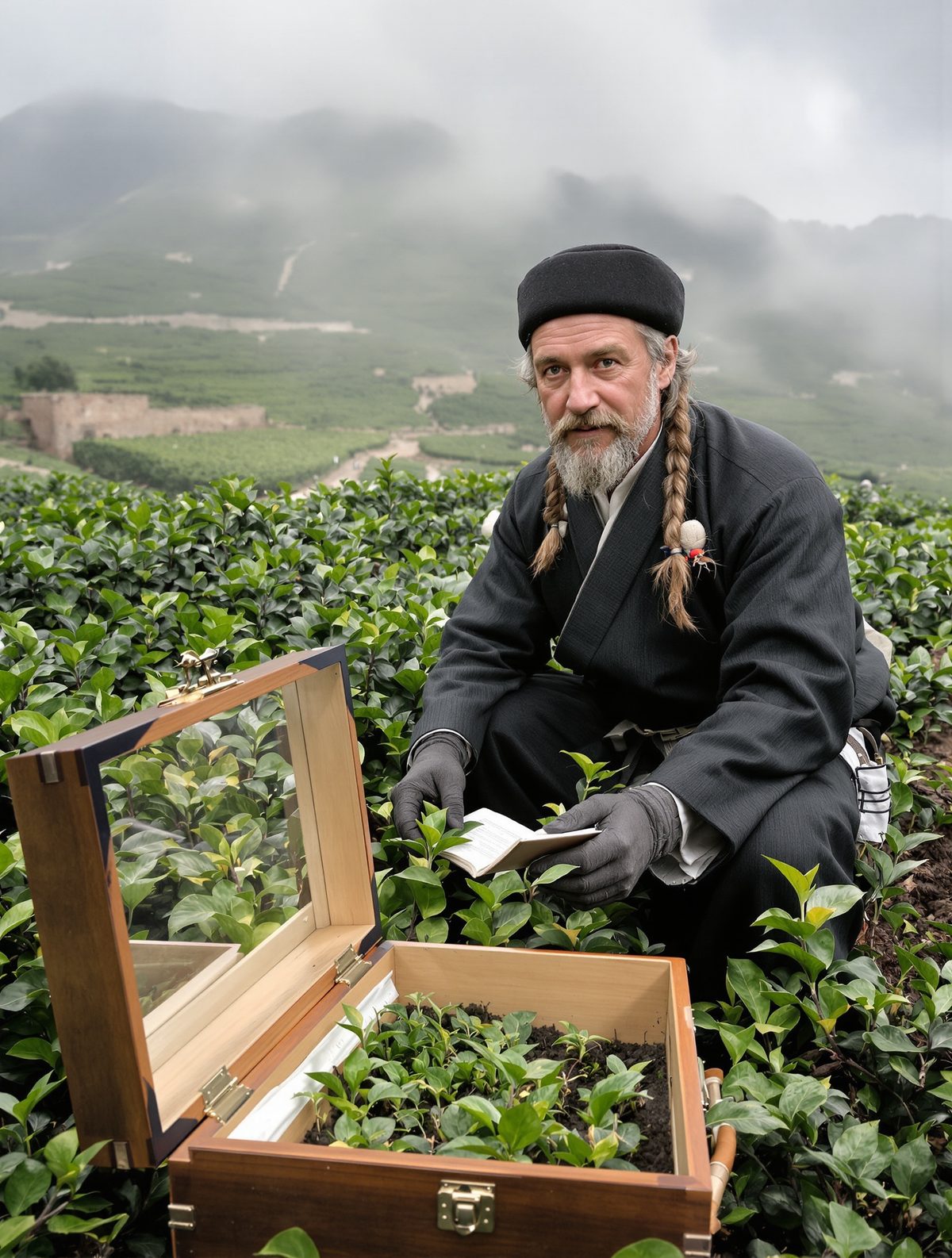
In the shadowy, humid nights of 19th-century China, where the air was thick with secrets and the whispers of imperial might, a solitary figure moved with determined stealth. Disguised in the garb of a local merchant, with Ming-style robes flowing around him, Robert Fortune embarked on a mission so audacious that it borders on the realm of legend. He was a Scottish botanist, driven not by military might or political ambition, but by a thirst for botanical knowledge — and the fortunes that such knowledge might bring.
The Tea Obsession: Britain's Botanical Quest
By the 1840s, Britain's love affair with tea had reached extraordinary heights, with every class partaking in the daily ritual. Tea was not just a beverage; it was a social institution. Yet the fragrant brew was also a symbol of Britain's vexing dependence on China, which held a tightly controlled monopoly over the precious tea trade. As a result, vast sums of silver were flowing into Chinese coffers. This one-way trade imbalance was a thorn in the side of the British Empire, whose own soils could not yield the tender leaves of Camellia sinensis — tea's elusive plant.
Thus, the British East India Company, ever cunning and opportunistic, sought a way to break China's stranglehold. Enter Robert Fortune, a man whose knowledge of plants was as deep as the canopies of the tea plantations he sought to penetrate. In disguise and with purpose, Fortune was tasked with a monumental mission: to learn the secrets of tea cultivation and bring them back to the British Empire.
The Disguise and the Journey: A Foreigner Amongst Shadows
In 1848, Robert Fortune embarked on what would be one of history's most intriguing botanic espionage missions. He donned the traditional attire of a Chinese merchant, complete with a shaven head and a long queue — a risky guise in a land where foreign presence was tightly restricted and not without penalties.
With the aid of a local guide and the use of Pidgin English, Fortune infiltrated the all-but-impregnable tea regions of China's interior, including the famously exclusive Wu Yi Shan, where some of the world's finest teas originated. The audacity of a westerner slipping into such deeply held Chinese secrets, where even the local villagers were often kept in the dark about the full extent of tea cultivation, cannot be overstated.
The Heist: Knowledge That Changed Empires
Fortune's journey was plagued with challenges, from hostile terrain and disease to the constant threat of discovery. Yet it was a mission he excelled at, driven by both passion and incentive. His remarkable botanical knowledge allowed him to discern the subtleties of tea cultivation. He noted the specific soil preferences, the altitude conditions, and the precise methods of planting, plucking, and processing the leaves that transformed into the enchanting elixir loved by millions.
But Fortune's most daring and strategically pivotal act was the clandestine acquisition of tea plant seeds and cuttings. Using ingeniously designed glass cases that mimicked the natural environments essential for the plants’ survival, he smuggled thousands of tea plants and seeds out of China. Thus began the transferral of prized flora to the British-controlled territories of India, specifically the regions of Assam and Darjeeling. Here, the seeds would find a new home, growing quietly beneath the Himalayas, and laying the groundwork for what would soon become one of the largest tea industries in the world.
A Botanical Revolution: India's Emergence
Fortune's mission culminated in a seismic shift in global tea production. By 1851, tea had begun to flourish in India, marking the start of Britain's escape from China's monolithic grip. The imprints of Fortune's voyage were undeniable: within a few decades, India surpassed even China as the world's leading tea producer. Victoria's empire had achieved not just economic benefit but cultural transformation, as tea merged seamlessly with the British way of life.
Yet, Fortune's success had implications far beyond gardens and cups. It stood as a testament to an era where botanical knowledge became a tool of empire. Tea's prolific journey from China to India was not merely about trade; it was an emblematic tale of colonial ambition and scientific ingenuity intertwined.
The Legacy of Robert Fortune: More Than Just Tea
While Britain’s aggressive methods and colonial endeavors are often rightly critiqued, Robert Fortune’s expedition speaks to the paradoxes of progress. His work reflected the period's thirst for scientific exploration, leading to advancements that crossed boundaries and expanded understanding. His journey opened doors for botanists, horticulturists, and traders alike, altering landscapes both literal and economic.
Today, tea is more than a symbol of British tradition; it is a global commodity, valued and cherished by cultures worldwide. The landscapes of India and Sri Lanka owe their lush vistas to this single act of plant piracy. But perhaps the most enduring legacy is how this tale of espionage and botany reminds us of the interconnectedness of cultures, economies, and ecosystems — illustrating how knowledge, when shared across borders, has the potential to change the world.
In a world facing complex global challenges, from climate change to sustainable agriculture, the life of Robert Fortune offers a thought-provoking reminder: the power of natural wonders transcends national boundaries, and secrets can grow into shared legacies.