In the waning days of World War II, as the sun dipped below the Italian horizon on April 23, 1945, a remarkable scene unfolded along the banks of the mighty River Po. A soft hush blanketed the air, punctuated only by the murmur of soldiers and the orchestration of metallic clinks and clacks. On this fateful night, amidst the shadows of the crumbling Axis powers, the British Eighth Army called upon its engineers to perform a feat of wartime engineering brilliance: the erection of a Bailey bridge. In the grips of night, under the watchful gleam of artillery-run searchlights, history was soon to be made.
The Last Obstacle: The River Po
As April drew its curtains on 1945, the vibrant and often tragic theatre of World War II edged closer to its denouement in Italy. The British Eighth Army, spearheaded by the determined Field Marshal Sir Harold Alexander, had marched up the Italian boot, shattering German lines and pushing enemy forces into a defensive retreat. The last formidable geographical barrier in their path was the River Po, snaking its way across Northern Italy, a natural boundary that separated the Allied forces from total domination in Italy.
With the capture of Bologna on April 21st, British forces realized that crossing the Po would unleash the finale of their arduous campaign. The crossing would have to be swift yet seamless, for there lay an unpredictable enemy and unpredictable weather. The flow of the Po, though a serene stroke on the landscape by sight, commanded respect and meticulous planning to overcome. And while the Axis powers were crumbling, their resolve to defend this waterway added an unpredictable layer to the upcoming operation.
Bridging the Divide: The Ingenious Bailey Bridge
Developed by the British during wartime exigencies, the Bailey bridge symbolized wartime ingenuity—a portable, pre-fabricated bridge that combined ease of assembly with remarkable load-bearing capability. It was named after its designer, Donald Bailey, who remarkably found inspiration for its simplistic yet effective design while playing with toy blocks.
The task of constructing such a bridge fell to the Royal Engineers attached to the Eighth Army. Under the watchful glow of immense searchlights, they toiled with determination as dusk yielded to the glow of artificial daylight. In this era where light meant sabotage, the illumination symbolized both defiance and the promise of victory.
The structure took shape with unwavering precision, piece by piece. With astounding speed, the pontoon-supported framework stretched across the Po like an iron spider’s web, allowing troops and armor to flow between its armatures. The Bailey bridge became a triumph of logistical mastery, an unsung hero facilitating the Allied advance toward triumph.
The Dance of Light and Shadow
Amidst the relentless drive across the northern Italian plains, the combatants often found themselves at nature’s mercy. But on this occasion, it was human ingenuity that transformed night into day. The searchlights—an often-overlooked arm of the Royal Artillery—painted the night canvas with hues of white, revealing the bridge’s skeletal frame and the silhouettes of men crossing with purpose.
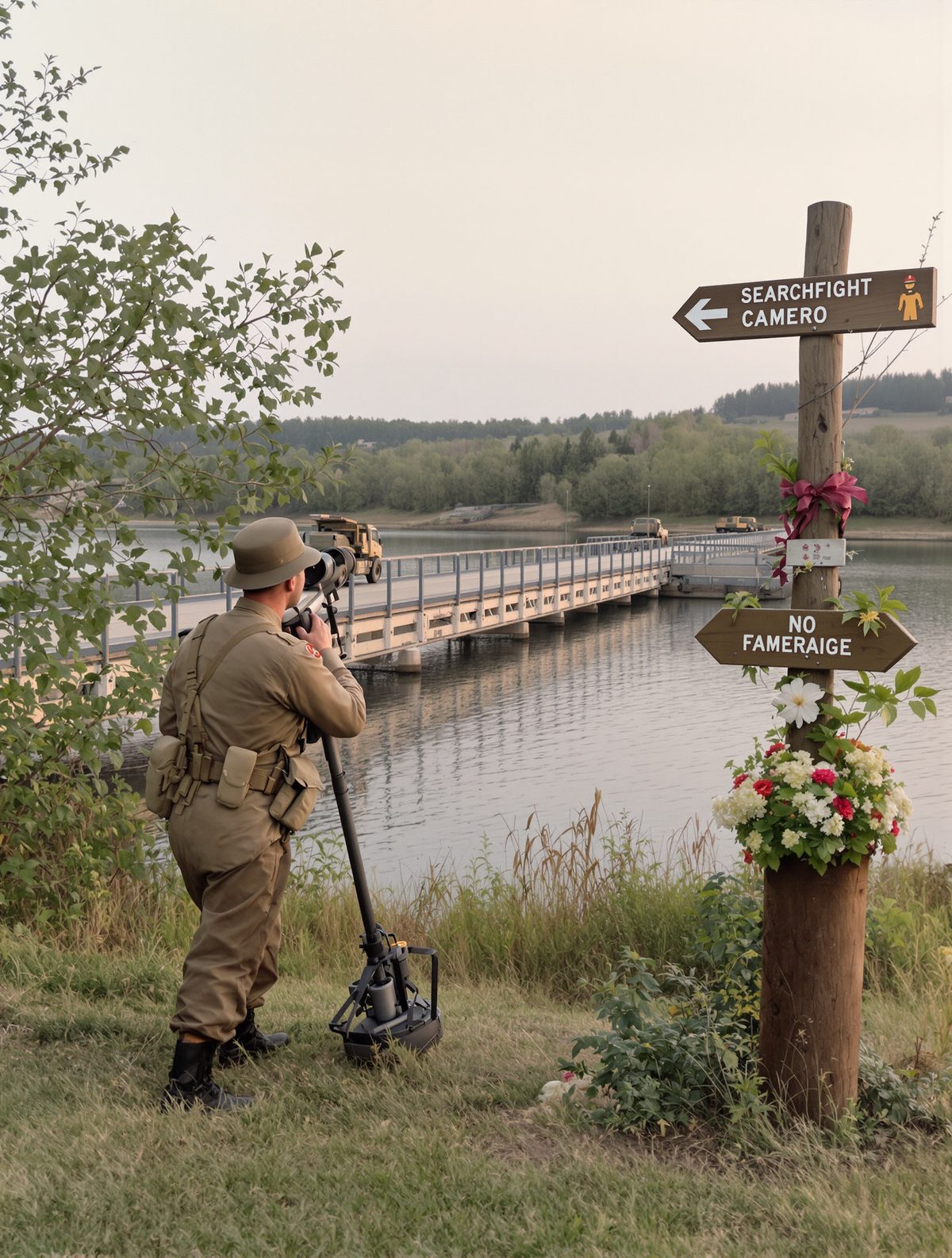
These beams not only ensured the bridge’s assembly but also safeguarded against potential sabotage and German insurgency from the depths of darkness. Watching from a distance, a military policeman directed the ceaseless traffic with an arm wreathed in moonlit mystery. A small wooden signpost beside his station bore freshly picked flowers—a humble testament to life’s persistent beauty amidst the march of war.
The poetic interplay of light and shadow on these historic nights did more than illuminate their immediate task; it cast a broader light on the indomitable spirit of people as decisions of destiny lay about them.
The Culmination of the Italian Campaign
As the Bailey bridge stood firm and the Eighth Army marched resolutely past, Italy's final chapters in the Second World War unfurled with dramatic rapidity. Within a mere six days, the might of the German and Fascist Italian armies dissipated like echoes in the wind. On April 29, 1945, Italian Partisans captured and executed Benito Mussolini, marking a quintessential moment in the recapturing of Italy.
With the Po crossed, and the Axis powers' spirit broken, a series of surrenders ensued. Officially, on May 2, 1945, German forces across Italy capitulated, signaling a closure to one of the war's most complicated and grueling campaigns. The end of the war in Europe was imminent, a mere prelude to the official Victory in Europe Day on May 8.
Echoes of the Past: Lessons to the Present
As searchlights swept the now-peaceful span of the River Po, they illuminated more than mere stone and steel. They shone a beacon of human perseverance, creativity, and courage—lighting the path from devastating ruin to beckoning peace. The swift assembly of the Bailey bridge serves as a microcosm of capability realized under duress, showcasing how innovation and collaboration can conquer even the most daunting of obstacles.
Today, as we look back on those hauntingly triumphant nights of April, filled with the tension of uncertainty and the triumph of resolution, we are reminded of the resolve that extraordinary circumstances can evoke in ordinary people. The lighting of the Po serves as an enduring beacon—an artistic narrative reminding us of the continuous strive for peace, progress, and the undying human spirit.