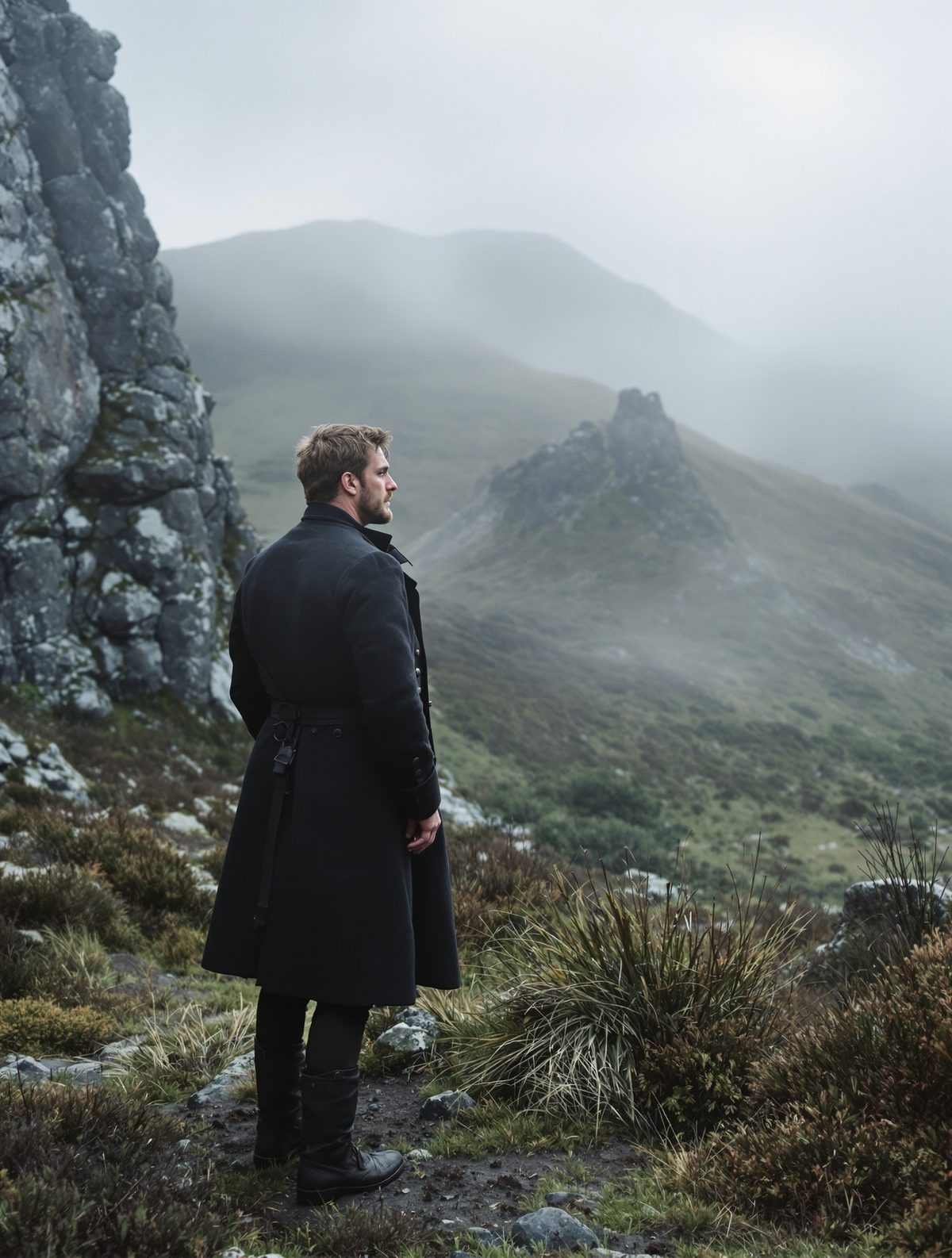
The gas lamps flickered against the grimy windows of Whitechapel Road as a distinguished gentleman in a top hat hurried through the November fog of 1884. Dr. Frederick Treves, one of London's most promising young surgeons, wasn't making his usual rounds at the Royal London Hospital. Instead, he was following whispered rumors about a "freak show" that promised to display the most grotesque human specimen ever seen. What he discovered in that dingy storefront would challenge everything Victorian society believed about humanity, dignity, and the power of compassion.
Behind a grimy curtain, cowering in fear and barely recognizable as human, sat a young man whose condition was so severe that crowds paid pennies just to gawk and gasp. But Treves saw something others missed—intelligence flickering behind eyes that had known nothing but cruelty. In that moment, the respected surgeon made a decision that would scandalize London's medical establishment and rewrite the rules of what it meant to be human.
The Freak Show Horror of Victorian London
Victorian London's appetite for the macabre was insatiable. In the shadowy corners of Whitechapel, where Jack the Ripper would later stalk his victims, a different kind of horror played out daily in the numerous "freak shows" that lined the streets. These establishments, part carnival and part human zoo, exploited society's most vulnerable members for profit.
Joseph Carey Merrick, known to gawking crowds as "The Elephant Man," was the star attraction of one such show. At just 22 years old, he suffered from what we now believe was Proteus syndrome, a rare condition that caused massive bone and tissue overgrowth. His head measured 36 inches in circumference—nearly three times the normal size. Bony growths protruded from his skull like horns, while his right arm had swollen to enormous proportions. Most tragically, a growth on his upper lip made his speech nearly incomprehensible to most people.
The showman who "owned" Merrick, a character known only as Sam Torr, had turned human misery into a lucrative business. For twopence—about two dollars today—Victorian ladies and gentlemen could enter the dimly lit shop at 123 Whitechapel Road and stare at this "half-man, half-elephant" as he sat nearly naked on a makeshift stage. The crude poster outside promised audiences would witness "one of the most remarkable freaks of nature."
What the crowds didn't see was the intelligent, sensitive man trapped inside that ravaged body—a man who had taught himself to read and possessed an unexpectedly refined sensibility that would soon astonish London's medical elite.
An Unlikely Meeting That Changed Everything
Frederick Treves was hardly the typical Victorian do-gooder. At 31, he was a rising star in London's competitive medical world, known more for his surgical precision than his sentimentality. He had heard whispers about the Elephant Man from colleagues at the Royal London Hospital, located just across the street from the freak show. Initially, his interest was purely professional—he wanted to examine this medical anomaly for scientific purposes.
When Treves first encountered Merrick in November 1884, the meeting was brief and clinical. He paid his twopence, studied the deformed man with a doctor's detached curiosity, and arranged to have Merrick brought to the hospital for examination. During that first medical consultation, Treves made detailed notes about Merrick's condition but noted something unexpected: despite his garbled speech, Merrick was clearly intelligent and surprisingly gentle.
After the examination, Merrick disappeared back into London's underworld of exploitation. For two years, Treves heard nothing more about him. Then, in June 1886, a commotion at Liverpool Street Station would change both their lives forever.
A crowd had gathered around what they assumed was some sort of wild animal. Police found a heavily cloaked figure being tormented by an angry mob of onlookers. When they removed the hood, they discovered Merrick—beaten, robbed, and abandoned by a Belgian showman who had promised him work but instead had stolen his life savings. In his pocket, officers found a crumpled card with Treves' name on it, a memento from their brief encounter two years earlier.
Breaking Every Rule for Humanity's Sake
When the police brought Merrick back to the Royal London Hospital, Treves faced an impossible dilemma. Hospitals in 1886 were strictly for the curable sick—they were not shelters for the destitute or sanctuaries for social outcasts. The hospital's board of governors had clear rules: no incurable patients, no long-term residents, and absolutely no charity cases that couldn't pay their way.
Merrick was all three.
But Treves had seen something in those frightened eyes during their first meeting—a spark of humanity that society had tried to extinguish. He made a decision that could have ended his career: he would hide Merrick in the hospital's unused rooms while he figured out a permanent solution.
The surgeon's first challenge was convincing the hospital staff. Most were terrified by Merrick's appearance. Nurses refused to enter his room, and other patients complained about sharing space with such a "monster." Treves realized he needed allies, and he found an unexpected one in Mothershead, the hospital's formidable head nurse, who gradually came to see past Merrick's deformities to the gentle soul within.
But hiding a man who stood nearly six feet tall and required constant care proved nearly impossible. Within weeks, rumors spread through the hospital corridors. The board of governors demanded an explanation. Treves knew he needed a miracle—or at least, royal intervention.
The Princess and the Elephant Man
In one of the most audacious moves of his career, Treves wrote directly to Alexandra, Princess of Wales, describing Merrick's plight and requesting her patronage. It was a desperate gambit that paid off spectacularly. Not only did Princess Alexandra agree to visit Merrick, but she brought along several prominent society ladies.
The visit on May 21, 1887, became the stuff of legend. When the Princess entered Merrick's room at the London Hospital, she didn't recoil in horror as so many others had. Instead, she sat down, engaged him in conversation, and treated him with the dignity he had never experienced. She even left him a signed photograph and promised to return.
Word of the Princess's visit spread through London's high society like wildfire. Suddenly, visiting Joseph Merrick became fashionable. The hospital was flooded with donations specifically designated for his care. Prominent actresses, including the celebrated Madge Kendal, sent him gifts and letters. For the first time in his life, Merrick experienced kindness from strangers who expected nothing in return.
The transformation was remarkable. With Treves' encouragement, Merrick began constructing elaborate cardboard models of cathedrals—works of surprising intricacy and beauty. He devoured books, particularly romantic novels and poetry. Most surprisingly, he revealed a deep spiritual nature, often discussing religious philosophy with visiting clergy.
But perhaps the most touching detail was Merrick's nightly ritual: he would attempt to sleep lying down like a normal person, despite the dangerous weight of his massive head, because he dreamed of being like everyone else.
Four Years of Dignity and Friendship
From 1886 until his death in 1890, Merrick lived in rooms specially adapted for him at the London Hospital. Treves had managed to secure him permanent sanctuary, but more than that, he had given him friendship. The two men, from vastly different worlds, developed a genuine bond that transcended the typical doctor-patient relationship.
Treves later wrote movingly about their conversations, revealing Merrick's sharp wit, his love of literature, and his surprisingly optimistic outlook despite a lifetime of cruelty. Merrick never expressed bitterness about his treatment at the hands of society. Instead, he seemed genuinely grateful for each small kindness he received.
The surgeon arranged for Merrick to attend theater performances through special entrances, always in private boxes where he wouldn't frighten other patrons. These outings filled Merrick with joy—he was particularly fond of pantomimes and romantic dramas. For a man who had spent years as a spectacle, becoming a spectator was a precious gift.
On April 11, 1890, Merrick was found dead in his bed. He had apparently attempted once again to sleep lying down rather than propped upright as medical necessity demanded. The weight of his head had dislocated his neck, but Treves believed it was a peaceful death—the death of a man who had finally experienced what it meant to be treated as human.
The Legacy of Compassion
Frederick Treves' decision to save Joseph Merrick from the freak shows of Victorian London resonates far beyond their individual story. In an era when Social Darwinism justified the abandonment of society's most vulnerable members, Treves proved that medical science could serve compassion rather than mere curiosity.
Their relationship challenged fundamental Victorian assumptions about disability, dignity, and what constituted a life worth living. Merrick's transformation from exploited spectacle to beloved figure showed that environment and kindness could overcome even the most severe physical challenges.
Today, as we grapple with questions about healthcare access, the treatment of disabled individuals, and the responsibilities of medical professionals, the story of Treves and Merrick offers profound lessons. It reminds us that behind every medical case is a human being deserving of dignity, that professional rules sometimes must bend to moral imperatives, and that the courage to see past surface differences can literally save lives.
In saving the Elephant Man from the mob, Frederick Treves didn't just rescue one tortured soul—he demonstrated that in our darkest moments, individual acts of compassion can light the way toward a more humane society. Their unlikely friendship stands as proof that recognizing each other's humanity is perhaps the most radical act of all.