When the Frost Comes Knocking
Picture this: It is the year 1553, and Tudor England is a burgeoning power with an insatiable hunger for exploration and trade. Distant lands whisper of untold riches and bustling markets, alluring empires with the promise of prosperity. Amidst this backdrop of ambition and adventure, three English vessels sail northeast into the unexplored Arctic waters, commanded by the resolute Sir Hugh Willoughby. Little did they know, they were venturing into a frozen tomb, a voyage doomed to become one of history's most chilling mysteries.
The Bold Navigators of the Northeast Passage
The mid-16th century marked a transformative period for England as it endeavored to establish itself as a formidable maritime power. The north and east promised untapped pathways to Asia, circumventing the Spanish and Portuguese strongholds. On May 10, 1553, Sir Hugh Willoughby, along with his head ships the Bona Esperanza, the Edward Bonaventure, and the Bona Confidentia, set sail from London. They sought the elusive Northeast Passage, a direct sea route to the markets of Cathay, the mythical kingdom believed to lie somewhere in Asia.
Sir Hugh Willoughby, a knight with a heart full of valor and a mind sharp with curiosity, was tasked with the unenviable duty of leading this ambitious mission. Although Willoughby had limited navigational experience, his mettle and leadership were deemed indomitable. He was bolstered by the expertise of another great navigator, Richard Chancellor, who had taken the chief navigator position on the Edward Bonaventure.
Into the Jaws of Winter
The fleet's journey was not unopposed by nature. Conditions turned treacherous as they sailed further into the icy domains of the Arctic Ocean. Prolonged periods of fog and severe storms scattered the ships. One storm on August 2 forced the fleet to separate, with Willoughby and Chancellor losing sight of each other. While Chancellor successfully found refuge in the White Sea, Willoughby and his men were condemned to a more tragic fate.
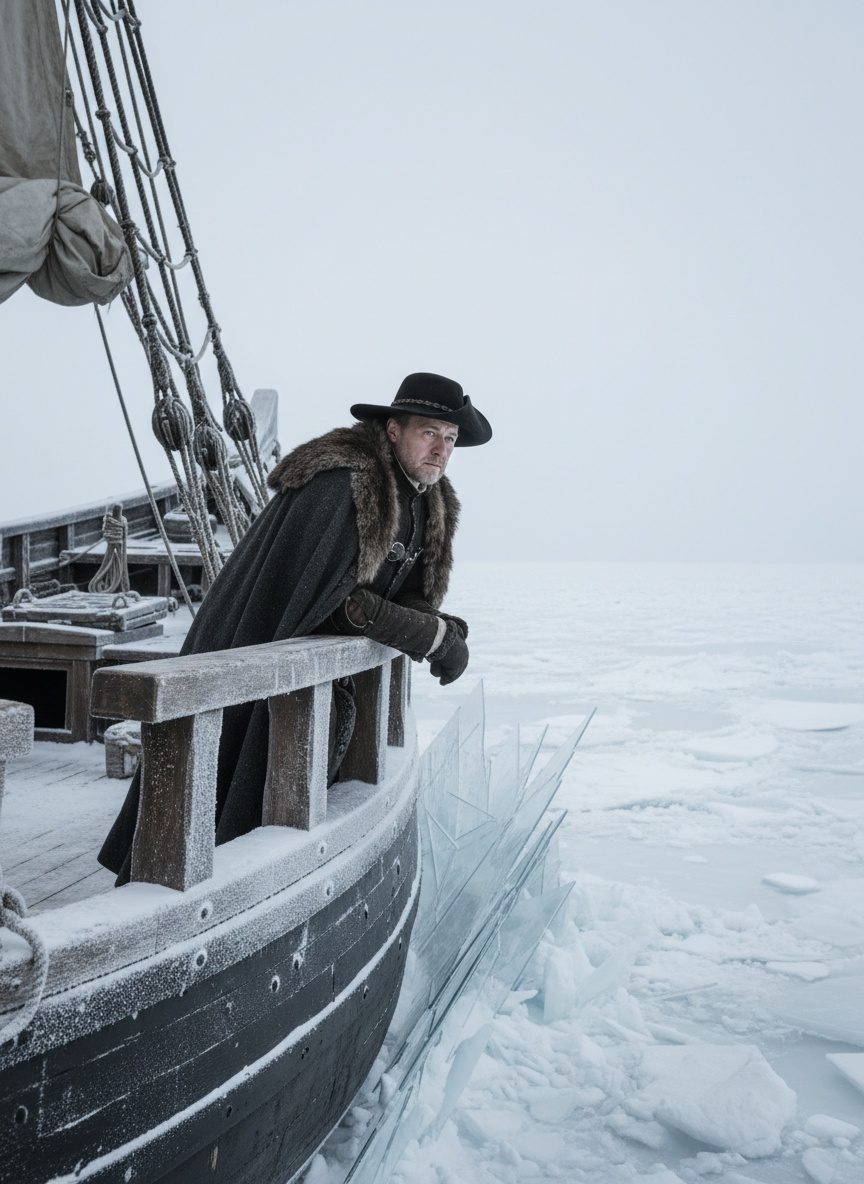
The remaining two ships pushed forth through turbulent waters, navigating through fields of treacherous ice that threatened to engulf them whole. The howling winds echoed doom as their provisions dwindled and their warmth waned. The fall of 1553 saw the grim Arctic embrace the Bona Esperanza and the Bona Confidentia — bid to an icy purgatory as winter settled in.
Frozen in Time
Sometime in late 1553, fate delivered its final, chilling touch. Mariners accustomed to the roar of waves and whistle of the wind were instead encased in an eerie silence, a deathly gift of the frozen starry nights. A year turned, and with it came the thaw of spring, unlocking the secrets of the tundra. It wasn’t long before local fishermen chanced upon the grim remnants of Sir Hugh Willoughby’s expedition.
Among desolate landscapes, the fishermen discovered that every sailor was frozen at his post, a haunting testament to their dedication and resolve. Sir Hugh Willoughby himself was found sitting at his desk, pen in hand, as if captured mid-thought, illustrating mankind's ceaseless pursuit for discovery even in the face of certain death.
The Ghostly Tale of the Log Book
But what may be most fascinating—and often overlooked—is the content of Willoughby’s logbook, which survived the deathly freeze. It chronicled not just the course and latitude navigated but detailed the oppressive cold and the men's doomed attempts to survive. One passage eerily indicated sightings of unknown landmasses and peculiar locales—potentially Norway’s coastline—hinting that the ill-fated crew had travelled farther than Europe previously charted.
The remnants also note encounters with strange lights hovering in the northern skies, a phenomenon now likely explained as the Aurora Borealis, which must have appeared otherworldly to the seafarers of his time.
The Grand Designs of Tudor Ambitions
While Sir Hugh Willoughby’s expedition ended in tragedy, it was a poignant chapter in the greater narrative of England’s age of exploration. The surviving navigator, Richard Chancellor, succeeded in reaching the Russian court, forging a vital trade link with Tsar Ivan IV. This laid the groundwork for the Muscovy Company, opening the untapped resources of Russian trade to England's commercial empire.
Chancellor's encounters catalyzed Anglo-Russian relations, securing England’s foothold in the burgeoning domain of international trade that would eventually span the globe. This paved the way for an era marked by imperial ambitions that would define much of England’s history for centuries to come.
Legacy Encapsulated in Ice
Today, Sir Hugh Willoughby’s final resting ice lies melted with the sands of time, but his courage and those of his men remain eternal. Their quest to chart a path through unconquered territories is reflective of humanity’s unwavering spirit to explore, even against unimaginable odds.
The story serves as a stark reminder that the tides of exploration are fraught with peril and uncertainty, yet are motivated by a force elemental to the growth of civilization — the pursuit of knowledge and the relentless desire to expand our horizons. It exemplifies how the echoes of history continue to guide contemporary explorers and navigators through uncharted realms, whether on earth or in the endless expanse of space.
We are left, then, to ponder the intersecting trajectories of ambition and fate, exploration and tragedy — a testament to the legends they left out of the textbooks, yet continue to inspire those who dare to discover beyond the known world.