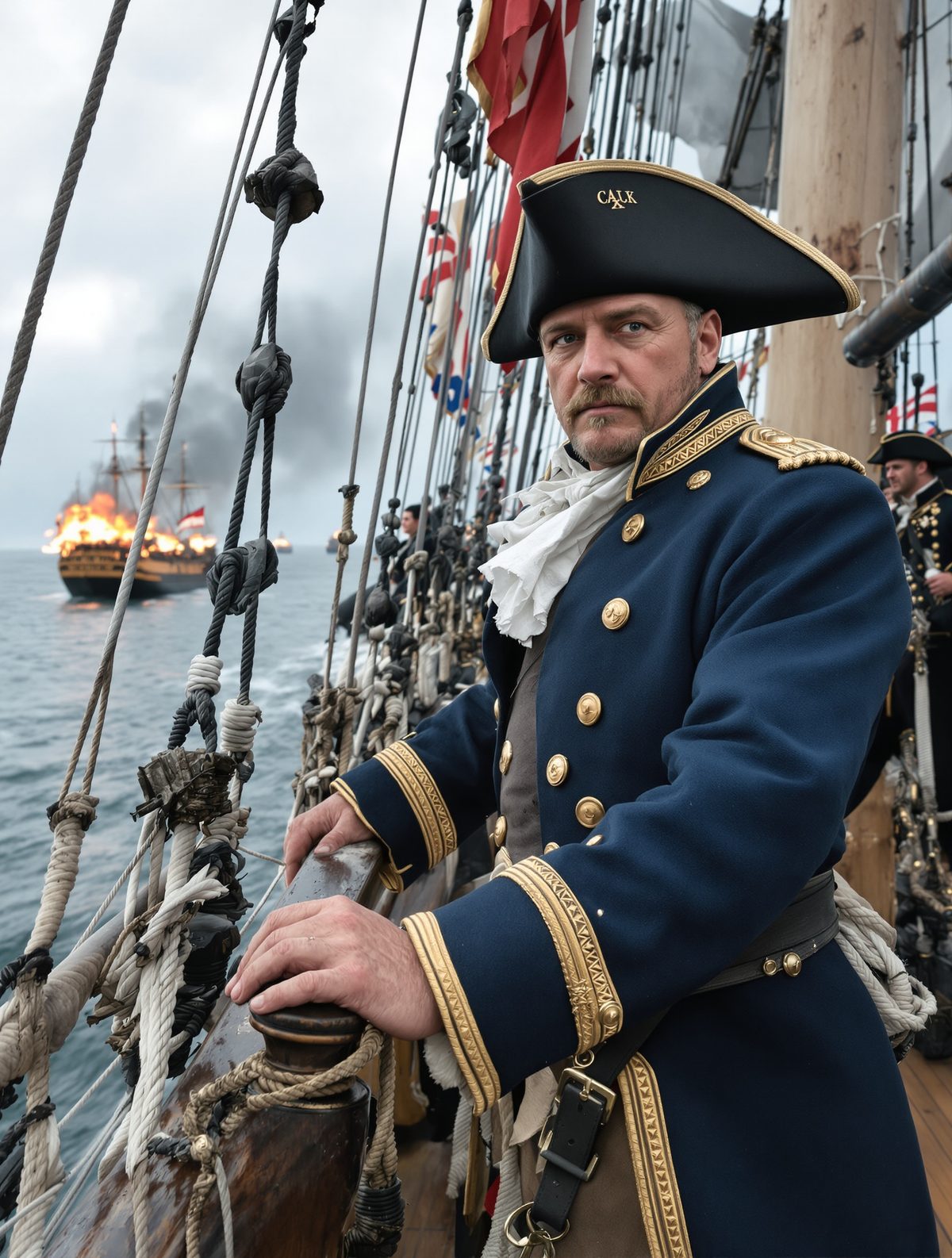
Picture, if you will, a grizzled sea captain standing before Queen Elizabeth I in 1576, his weathered hands cradling a chunk of coal-black rock that sparkles in the candlelight of Greenwich Palace. The queen's eyes widen as her assayers whisper the magic word: gold. What unfolds next is a tale of Arctic adventure, monumental delusion, and perhaps the most expensive case of wishful thinking in English history. Sir Martin Frobisher's three expeditions to the frozen wastelands of what we now call Canada would consume a fortune, launch miniature wars with the Inuit, and ultimately prove that even queens can fall victim to fool's gold.
The Glittering Deception That Fooled a Kingdom
Martin Frobisher hadn't set out to become England's first gold prospector. The Yorkshire-born navigator was chasing an entirely different dream in 1576: finding the fabled Northwest Passage to the spice markets of Asia. After weeks battling Arctic ice that could crush ships like walnuts, Frobisher's expedition reached what is now Baffin Island, where they encountered the Inuit people in a series of encounters that would escalate into genuine warfare.
But it was a seemingly innocent souvenir that changed everything. When Frobisher scooped up some heavy, black stones as proof of his Arctic journey, he unknowingly set in motion one of history's most spectacular mining disasters. The rock samples, once they reached London's assayers, seemed to contain traces of gold. Word spread like wildfire through Elizabeth's court: England had discovered its own El Dorado in the frozen North.
What makes this story particularly fascinating is how quickly rational people abandoned reason. The assayers who declared Frobisher's samples valuable were respected professionals, yet they were working with primitive testing methods and, quite possibly, their own wishful thinking. England desperately needed gold to compete with Spain's New World riches, and these black rocks offered exactly what the nation craved to hear.
The Queen's Gamble: Bankrolling Arctic Ambition
Elizabeth I was nobody's fool when it came to money, yet even she was swept up in the golden fever. By 1577, she had committed royal ships and a substantial portion of the treasury to Frobisher's second expedition. This wasn't just about potential wealth—it was about England's survival as a maritime power. Spain's treasure fleets from the Americas were funding an empire that threatened to dominate Europe, and Elizabeth needed her own source of precious metals.
The scale of the second expedition reveals just how seriously the English took their Arctic gold mine. Frobisher returned to the Canadian Arctic with fifteen ships and over 140 men, an enormous undertaking by 16th-century standards. Their mission had shifted from exploration to industrial mining, complete with equipment to extract and process ore on a massive scale.
But the Arctic had other plans. The expedition faced temperatures that froze wine solid, ice floes that appeared overnight to trap ships, and increasingly hostile encounters with the Inuit, who quite reasonably viewed these foreign miners as invaders. Despite these challenges, Frobisher's men loaded their ships with over 200 tons of the mysterious black rock, convinced they were hauling home England's financial salvation.
When Fool's Gold Sparked Real Wars
Here's where the story takes a darker turn that most history books gloss over: Frobisher's expeditions weren't just mining ventures—they were military campaigns that sparked genuine warfare in the Arctic. The Inuit, whom Frobisher's men called "Eskimos," initially approached these strange visitors with curiosity. But as the English began claiming territory and establishing mining operations, peaceful contact deteriorated into armed conflict.
The third expedition in 1578 was practically an invasion force: fifteen ships carrying over 400 men, along with prefabricated buildings intended to establish England's first permanent settlement in North America. Frobisher had orders to build a fortified colony that could protect the supposed gold mines year-round. The Inuit, facing what amounted to a colonial conquest of their homeland, fought back with remarkable ingenuity.
These Arctic skirmishes involved some of the most unusual warfare in English military history. Inuit warriors, masters of their frozen environment, used kayaks to launch surprise attacks on English boats. They employed tactics that bewildered European soldiers: appearing and disappearing across ice fields, using the landscape itself as a weapon. Frobisher's men, weighed down by heavy armor and European weapons designed for temperate climates, found themselves outmaneuvered by opponents who could hunt seals through breathing holes and navigate by reading wind patterns on snow.
The Great Unraveling: Reality Bites
By the time Frobisher's third expedition returned to England in 1578, carrying another massive cargo of Arctic ore, cracks were already appearing in the golden dream. The second expedition's rocks had proven more difficult to process than expected, yielding little actual gold despite months of expensive refinement attempts. Doubts were spreading through Elizabeth's court, but the financial and political momentum behind the Arctic enterprise had become too great to stop.
The truth, when it finally emerged, was devastating in its simplicity: Frobisher's "gold ore" was iron pyrite—fool's gold. The hundreds of tons of rock that had cost England a fortune to extract and transport were essentially worthless. Modern estimates suggest the three expeditions cost approximately £20,000, equivalent to roughly £6 million today, and that's before accounting for the opportunity costs of ships, men, and materials that could have been used elsewhere.
What makes this failure particularly poignant is how close England came to establishing a permanent Arctic presence three centuries before the Franklin Expedition. The prefabricated buildings and colonization equipment that Frobisher's final expedition carried might have given England a crucial foothold in North American Arctic exploration. Instead, the worthless pyrite not only bankrupted the venture but soured English interest in Arctic exploration for decades.
The Inuit Victory That History Forgot
Perhaps the most overlooked aspect of Frobisher's expeditions is that they represent one of the earliest successful indigenous resistances to European colonization in North America. The Inuit didn't just survive Frobisher's invasions—they effectively repelled them. When the English abandoned their Arctic ambitions, it wasn't solely because of the worthless ore; it was also because the Inuit had proven that establishing a permanent English presence would be far more costly and difficult than anticipated.
The Inuit tactics and knowledge that frustrated Frobisher's expeditions offer a fascinating glimpse into Arctic warfare that most military histories ignore. These weren't primitive people overwhelmed by European technology—they were sophisticated strategists who understood their environment better than any European could hope to. Their victory over one of England's most ambitious colonial ventures deserves recognition as a significant military achievement.
Lessons from the Ice: Why Frobisher's Folly Still Matters
Frobisher's fool's gold expeditions offer a perfect case study in how confirmation bias, institutional pressure, and economic desperation can drive even intelligent people to make spectacularly bad decisions. The assayers who declared worthless pyrite to be gold weren't necessarily incompetent—they were working under enormous pressure to find what their queen and country desperately wanted to exist.
The parallels to modern investment bubbles are striking: the dot-com boom, the housing crisis, cryptocurrency speculation. In each case, legitimate experts convinced themselves and others that this time was different, that the usual rules didn't apply, that riches lay just within reach. Frobisher's expeditions remind us that the human capacity for self-deception, especially when vast sums of money are involved, hasn't changed much in four and a half centuries.
Moreover, these expeditions highlight how colonial ventures were never the one-sided affairs that traditional histories suggest. The Inuit resistance to Frobisher's mining operations demonstrates that indigenous peoples were often far more effective at defending their territories than European records acknowledged. In an age when we're re-examining colonial narratives, the story of England's failed Arctic gold rush offers a valuable reminder that European expansion was never inevitable—and that sometimes, the ice itself was the best ally indigenous peoples could have.