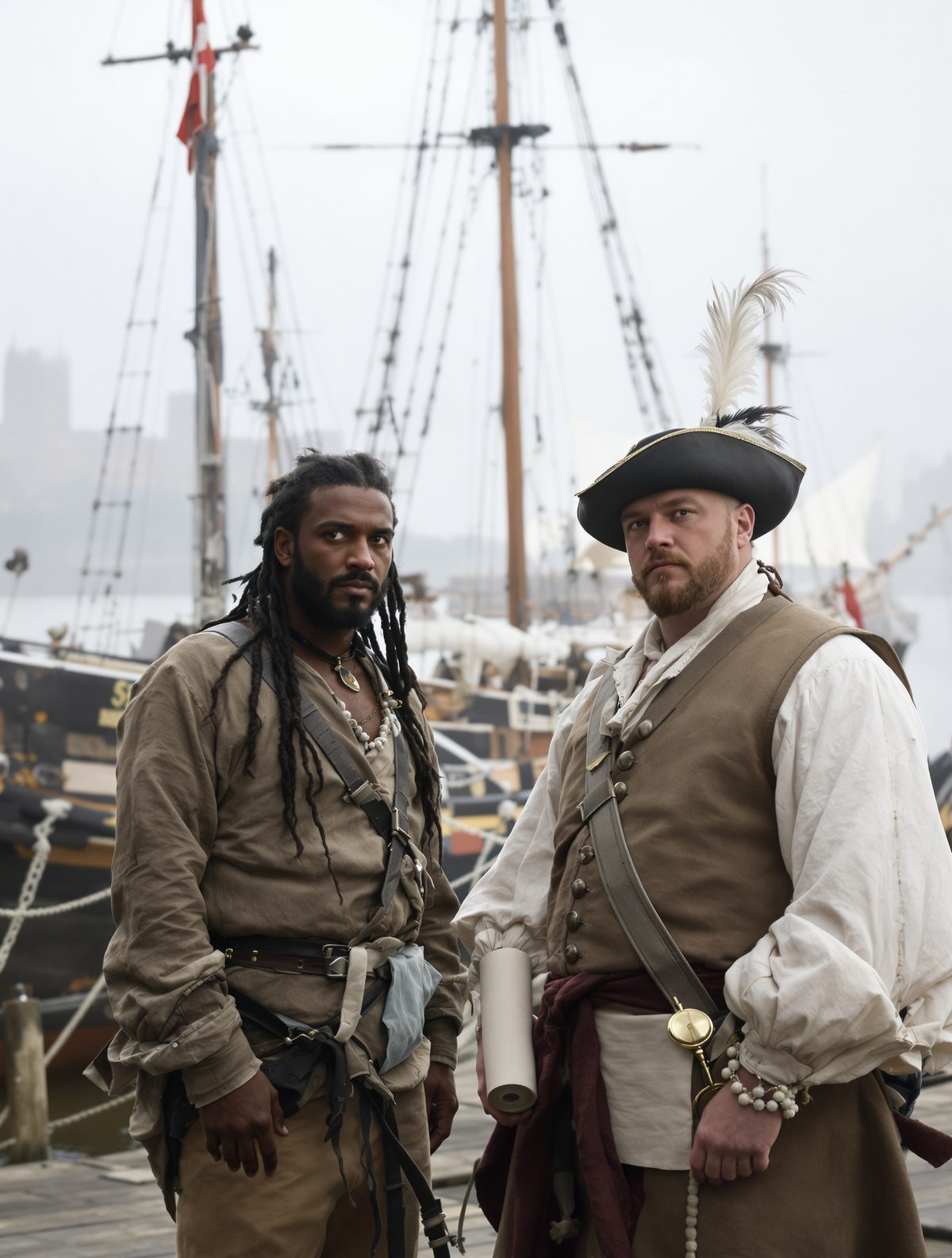
Imagine a bustling scene: the clamor of dockworkers, the cries of seagulls circling overhead, and the powerful stench of fish mingling with fresh spices. Among the throng of people, a man clothed in woven cloth walks with a remarkable air of purpose. His skin is sunkissed by the American sun, yet he navigates the cobblestones of London as if they were the forests of his homeland. He is Tisquantum, more commonly known as Squanto, a name whispered in the annals of history for his unexpected role in bridging two worlds.
From Patuxet to Captivity: A World Exploited
In the year 1614, Captain Thomas Hunt, a merchant with ambitions far wider than his morals, sailed the Atlantic with designs on profit cloaked in commerce. His destinations were the rich fisheries of New England, where the Nor’east winds whispered promises of bounty to the ears of European traders. The indigenous peoples of this land, the Wampanoag Confederation’s Patuxent tribe among them, were unaccustomed to the relentless avarice that arrived on their shores.
Without warning or treaty, Captain Hunt captured twenty-four Native Americans, including Tisquantum. Lured aboard with the promise of trade, these men were instead shackled and sailed across the ocean’s breadth. His captives’ future lay in slavery markets, a fate Hunt considered merely business. What Hunt could never envision were the twists of fate that would shape Tisquantum’s destiny—and that of an entire continent.
The Spanish Interlude: Rescue and Redemption
Arriving in the port of Málaga, a place where the perfume of oranges blended with hints of tobacco and salt, Tisquantum faced the grim reality of being sold like goods. Yet, in an unexpected turn, Spanish friars—perhaps seeing divine providence at work—intervened. They secured his freedom, believing that no man should be reduced to chattel.
These friars introduced him to the tenants of Christianity, unknowingly setting the stage for Tisquantum's eventual mission of peace. It was their act of compassion in a harsh world that allowed Tisquantum to move towards England, a land he had only heard of in his captors' tales.
The London Education: Language, Culture, and Society
In London, Tisquantum found himself amidst a surge of activity, a city posturing as the beating heart of an empire. He mingled alongside blacksmiths, bakers, and those of nobler pursuits, quickly picking up the language of his captors turned saviors. This was a world of contrasts: the stink of the Thames complemented by the wealth of knowledge accessible within the city walls.
Tisquantum became fluent in English, mastering not only the words but the nuanced art of diplomacy—a skill that would later prove pivotal. He was no mere passive observer; Tisquantum's presence in the heart of London was an anomaly that captured the curiosity of the English elite. He sought passage home, driven by something more profound than mere survival—an unquenchable longing to return to his ancestral lands.
The Long Voyage Home and a New World Plagued
In 1619, determined to return to his roots, Tisquantum sailed back to the shores he once called home. The ship creaked like a living creature as it navigated the tempestuous North Atlantic. However, the coastline that appeared on the horizon was a desolation of familiarity—devastated by an unseen enemy.
A plague, thought to be brought aboard by English ships, had swept through the indigenous communities, decimating the Patuxet tribe to which Tisquantum belonged. He stepped onto a land that was both a graveyard and freed from foreseen futures. Yet, within this heartbreaking devastation lay the seeds of a new beginning.
Building Bridges: The Diplomatic Legacy of Tisquantum
The narrative often lauds Tisquantum’s role in assisting the Plymouth colonists, portraying him as the savior of the ‘Pilgrims.’ However, his story is considerably more layered. Tisquantum saw an opportunity to forge alliances—not out of subservience, but as a strategist who understood the delicate balance of power.
Fluent in both language and culture, Tisquantum mediated treaties between indigenous tribes and newcomers, embodying a bridge between two worlds on the cusp of inevitable conflict. His efforts laid foundational stones for cooperation, albeit tenuous, influencing the survival of countless people during those nascent years of colonial expansion.
Why Tisquantum's Story Matters Today
Why remember Tisquantum today? His life is a testament to resilience amidst unimaginable adversity. It speaks of the enduring human spirit, capable of making allies out of erstwhile enemies and creating harmony from discord. In an age where cultures continue to clash and coexist, Tisquantum’s forgotten chapters offer a powerful lesson: the seeds of understanding and empathy can bloom even in the most barren climates.
In the tales left out of textbooks, Tisquantum’s journey is a poignant reminder of the cost and potential of cultural exchange—bearing witness to the complexities involved when worlds collide. As we reflect on history, it is through Tisquantum’s shadowy walks through London that we glimpse the potential for building connections that transcend time and border.