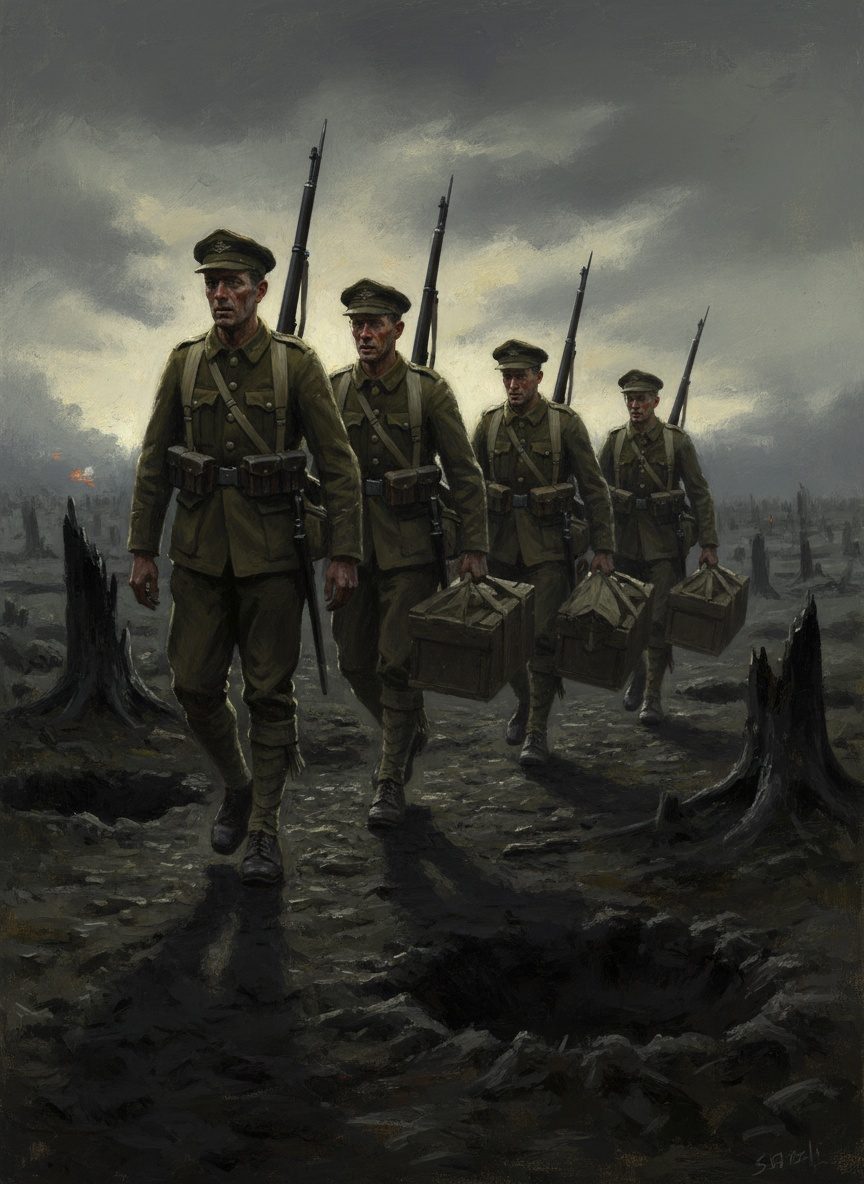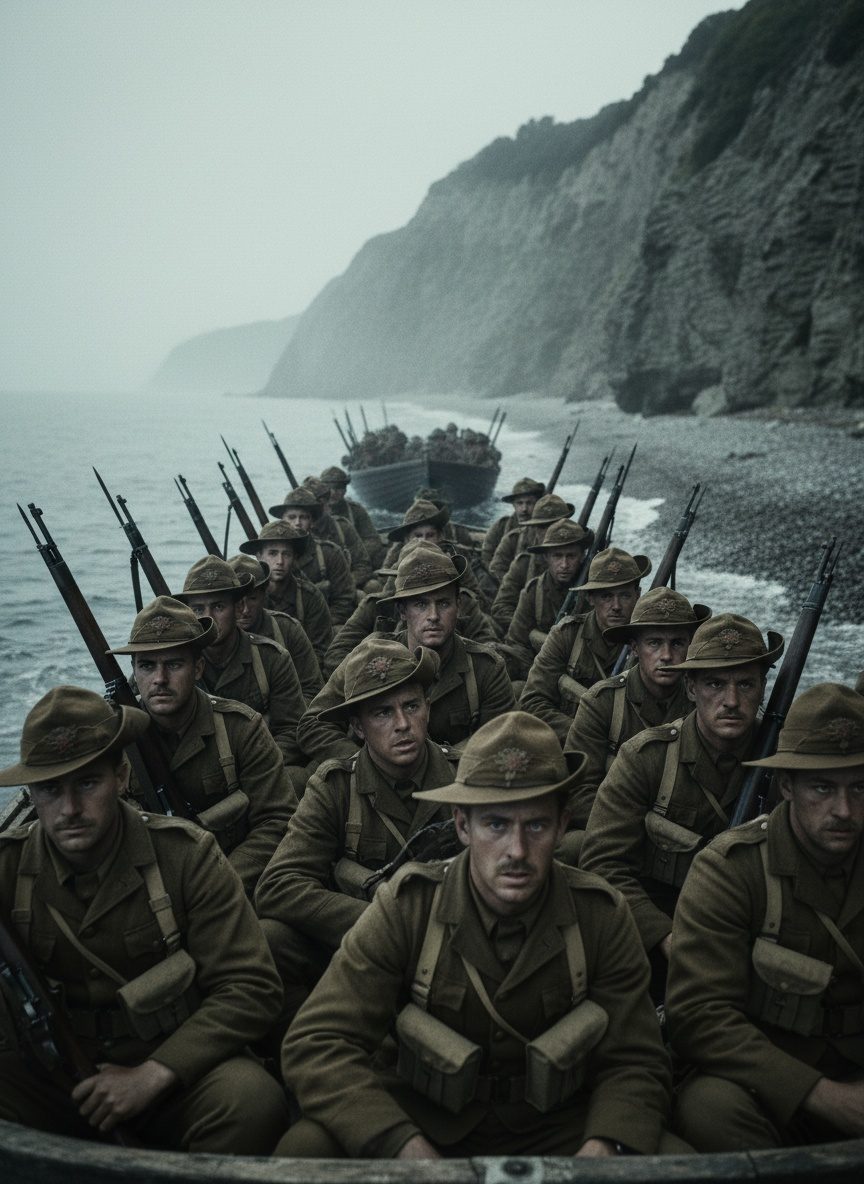
The engines cut out, and the sound of oars cutting through the dark water was swiftly drowned out by the thunderous crack of gunfire cascading from the cliffs above. The boats, filled with anxious young men from Australia and New Zealand, lurched forward, clattering onto the narrow shingle beach. The air was heavy with anticipation, each breath tasting of sea salt and fear. As the first wave of soldiers scrambled ashore, the realization dawned that they were far from where the planners had intended. Yet, even amidst this chaos and carnage, something extraordinary was unfolding; the legend of the ANZACs was being written in blood and bravery on the Gallipoli Peninsula.
Mistimed Shadows and Unseen Shores
The pre-dawn air was still, yet electric, when the orders came to mount the landing crafts. Every soldier felt the pulse of history in his veins but no one could predict the severity of the trial waiting on the Turkish shores. The Allied plan was bold: a series of landings on the Gallipoli Peninsula intended to open up the Dardanelles Strait and secure a direct route to Russia. But as the boats of the Australian and New Zealand Army Corps drifted towards what should have been their designated landing site, a lunar alignment played its hand against them.
The full moon, dipping beneath the horizon, cast confusing shadows over the incoming fleet, altering their navigation. Instead of the flat beach and clear sprawl ideal for an organized assault, the men landed at the rugged and inhospitable terrain of what would soon become known as 'ANZAC Cove.' The cliffs loomed tall, barren, and formidable, a natural fortress occupied by a well-prepared enemy.
Baptism by Fire
The first Australians to leap from their boats into the cold Adriatic waters were met with immediate and ferocious resistance. The Turks, stationed above the cove, rained down bullets with deadly accuracy, turning the beach into a killing ground. Unyielding, the ANZACs pressed on, their boots slipping on the wet shingle, clutching rifles heavy with cumbersome hope.
The cacophony of war blitzed from all directions—the shouts of orders amidst the cries of the wounded. Within moments, the water pulsed red, echoing the invisible guardians of this foreign land. Yet, driven by unfathomable courage, they scrambled up the steep cliffs, torn patches of earth bearing the brunt of their determined advance, defying the whisper of mortality at every turn.
This was not simply a battle for ground or glory; it was the crucible in which identities would be forged. The relentless spirit displayed as they pushed inland, against impossible odds and in the face of raw adversity, transformed these men from disparate lands into a unified front—a brotherhood borne of collective struggle and sacrifice.
The First Dawn of a Legend
As the sun crept its way above the horizon, it shed light on a scene of staggering devastation. Amongst the chaos and confusion, the ANZACs had established their footing. But the cost was immeasurable—5,000 casualties; an abstract number that barely conveyed the human toll.
Every patch of earth taken was wrested with improbable valor. Corporal after corporal speaking of unyielding mateship beneath the shadow of death—an unspoken code understood across no man’s land. These shared hardships on the unforgiving slopes sowed the seeds of a legend that would redefine two young nations, half a world away from the imperial clutches that had sent them here.
This first fateful day at Gallipoli introduced the world to their indomitable spirit. Their stand was not just against an earthly enemy; it was a defiance of despair, a harbinger of hope that in surrendering some, they found themselves in deeper bonds of solidarity and identity amidst the roar of war.
A Pause in the Final Act
In the years that followed, 25 April 1915 would become a day etched in the collective memory of Australians and New Zealanders. Yet, beyond the solemn commemorations and poignant reflections, the enduring legacy of the ANZACs at Gallipoli resonates with a deeper understanding of sacrifice and resolve. The tale of their tenacity under fire serves as both a caution and a cornerstone—a reminder of the cost of engagement and the potential for unity borne of hardship.
As we revisit that fateful morning, we not only honor the fallen but are compelled to reflect on the powerful narratives forged in the crucible of conflict. In missteps and mistakes, courage can rise unbidden; in moments of vulnerability, strength is found. The ANZAC landings at Gallipoli succeed not just as a historical record, but as a testament to the ethos of a collective spirit showcasing resilience, painting the silenced screams of suffering with strokes of courage, forever redefined in memory and identity.